Choosing thin plywood for global sourcing requires more than comparing prices and thicknesses. The right panel must match its final use, shipping conditions, production process, and quality expectations. A 3 mm sheet for cabinet backs behaves differently from a flexible panel used in packaging or model making. Small defects can become costly during cutting.
This guide examines thin plywood through practical sourcing details. It considers veneer species, core construction, thickness tolerance, moisture content, surface quality, bonding performance, and formal testing. A buyer should request clear technical data, production samples, and recent inspection records before placing a large order. Ask how the supplier controls glue spread, pressing temperature, sanding depth, and panel storage. These details often reveal more than a polished catalog.
Packaging matters too. Thin sheets can warp when stacked on damp floors or exposed to uneven pressure inside a container. Edge protectors, moisture-resistant wrapping, and flat pallet support can reduce damage. Certification and test documents should also be checked against the destination market and the intended application.
No checklist is perfect. A sample may pass while a later batch varies because veneer quality changes seasonally. This is why reliable sourcing needs repeat inspections, written specifications, and honest communication. The cheapest thin plywood is not always the most economical choice. A stable supplier, consistent tolerances, and fewer rejected panels may protect the budget better. Careful comparison creates a stronger balance between cost, performance, compliance, and long-term supply reliability.
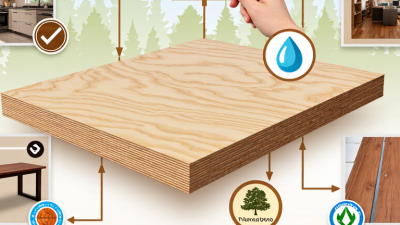
Thin plywood is not simply a thinner version of standard plywood. For global sourcing, its type and core determine bending, weight, surface quality, and machining behavior. Veneer-core plywood uses crossed wood layers, giving it dependable strength in both directions. Common core species include poplar, birch, eucalyptus, and softwood. Each behaves differently. Poplar is light and easy to cut, while birch is denser and usually holds screws better. Softwood may reduce cost, but its softer surface can dent during shipping.
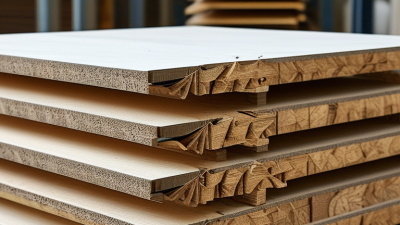
Thin plywood also varies by face grade and layer count. A clear face suits visible panels; lower grades may contain knots, patches, or color shifts. Do not judge the core from the face alone. Ask for a cross-section sample. Look for tight glue lines, even thickness, and veneers without open gaps. Three-ply sheets can work for curved parts, but five-ply construction often feels more stable. An MDF or composite core may machine smoothly, yet it can react differently to humidity than solid wood veneer. That difference matters in cabinets, packaging inserts, and lightweight interior parts.
In sourcing work, I compare at least three production samples before approving a thin plywood grade. I measure thickness at several points, check warping, and test a small cutout. Simple checks expose surprises. Request moisture data, bonding test results, and formaldehyde documentation for the destination market. A supplier’s specification sheet is useful, but it is not proof by itself. I have seen attractive samples fail after humidity changes. A stronger core may be unnecessary, while a cheaper core may create waste. Review the real application, not just the lowest quotation.
Thin plywood selection starts with a precise thickness requirement. Nominal measurements can mislead during global sourcing. A 3 mm panel may measure slightly less after sanding, pressing, or moisture changes. Request a caliper reading range, not only a target number. Specify the acceptable tolerance in millimetres. Small differences affect joints, edge finishing, and machine settings.
Strength depends on more than thickness. Ask about wood species, veneer direction, core construction, and adhesive performance. A cross-laminated panel usually resists bending better than a poorly balanced panel. Define the expected load, span, fixing method, and usage frequency. For example, a lightweight cabinet back needs different performance than a curved display component. Request bending, bonding, and moisture-resistance data when these properties matter. Test samples under realistic conditions.
Performance requirements should be written as measurable checks. Inspect surface cracks, voids, delamination, warping, and edge damage. Compare samples after conditioning them in warm, humid, and dry environments. One sample can look excellent and still fail during installation. That happens. A sourcing specification should also state packaging, storage, and inspection procedures. This approach is not perfect, because transport conditions and local testing methods may vary. Recheck critical results with an independent laboratory when the application carries real risk. Avoid choosing the thinnest panel simply to reduce cost. The cheaper decision may create waste, rework, or early replacement.
| Requirement | Typical Specification for Thin Plywood | Why It Matters in Global Sourcing | Recommended Verification |
|---|---|---|---|
| Nominal thickness | 1.5–6.0 mm; common commercial sizes include 3.0 mm, 4.0 mm and 5.0 mm. | Thickness affects bending stiffness, weight, machining allowance and fit within the finished assembly. | State both nominal thickness and allowable thickness tolerance on the purchase specification. Check with a calibrated micrometer at multiple points. |
| Thickness tolerance | Set by the applicable product standard and contract; a practical procurement target is often approximately ±0.15–0.30 mm for thin panels, subject to construction and grade. | Tight tolerance improves lamination, nesting, edge alignment and dimensional consistency across suppliers. | Use an agreed sampling plan and record readings from the center and four edge areas of each sampled panel. |
| Panel dimensions | Common sheet formats range from approximately 1,220 × 2,440 mm to 1,525 × 3,050 mm, depending on the supply region and intended use. | Sheet size influences freight utilization, cutting yield, container loading and the amount of jointing required. | Specify length, width, squareness and diagonal difference. Confirm whether dimensions are measured before or after conditioning. |
| Veneer construction | Balanced cross-laminated veneers; face and back grain normally run in the same direction, while core layers are oriented perpendicular to improve stability. | Layer balance affects warping, screw-holding, bending behavior and resistance to splitting. | Approve a construction diagram stating veneer count, approximate veneer thickness, grain direction and permitted core gaps. |
| Density | Typically about 400–700 kg/m³ for many softwood and mixed-species plywood products; hardwood constructions may be higher. | Density affects panel weight, stiffness, handling cost, fastener performance and shipping calculations. | Require density reporting at a defined moisture content and test representative samples from production lots. |
| Bending strength (MOR) | Typical values may range approximately from 25–60 MPa, depending on species, veneer quality, grain direction, thickness and test method. | MOR indicates the maximum bending stress before failure and helps determine whether a thin panel can carry the required load. | Specify test direction, conditioning, span, loading rate and the applicable standard, such as EN 310 or an equivalent national standard. |
| Modulus of elasticity (MOE) | Typical values may range approximately from 4,000–10,000 MPa, varying with wood species, lay-up and grain direction. | MOE measures stiffness and is often more important than ultimate strength when limiting deflection in shelves, skins or curved components. | Set a minimum MOE in both principal directions when the panel will be loaded or installed with a defined span. |
| Strength direction | Parallel-to-face-grain bending performance is commonly higher than perpendicular-to-face-grain performance; the difference depends on the lay-up. | Incorrect grain orientation can cause excessive deflection or premature failure even when the nominal grade appears adequate. | Show installation direction on drawings and request test data in both parallel and perpendicular directions where relevant. |
| Moisture content | Commonly targeted around 6–14% at shipment, depending on regional climate, product standard and end-use conditions. | Moisture variation can cause swelling, shrinkage, warping, bond stress and dimensional changes after arrival. | Measure with a calibrated meter and confirm the conditioning environment used before testing. |
| Dimensional stability | Low visible warping, limited edge swell and stable length/width after conditioning; exact limits should be contract-specific. | Thin sheets are more sensitive to handling damage and moisture cycling, particularly during ocean transport and storage. | Define maximum bow, cup, twist and edge lift, then inspect panels after conditioning and after simulated moisture exposure. |
| Bond durability | Interior, humid-service and exterior grades require different adhesive systems and durability levels; no single glue line is suitable for every application. | The correct bond class reduces delamination risk under humidity, heat, wetting and drying cycles. | Specify the intended service class and request cyclic boil, water-soak or wet-strength testing where required by the applicable standard. |
| Formaldehyde emissions | Set the required emissions class according to the destination market and product application; common regulatory frameworks use chamber or perforator test methods. | Import regulations, indoor-air requirements and customer specifications may differ by country. | Request a current third-party test report using the method recognized in the destination market, such as EN 717-1 or an equivalent method. |
| Surface quality | Define face grade by permitted knots, splits, patches, discoloration, open defects, sanding marks and repaired areas. | A clear visual grade may be needed for furniture, while lower face grades may be adequate for concealed structural or packaging components. | Use approved physical samples or high-resolution defect standards, and state separate requirements for face, back and edges. |
| Core defects | Limit open joints, voids, overlaps, core laps and veneer buckling according to the selected grade and intended use. | Core defects reduce effective thickness, local strength, screw-holding and edge quality. | Inspect cut edges and use destructive section checks on samples when internal construction is critical. |
| Surface finishing compatibility | Specify sanding level, surface smoothness, coating compatibility and whether the panel will be painted, laminated, veneered or left exposed. | Uneven sanding or resin contamination can cause poor adhesion, telegraphing and visible surface defects. | Perform a trial finish using the actual coating or adhesive system before approving mass production. |
| Machining and fastener performance | Use a stable, void-controlled lay-up for routing, drilling, stapling and screw fastening; define minimum edge distance for the finished design. | Thin plywood has limited edge thickness, so splitting and pull-out can occur if fasteners are oversized or placed too close to the edge. | Run application-specific pilot tests for drill diameter, screw type, staple spacing, routing speed and edge distance. |
| Packaging and transport protection | Use flat, dry stacking with corner protection, moisture-resistant wrapping and sufficient pallet support to prevent sagging and impact damage. | Long-distance transport can expose panels to humidity, condensation, abrasion and forklift damage. | Agree pallet height, strap method, wrapping materials, storage conditions and container loading photos before shipment. |
| Quality acceptance plan | Combine visual inspection, dimensional checks, moisture measurement and periodic laboratory testing. | A documented acceptance plan makes quality comparable across countries, factories and shipment lots. | Define sample quantity, inspection level, critical defects, major defects, minor defects and corrective-action requirements before ordering. |

Note: The numerical ranges are indicative procurement benchmarks for thin plywood and are not a substitute for the requirements of the applicable product standard, structural design code or destination-market regulation. Final limits should be agreed through a product specification, approved sample and verified test method.
Choosing thin plywood for global sourcing starts with wood species, not price. Birch offers a tight grain, clean edges, and good screw holding. Poplar is lighter and easier to machine. Eucalyptus often provides higher density, but its color and movement can vary. The right choice depends on the panel’s use, humidity, and required stiffness. FAO’s Global Forest Products Facts and Figures 2023 shows Asia produced roughly three quarters of global plywood output in 2022. That concentration makes regional species availability important during supplier evaluation.
Grade descriptions require careful checking. “A” face quality is not identical across every country. Ask for the applicable standard, such as EN 635 for appearance classification and EN 636 for service conditions. Structural projects also need bonding performance verified under EN 314-2 or an equivalent specification. Thin panels can reveal core gaps after cutting. Request cross-section photographs and measured thickness data.
Surface quality is more than a smooth touch. Check veneer joins, open knots, patches, sanding marks, and color variation under angled light. A 2024 report from the European Panel Federation noted continued pressure for consistent panel quality and traceable raw materials across European markets. That matters when replacing one supplier with another. In practice, I would test samples after conditioning them at 20°C and 65% relative humidity. One weakness remains: visual inspection alone can miss weak glue lines. A laboratory bond test may cost more, but rejected production costs far more.
When sourcing thin plywood globally, certifications should be checked before price negotiations. Requirements differ by destination. Confirm formaldehyde emissions, moisture content, bonding strength, and thickness tolerance. Ask for recent test reports from an accredited laboratory. The report should identify the exact panel construction, not only the product family.
Check each certificate’s scope, validity period, factory address, and issuing organization. Then verify the document independently. A certificate may be genuine but unsuitable for your destination market. For example, a panel approved for interior furniture may fail requirements for children’s products or humid environments. Request evidence for calibrated testing equipment and documented quality procedures. Small details matter.
Supplier reliability requires more than polished documents. Order samples from the same production line used for bulk orders. Measure thickness at several points with a digital caliper. Inspect edge sealing, surface flatness, glue lines, and packaging after simulated handling. Ask how the supplier manages rejected panels and production changes. Their answer reveals more than a sales presentation.
A common mistake is trusting the first successful sample too quickly. One sample proves little. A small trial order can expose uneven veneers, delayed shipping, or inconsistent packing. Keep written specifications, inspection photos, batch numbers, and agreed corrective actions. I would also review communication during a problem, not only during negotiations. Reliability appears when something goes wrong.
Choosing thin plywood for global sourcing requires more than comparing the factory price. A low-cost sheet can become expensive after packaging, freight, customs, and inspection fees. Request prices by sheet, cubic meter, and finished pallet. These figures reveal hidden differences. Check thickness tolerance, core gaps, surface quality, moisture content, and warping after storage. A small sample should travel before a large order.
Packaging matters because thin panels bend easily. Use flat pallets, rigid corner protection, moisture-resistant wrapping, and straps that do not crush the edges. Ask for the packed dimensions and gross weight. A pallet that looks compact may still increase shipping costs through its volume. Sea freight is usually economical for larger quantities, while air freight can destroy the budget. The cheapest quote is not always the cheapest shipment.
Import planning needs equal attention. Confirm the correct customs classification, commercial invoice details, packing list, country of origin, and any required wood-product or emissions documentation. Requirements differ by destination and product construction. A customs broker can help, but the importer remains responsible for accurate information. I would also confirm whether pallets need approved treatment markings. One overlooked document can delay a container for days. My earlier assumption was that thinner plywood always reduced freight costs; packaging and damage claims proved otherwise. A landed-cost worksheet is less exciting, but it exposes these uncomfortable gaps.
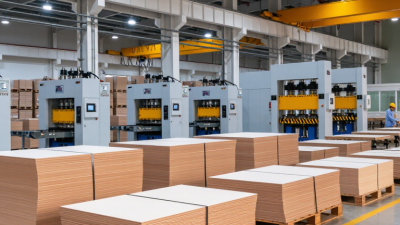
Comparing material volume, packaging, shipping, and import considerations

Signup our newsletter to get update information, promotion or insight.