What Are the Top Plywood Board Manufacturers in China?
China is one of the world’s major sources of plywood board, serving furniture, construction, packaging, and interior design markets. However, choosing a manufacturer requires more than comparing factory prices. Product quality can vary between mills, even within the same region. This guide examines leading plywood board manufacturers in China through practical and verifiable criteria. These include production capacity, veneer quality, adhesive performance, certification, export experience, and customer support. Details matter. A clean warehouse, properly stacked panels, and calibrated pressing equipment can reveal much about a supplier’s daily discipline.
Reliable manufacturers usually provide clear product specifications, moisture information, emission grades, and test documentation. Buyers should also confirm whether certificates match the exact factory and product line. A polished website is not proof of consistent manufacturing. Neither is a low quotation. Sample testing, factory audits, and small trial orders remain sensible steps before larger contracts. This article considers companies with established market visibility, but rankings should not be treated as permanent. Production teams change, equipment ages, and export policies can shift. That uncertainty deserves attention.
The discussion also compares common plywood types, including commercial plywood, film-faced plywood, marine-grade panels, and furniture-grade products. Each serves a different purpose. A construction panel may not suit a high-end cabinet. Readers will find practical questions for evaluating suppliers, such as veneer sourcing, core composition, bonding strength, packaging standards, and after-sales communication. Some manufacturers may perform strongly in one category but only moderately in another. That is worth acknowledging. The best choice depends on application, budget, delivery requirements, and acceptable risk, not reputation alone.
What Defines a Top Plywood Board Manufacturer in China?
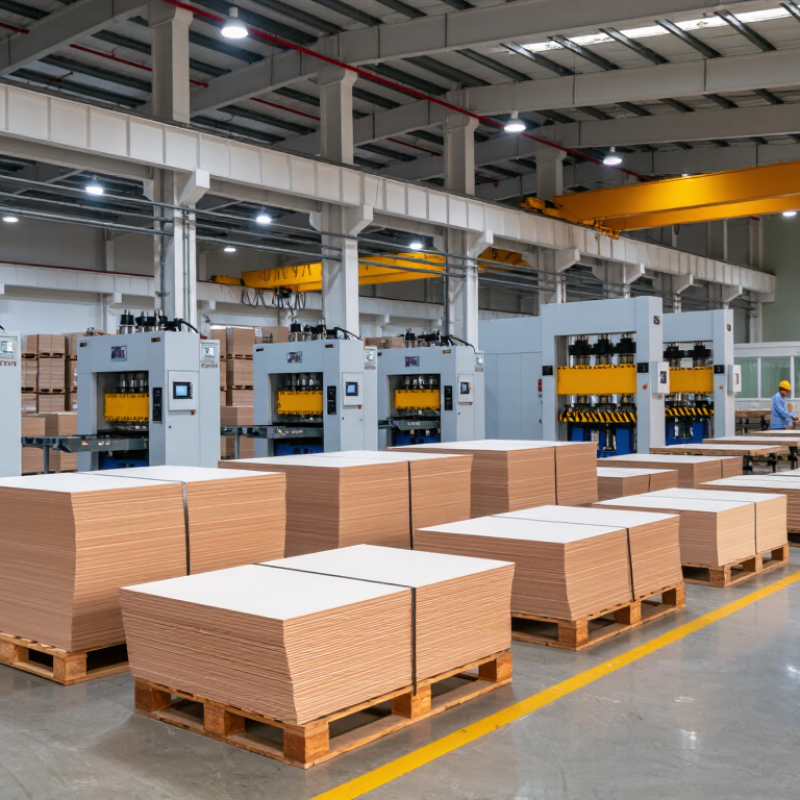
A top plywood board manufacturer in China is defined by consistent control, not impressive catalog images. Experienced producers inspect logs, veneers, adhesives, and core materials before production begins. They measure veneer moisture carefully, because uneven moisture can cause bubbles, warping, or weak bonding after pressing.
Reliable factories use documented procedures for peeling, drying, grading, assembly, and hot pressing. Technicians should monitor temperature, pressure, and pressing time for every panel thickness. Quality teams also test bonding strength, thickness tolerance, surface defects, and formaldehyde emissions according to the buyer’s required standards. Clear batch records matter. They allow problems to be traced instead of guessed.
Factory experience becomes visible during difficult orders. A capable manufacturer can explain how it handles curved veneers, mixed core grades, custom sizes, and repeated shipments. It should provide samples, inspection reports, packaging details, and realistic production schedules. Good communication helps, but evidence matters more. A confident answer is not enough.
No factory is flawless. Even a well-managed line may produce a rejected panel. The important question is how quickly the team identifies the cause and corrects it. Sometimes a small labeling mistake reveals a larger weakness in warehouse control. Honest manufacturers discuss such risks and improve their process instead of hiding them. That attitude often separates dependable plywood production from low-cost manufacturing.
What Defines a Top Plywood Board Manufacturer in China?
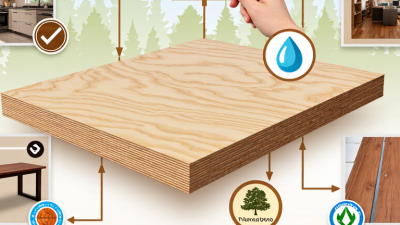
A leading plywood manufacturer is typically evaluated by product quality, formaldehyde-emission compliance, production consistency, certification coverage, customization capability, and delivery reliability. The chart presents a practical procurement-weighting model based on commonly used buyer evaluation criteria.
Higher percentages indicate greater importance when comparing plywood suppliers for construction, furniture, packaging, and interior projects. Certification and emission compliance are especially important because plywood performance depends on both structural quality and indoor-air-safety requirements.
Key Factors for Evaluating Chinese Plywood Manufacturers
What Are the Top Plywood Board Manufacturers in China?
Evaluating Chinese plywood manufacturers requires more than comparing prices. FAOSTAT’s Forestry Production and Trade database identifies China as the world’s leading plywood producer. ITTO’s Biennial Review and Assessment of the World Timber Situation also highlights China’s major role in global wood-panel supply. These figures show scale, not automatic quality. Buyers should inspect veneer thickness, core gaps, glue spread, sanding marks, and panel moisture. A reliable factory should provide batch records, product specifications, and recent third-party test reports. Ask whether the reports match the exact panel grade and production line.
Tips: Request samples from three batches. Measure thickness at several points. Check edges for open gaps. Confirm formaldehyde results under the required testing method, such as EN 717-1. For structural plywood, verify relevant performance standards, including EN 314-2 or ASTM requirements. A factory tour can reveal practical details: covered veneer storage, calibrated presses, clean glue rooms, and labeled pallets. Production capacity also deserves careful review. A large annual figure may include lower-grade panels or subcontracted output. That can distort comparisons.
Payment terms, complaint handling, and replacement procedures indicate operational maturity. Review inspection records before shipment, not after arrival. Certifications should be current and traceable through the issuing body. Still, no checklist is perfect. Veneer quality can vary during wet seasons, and one impressive sample may hide inconsistent batches. Independent pre-shipment inspection remains useful, especially for large orders. Based on field experience, communication speed often predicts delivery reliability better than a polished factory presentation.
Leading Plywood Board Manufacturers and Their Product Strengths
China remains a major force in plywood production. FAO’s FAOSTAT Forestry Production and Trade database reports global wood-based panel output above 400 million cubic metres in 2022, with China contributing more than half. This scale supports strong manufacturing depth, but capacity alone does not prove consistent quality.
Leading plywood board manufacturers usually build clear product strengths around specific applications. Commercial plywood suppliers focus on stable core veneers, smooth sanding, and low formaldehyde emissions. Furniture-grade producers often offer calibrated thickness, clean faces, and decorative surface options. Construction-focused factories commonly provide film-faced boards with water-resistant coatings, dense cores, and repeated-use performance. According to ITTO market reporting, China’s plywood exports exceeded 10 million cubic metres in recent years, showing substantial international demand and production capability.
Technical buyers should examine more than catalog photographs. Check veneer species, adhesive class, moisture content, panel tolerance, and third-party test records. A practical factory audit should include edge inspection, random thickness checks, and boiling-water resistance tests. Small details matter. A weak core can ruin an attractive face. Export experience also helps with packaging, documentation, and container loading, although it cannot replace independent inspection. Some supplier claims may sound precise but remain difficult to verify. That is an uncomfortable gap. Buyers should compare tested performance, not only price, output, or polished samples.
How Chinese Plywood Manufacturers Compare in Quality and Capacity
Chinese plywood manufacturers differ sharply in quality control, automation, and production scale. FAOSTAT’s 2022 forestry data places China among the world’s leading plywood producers, with annual output exceeding 200 million cubic metres. A 2023 industry report from the China National Forest Products Industry Association estimated domestic plywood production at roughly 215 million cubic metres. This capacity supports stable supply, but volume alone proves little.
Higher-quality factories usually control veneer moisture, core alignment, glue spread, and hot-press temperature. These details affect bending, delamination, and edge strength. Laboratory tests should follow standards such as EN 314 for bonding quality or EN 636 for plywood performance. Formaldehyde testing also matters. The U.S. EPA’s TSCA Title VI sets a 0.05 ppm emission limit for hardwood plywood. Some suppliers meet stricter project requirements, while others only provide basic commercial grades. The difference may appear as swelling around a screw hole.
Tips: Request recent third-party test reports, production photographs, and batch-level inspection records. Check whether certificates match the exact factory address. Capacity figures can be overstated. I have found that a smaller plant with disciplined moisture control may outperform a larger facility with inconsistent veneer grading. That comparison is not perfect, but it is more useful than judging factories by annual output alone. Ask for samples from different production dates, then inspect thickness, flatness, core gaps, and surface repairs before approving a large order.
What Are the Top Plywood Board Manufacturers in China? - How Chinese Plywood Manufacturers Compare in Quality and Capacity
| Manufacturer Segment |
Typical Annual Capacity |
Common Board Thickness |
Main Product Grades |
Surface Quality |
Moisture Content |
Quality Standards |
Typical Export Capability |
| Large Integrated Manufacturers |
100,000–500,000 m³ |
3–30 mm |
Commercial, film-faced, furniture, structural and LVL-related panels |
Consistent veneer matching, smooth sanding and controlled defects |
6–14% |
Usually able to support EN 314, EN 636, CE, CARB Phase 2 and E0/E1 requirements, subject to testing |
High-volume container loading, formal inspection systems and regular overseas shipments |
| Export-Oriented Contract Manufacturers |
50,000–200,000 m³ |
4–25 mm |
Furniture, packaging, marine, construction and decorative plywood |
Good grading consistency with customer-specific face veneer options |
8–16% |
Commonly work to buyer specifications, EN standards, ASTM requirements and low-emission specifications |
Strong documentation, private-label production and flexible export packaging |
| Regional Medium-Sized Factories |
20,000–100,000 m³ |
3–25 mm |
Commercial plywood, shuttering panels, packing boards and basic furniture panels |
Ranges from utility grade to controlled BB/CC or better grades |
8–18% |
May provide EN, ASTM or domestic test reports depending on the product line |
Moderate export experience, with competitive pricing for standard specifications |
| Specialized Film-Faced Panel Producers |
30,000–150,000 m³ |
12–21 mm |
Concrete-forming panels, overlay plywood and reusable shuttering boards |
Phenolic-film surfaces with sealed edges and controlled panel flatness |
6–14% |
Product performance is usually specified by film weight, bonding class, density and reuse requirements |
Suitable for repeated container orders and construction-material distributors |
| Custom and Small-Batch Manufacturers |
5,000–50,000 m³ |
3–40 mm |
Special dimensions, cut-to-size panels, decorative veneers and prototype orders |
Highly dependent on selected veneer, core material and inspection criteria |
8–18% |
Certification availability varies; project-specific testing is often required |
Flexible specifications and lower minimum order quantities, but limited production scale |
Note: The figures are representative ranges for Chinese plywood manufacturing segments rather than company-specific data. Actual capacity, emissions, bonding performance, tolerances and certifications should be verified through current factory records, laboratory reports and pre-shipment inspection.
How to Choose the Right Plywood Manufacturer in China
Choosing the right plywood manufacturer in China requires more than comparing quoted prices. Start with the board’s intended use, thickness, core structure, and surface requirements. A reliable supplier should explain these details clearly. Avoid vague promises.
Ask for production photos, factory addresses, equipment details, and recent quality records. Independent audits can confirm whether the stated capacity is realistic. Request samples from different production batches. Check the core for gaps, overlapping veneers, warping, and uneven bonding. Look closely at the edges after cutting. Small defects often become expensive problems during installation.
Confirm the supplier’s experience with your target market and required testing standards. Ask which adhesives are used and how emissions are controlled. A professional manufacturer should provide clear test reports, packing specifications, and inspection procedures. Do not accept copied certificates without verification. Third-party testing may cost more, but it can protect a large order.
Communication is another practical test. Measure how quickly the team answers technical questions. Good communication reduces errors in drawings, labeling, moisture control, and delivery schedules. Still, no checklist is perfect. I have seen attractive samples hide inconsistent production. A trial order gives better evidence than a polished presentation. Define acceptable tolerances in writing, inspect before shipment, and keep payment terms linked to verified quality. The lowest price is rarely the safest choice.