How to Choose Birch Plywood Sheets for Your Project?
Choosing birch plywood sheets is not just a matter of picking a thickness. The right panel depends on where it will be used, how it will be finished, and the loads it must carry. A cabinet door needs a smooth, consistent face. A workbench top needs dependable core construction and adequate thickness. Small details matter.
Start by checking the panel’s grade, face quality, core, and adhesive rating. APA—The Engineered Wood Association’s panel guidance explains why exposure classification must match the intended conditions; an interior-rated panel is not a safe assumption for damp spaces. Also inspect the edges. Voids, uneven plies, and patching may become visible after cutting, especially on open shelves or clear-coated furniture. Ask the supplier for the product datasheet, not just a verbal grade description.
Moisture deserves attention, too. The USDA Forest Products Laboratory’s Wood Handbook reports that the fiber saturation point for most wood is near 30% moisture content. Below that point, moisture changes can cause wood to shrink or swell. Cross-laminated plywood helps limit movement, but it does not make panels immune to humidity. That distinction is easy to overlook. Measure the sheet, check for flatness, and let it acclimate in the project space before cutting. No sheet is perfect. A slight color variation or core inconsistency can still affect a visible finish. In this guide, we’ll compare grades, thicknesses, core quality, and suitable uses so you can choose with evidence—not guesswork.
Assess Loads Against Birch Plywood’s Typical Density of 650–700 kg/m³
How to Choose Birch Plywood Sheets for Your Project?
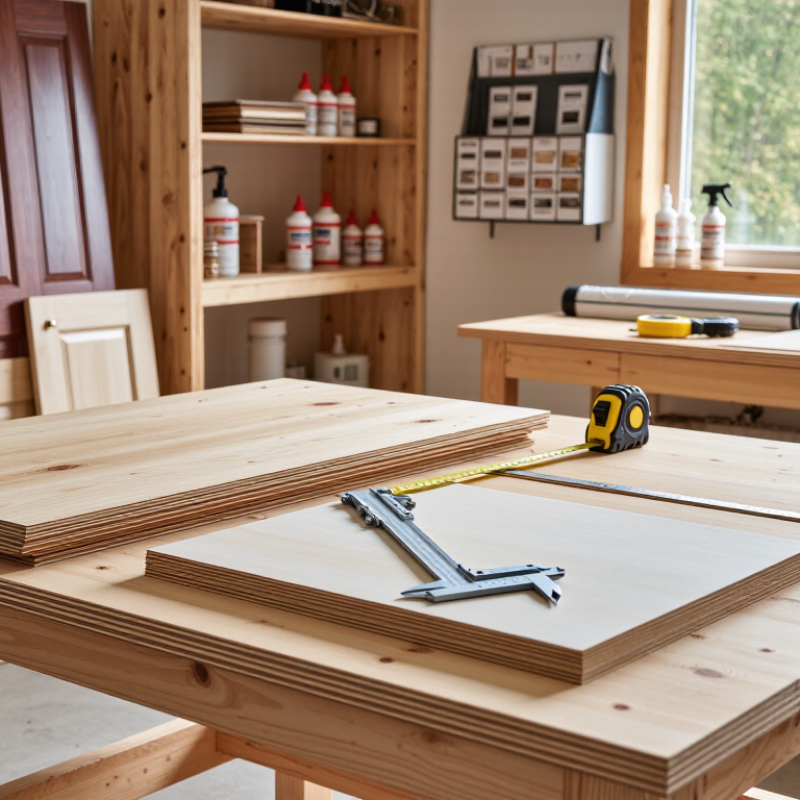
Birch plywood typically has a density of 650–700 kg/m³, useful for estimating handling weight and dead load. An 18 mm sheet weighs about 11.7–12.6 kg per square metre. At 1,220 × 2,440 mm, that is roughly 35–38 kg before fittings or finish. Check the supplier’s technical sheet: moisture, glue layers, and construction can shift the actual weight. The USDA Forest Products Laboratory’s Wood Handbook explains that wood density changes with moisture content, so one number is only a starting point.
Density does not tell you how much a shelf can safely carry. Span, panel thickness, support spacing, grain direction, and fastening all affect bending and deflection. APA’s Engineered Wood Construction Guide likewise treats panel selection in relation to span and support conditions. For a long shelf carrying books, add a centre support or choose a thicker panel, then check the maker’s load data. A panel may feel solid and still sag over time.
Tips: Weigh a sample sheet if the load limit is tight. Include the panel’s own weight, stored items, and hardware in your estimate. Keep panels dry before installation; I’ve seen damp stock complicate an otherwise careful fit.
Choose EN 636 Service Class 1, 2, or 3 for the Exposure
Birch plywood can look identical across grades, yet its bond specification changes where it should be used. Choose the EN 636 class for the moisture the sheet will actually face. EN 636-1 is intended for dry interior conditions, such as a heated bedroom or office. It is not the right choice beside a sink or in a damp utility room. Small details matter. A brief splash can become repeated wetting near a doorway or worktop.
EN 636-2 is designed for humid conditions, including spaces where moisture levels may rise, provided the sheet is protected from prolonged exposure. EN 636-3 is intended for exterior conditions, where rain and changing humidity may occur. That does not mean every sheet is waterproof or needs no protection. Seal exposed edges, especially after cutting; they can absorb water faster than the faces. I still check the technical sheet before ordering, because the class alone does not confirm suitability for every structural use. Also check the panel’s stated application and any required coating. It is easy to overestimate what a grade can handle. A covered porch and an exposed garden gate are not the same test.
How to Choose Birch Plywood Sheets for Your Project? - Choose EN 636 Service Class 1, 2, or 3 for the Exposure
A practical guide to matching plywood service class to expected moisture exposure.
| EN 636 service class |
Typical exposure |
Example project locations |
What to check when choosing birch plywood |
Important limitation |
EN 636-1
Service Class 1 |
Dry interior conditions. The plywood is intended to remain dry during normal use. |
Interior furniture, cabinets, shelving, and wall panels in heated, dry rooms. |
Confirm the sheet is declared for dry-condition use. Choose the appropriate thickness, grade, and structural specification for the design. |
Not intended for regular dampness, prolonged high humidity, or outdoor exposure. |
EN 636-2
Service Class 2 |
Humid conditions, where moisture levels may be higher than in dry interiors but are not persistently severe. |
Protected construction areas, covered exterior locations, and interior spaces subject to occasional humidity. |
Check that the product is specifically declared for humid conditions and that its intended use matches the project design. |
Humid-condition suitability does not make the panel suitable for continuous weather exposure or standing water. |
EN 636-3
Service Class 3 |
Exterior conditions, including exposure to weather, when the plywood is specified and installed for that use. |
Exterior joinery, exposed construction applications, and other outdoor uses covered by the product specification. |
Verify the exterior-use declaration, structural suitability where relevant, and installation requirements. Protect edges and surfaces as specified. |
Exterior classification alone does not guarantee resistance to every exposure condition; detailing, coating, drainage, and maintenance still matter. |
Selection note: EN 636 describes plywood requirements for dry, humid, and exterior conditions. Always check the product declaration and project specification; service class does not by itself determine structural capacity, surface finish, or suitability for every installation.
Match Bond Durability to EN 314-2 Classes 1, 2, or 3
When choosing birch plywood, check the bond class against the moisture your project will face. EN 314-2 Class 1 is intended for dry interior conditions, such as furniture in a heated room. Class 2 suits humid conditions, where occasional moisture may occur but the panel is not exposed to weather. Class 3 is intended for exterior conditions, including repeated wetting and drying.
Think about the real location, not just the room name. A bathroom cabinet may see damp air, while a sheltered outdoor panel can still catch rain at its edges. Class 2 is not a safe substitute for exterior exposure. Check the panel’s technical sheet, and seal cut edges where appropriate. The bond class describes adhesive-bond durability; it does not make birch veneers waterproof or guarantee the panel’s service life.
Small detail. Big difference.
I have seen project plans specify “exterior plywood” without considering edge protection or how water drains. That label alone can mislead. Match the class to expected exposure, then confirm the panel’s other properties, including thickness, structural rating, and surface quality. If conditions are uncertain, ask the supplier for test documentation rather than relying on appearance. A smooth face tells you little about the bond inside.
Select Thickness and Sheet Size to Suit Spans and Cutting Plans
Choose thickness by support spacing, not appearance alone. For shelves or cabinet sides, a thicker sheet usually feels stiffer, but the right choice depends on span and load. APA’s Engineered Wood Construction Guide explains panel span ratings: a 32/16 rating indicates intended support spacing of up to 32 inches for roofs and 16 inches for floors, subject to design and installation conditions. Check the panel marking and project requirements before treating those figures as a guarantee. Thin sheets, such as 1/4-inch plywood, suit backs and light-duty panels; 1/2-inch and 3/4-inch sheets are common choices for sturdier parts. Details matter.
Plan sheet size around the cutting layout. A 4 × 8-foot sheet covers 32 square feet nominally, but saw kerfs, grain direction, and damaged edges reduce usable area. Sketch parts on paper, leave room between cuts, and check that long pieces fit the sheet. I still measure twice, then find one cut was awkward. The USDA Forest Products Laboratory’s Wood Handbook notes that wood movement varies with moisture and grain direction; plywood’s cross-laminated construction limits, but does not eliminate, movement. Store sheets flat and dry before cutting. For visible birch faces, place the best surface outward and avoid cuts that leave narrow, fragile strips.
Check Face Grade, Veneer Construction, and Formaldehyde Emissions Class
How to Choose Birch Plywood Sheets for Your Project?
A clean birch face can make a cabinet door look refined, but appearance alone does not tell you how a sheet will perform. Face grades describe visible features such as knots, patches, and repairs, though grading terms can vary between suppliers. Ask what the stated grade permits, then inspect both sides under good light. Check the edges, too. A small patch may be harmless beneath paint, yet distracting beneath clear finish.
Veneer construction matters when you cut, screw, or expose an edge. Look for consistent layers and ask whether the panel is intended for your use, such as furniture, shelving, or interior joinery. Examine a sample cut for gaps, loose plies, and uneven thickness. Small defects matter. I would not judge a whole batch from one perfect sample; request several sheets or confirm how quality is checked across the order.
Formaldehyde emissions class is another selection point, especially for enclosed rooms and frequently used furniture. Compare the class shown on the product documentation, and request current test or compliance records when available. Do not rely on a vague “low-emission” claim without supporting details. Requirements and labels can differ by market. One detail is easy to miss: coatings and adhesives added later may also affect indoor air quality, so consider the finished assembly, not just the bare panel.