| Material |
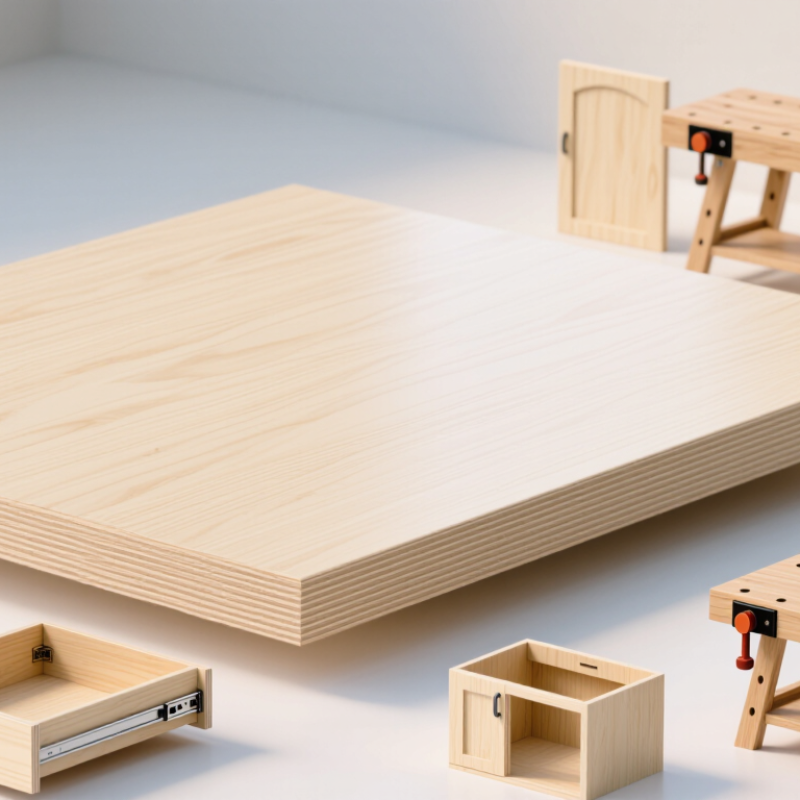
Cross-laminated birch veneer layers bonded into a panel |
Adjacent veneer layers are generally arranged with their grain directions perpendicular to each other, improving dimensional stability and strength compared with a single-layer board. |
Furniture components, cabinetry, shelving, worktops, interior fittings, packaging, and construction panels |
Confirm the panel is birch plywood rather than a mixed-species plywood if appearance, strength, or machining performance is important. |
| Appearance Grade |
BBBCPC |
Face grades commonly describe the number and size of permitted knots, patches, splits, and other visible defects. Grade codes can vary by product standard and supplier. |
Visible furniture faces generally require cleaner grades; painted, veneered, or concealed parts may accept lower grades. |
Ask for the face-and-back grade separately and request a written grading standard or representative sample. |
| Moisture Class |
EN 636-1 Dry conditions |
Intended for use in dry service conditions, typically corresponding to interior applications where the panel is protected from persistent moisture. |
Indoor furniture, wall lining, shelving, cabinetry, and dry interior joinery |
Dry-use classification does not make the panel waterproof. Protect edges and avoid prolonged exposure to water or high humidity. |
| Moisture Class |
EN 636-2 Humid conditions |
Designed for humid service conditions with occasional exposure to moisture, subject to the product’s declared performance and installation limits. |
Kitchens, bathrooms with suitable detailing, utility areas, interior construction, and semi-protected applications |
Check the relevant bonding classification, formaldehyde information, edge sealing requirements, and permitted exposure conditions. |
| Moisture Class |
EN 636-3 Exterior conditions |
Intended for exterior service conditions when the panel is properly designed, protected, installed, and maintained. Exterior classification does not mean unlimited weather resistance. |
Protected outdoor structures, vehicle bodies, site components, and construction elements subject to suitable detailing |
Confirm the panel’s declared exterior suitability, surface protection, edge treatment, fixing method, and exposure limitations. |
| Bonding Performance |
EN 314-2 Class 1Class 2Class 3 |
Bonding classes are commonly associated with dry, humid, and exterior service conditions respectively. Bonding class and EN 636 use should be checked together. |
Helps match adhesive durability to the intended service environment. |
Do not specify only “waterproof plywood.” Request the applicable standard, class, and technical declaration. |
| FSC Certification |
FSC 100% |
All wood in the product comes from FSC-certified forests. |
Projects requiring wood from FSC-certified sources without the use of controlled wood or recycled inputs in the product category. |
Verify the supplier’s current FSC certificate, product scope, chain-of-custody code, and the claim shown on delivery documents. |
| FSC Certification |
FSC Mix |
The product contains material from FSC-certified sources combined with controlled wood and/or recycled material, according to FSC requirements. |
Projects seeking responsible forestry certification while allowing approved material inputs. |
Specify the exact FSC claim required by the project and ensure the finished product, not only the raw veneer, is covered. |
| FSC Certification |
FSC Recycled |
The product is made from recycled material under the applicable FSC claim rules. |
Procurement programs prioritizing recycled wood content. |
Confirm that the claim applies to the plywood product being purchased and request supporting chain-of-custody documentation. |
| Common Panel Format |
1,220 × 2,440 mm |
A widely used nominal sheet size in many markets; actual manufacturing tolerances and availability vary. |
General furniture production, joinery, cabinets, partitions, and workshop fabrication |
Plan cutting layouts around the supplier’s actual sheet dimensions and usable face quality. |
| Common Panel Format |
1,250 × 2,500 mm |
A common metric panel format that can reduce joints in larger furniture and interior elements. |
Large cabinet sides, wall panels, shopfitting, doors, and interior architectural components |
Check transport access, lifting requirements, storage space, and whether the requested thickness is stocked. |
| Common Panel Format |
1,500 × 3,000 mm |
A large-format sheet used where fewer seams and larger cut components are beneficial. |
Large furniture parts, vehicle or equipment interiors, partitions, and architectural fabrication |
Confirm flatness, handling equipment, machining capacity, and cutting tolerance before ordering. |
| Typical Thickness |
6, 9, 12, 15, 18, 21, and 24 mm |
Birch plywood is available in many thicknesses. Actual thickness may differ slightly from the nominal value because of manufacturing tolerances and sanding. |
Thin panels for backs and drawer bases; medium thicknesses for furniture; thicker panels for load-bearing or heavy-duty parts |
Specify nominal thickness, permitted tolerance, number of plies, and whether the faces are sanded. |
| Panel Construction |
Odd or balanced number of veneer plies |
Many plywood panels use a balanced lay-up to reduce warping and provide more predictable behavior in service. |
Machined furniture parts, structural components, shelves, and precision assemblies |
For structural or highly visible work, request the lay-up, core quality, and thickness tolerance. |
| Surface Finish |
UnsandedSandedFilm-facedVeneered |
Surface treatment affects appearance, paintability, friction, cleanability, and resistance to moisture or abrasion. |
Furniture, formwork, flooring components, transport interiors, and decorative applications |
Specify sanding level, surface roughness, film or coating type, color, and whether both faces require the same finish. |
| Edge and Cut Protection |
Seal exposed edges when moisture exposure is possible |
Plywood edges absorb moisture more readily than finished faces. Sealing can reduce water uptake but does not change the declared moisture class. |
Kitchens, utility rooms, semi-protected exterior work, countertops, and service panels |
Specify edge sealing, corner detailing, drainage, ventilation, and compatible coatings as part of the installation design. |
| Storage Before Installation |
Keep flat, dry, supported, and protected from direct weather |
Correct storage helps limit moisture imbalance, staining, edge damage, and permanent distortion before fabrication or installation. |
All birch plywood applications |
Store sheets horizontally on level supports, keep them off the floor, and allow them to acclimatize where project conditions require it. |