Blog

Who Are the Top Birch Ply Suppliers in China?

Choosing a birch ply supplier in China takes more than comparing prices or browsing polished product photos. Buyers need to examine veneer quality, core construction, adhesive performance, thickness tolerance, and the supplier’s ability to keep specifications consistent between orders. A sample can look excellent under bright showroom lights. The real test comes when panels arrive for cutting, laminating, or installation.

Wood technologist Dr. Eugene Wengert is a recognized source on wood properties and processing. Rather than attribute an unverified birch-plywood quotation to him, this guide uses a practical sourcing maxim: “Judge the panel by its construction and consistency, not by its label alone.” That distinction matters. “Birch ply” can describe products with different face grades, core materials, bonding specifications, and intended uses.

This outline will help readers compare leading Chinese suppliers through concrete questions: Do they provide clear product specifications? Can they explain quality-control checks? Are samples representative of regular production? Do their documents match the panels being offered? Small details matter, including clean veneer faces, even edges, and reliable thickness. A supplier’s website may answer some questions, but not all. Independent verification and a careful sample review remain sensible steps.

There is no single best supplier for every project. Furniture makers, cabinet shops, and construction buyers may value different grades, formats, and service levels. The comparison ahead focuses on evidence and fit, while recognizing that supplier claims still deserve scrutiny.
Who Are the Top Birch Ply Suppliers in China?

What Birch Plywood Is and How It Is Made

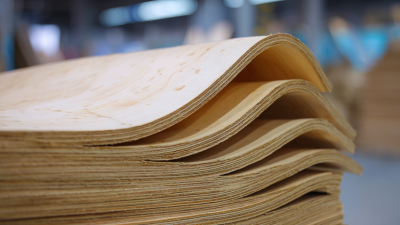
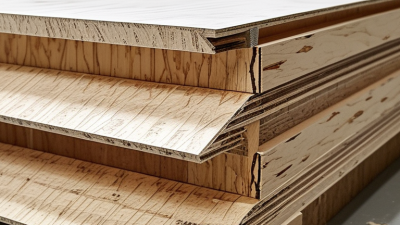
Birch plywood is an engineered panel made from thin layers of birch veneer. Makers usually peel these sheets from logs, then dry them to control moisture. They stack the veneers with neighboring grain directions crossing. This arrangement helps the panel resist movement and spread loads more evenly than a single sheet of wood. Adhesive bonds the layers under heat and pressure. The panel is then trimmed and sanded. Details vary by mill, grade, and intended use.

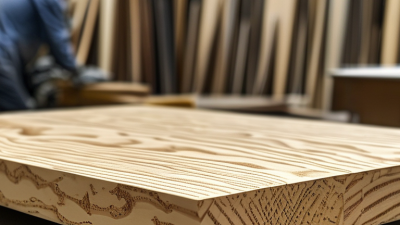
The pale face often has a fine, even grain, while the panel’s exposed edge shows its layered construction. Core quality matters: gaps or overlaps can affect machining and finish. Not every birch panel performs alike. Buyers should check thickness tolerance, veneer quality, bonding specification, and stated use rather than relying on appearance alone. These details are especially useful when comparing supplier samples.

Tips: Inspect a freshly cut edge for voids, and check whether the faces have patches or sanding marks. Ask for the product specification and a sample before placing a large order. A smooth surface can look reassuring, but it does not reveal every detail inside. One small oversight can matter.
How China’s Birch Plywood Supply Chain Is Organized

China’s birch plywood supply chain links timber suppliers, veneer mills, panel factories, and distributors. Birch logs or peeled veneers may come from domestic sources or overseas markets, while factories handle drying, grading, layup, hot pressing, sanding, and inspection. The exact route varies by mill.

FAO’s Global Forest Products Facts and Figures 2022 reported that the Asia-Pacific region produced about 62% of the world’s wood-based panels that year, with China the largest producer. This scale supports dense manufacturing networks, but it does not guarantee uniform birch content or quality.

A key sourcing distinction is all-birch construction versus birch face veneers over a different core. Both can look similar after sanding. That detail matters. Buyers should request a layer schedule, veneer thickness, moisture range, and batch-level inspection records.

The FAO figure describes the broad panel industry, not birch plywood alone; treating it as a birch-market estimate would be misleading. Supply routes can also shift with timber availability and freight costs.

Tips: Ask for cross-section photos and verify the core species in a pre-shipment sample. Compare test reports with the exact product specification, not a generic factory sheet. Some records are incomplete; flag that before ordering.

Profiles of Notable Birch Plywood Suppliers in China

China’s birch-plywood suppliers generally fall into three groups: integrated mills, export-focused panel makers, and regional processors. FAOSTAT’s 2022 forest-products data records China’s total plywood output above 70 million cubic metres. That figure covers all species, not birch alone. Scale matters, but it does not guarantee consistent birch faces or cores.

Integrated mills may control veneer peeling, drying, and pressing under one roof. Buyers can ask for recent thickness-tolerance results and inspect cut edges for core gaps. Export-focused suppliers often provide more documentation and packing options. ITTO’s 2023 Annual Review tracks plywood production and trade by volume, offering useful context for comparing export activity. Trade volume is not a quality score, though.

Regional processors can be flexible on dimensions and smaller orders. Their capacity and batch consistency may vary. Request a current production sample, moisture readings, and details of the adhesive system. Check whether the pale face veneer remains visually consistent across sheets. A certificate alone cannot reveal every production weakness. I would also compare repeat orders, not just the first sample; that step is easy to overlook.

Common Birch Plywood Sheet Formats

A comparison of surface area for three commonly used plywood panel formats. Actual availability varies by supplier and product specification.

How to Compare Suppliers by Quality and Certification

When comparing birch plywood suppliers in China, request specifications for the exact panel you plan to buy. “Birch plywood” can describe different core materials, veneer grades, and bonding conditions. Ask for thickness tolerance, face grade, glue type, and intended moisture exposure. Then compare those details against your project requirements. Looks can mislead.

Check sample panels for patching, open joints, sanding marks, and uneven veneer color. Measure thickness at several points, not just along one edge. Ask how the supplier controls core gaps and veneer alignment during production. A small sample is useful, but it cannot prove every production batch will match. Request a recent inspection report tied to the same product specification.

Treat certificates as evidence to verify, not as a quality guarantee. Check whether the document is current, names the actual factory, and covers the product or process being offered. For forestry claims, review the certificate’s scope and chain-of-custody details. For formaldehyde emissions, request test reports for the relevant panel and destination requirements. ISO 9001 may show a quality-management system; it does not certify every sheet. Ask for batch traceability, testing methods, and corrective-action records. If a supplier cannot explain a result clearly, pause and ask again. That awkward conversation can reveal more than a polished brochure.

Who Are the Top Birch Ply Suppliers in China? — How to Compare Suppliers by Quality and Certification

Comparison Dimension What a Qualified Supplier Should Specify Evidence to Request How to Compare Suppliers
Product grade and intended use Clearly state whether the panel is intended for dry, humid, or exterior conditions. EN 636 classifies plywood for these service conditions. Product data sheet, declared panel construction, and test documentation relevant to the intended use. Compare only products with the same declared use class. Do not treat “birch plywood” alone as a performance grade.
Bonding performance Identify the applicable bonding class. EN 314-2 defines bonding classes for plywood, including dry, humid, and exterior conditions. Test report identifying the panel type, test method, bonding class, and issuing laboratory. Match the bonding class to the application and verify that the report covers the product being quoted.
Face and back veneer quality Describe veneer appearance and defects using an agreed grading specification. EN 635 provides a framework for classifying plywood by surface appearance. Written face/back grade, defect limits, sample panel, and an agreed visual-inspection procedure. Compare samples under the same lighting and acceptance rules; confirm whether repairs, patches, and color variation are allowed.
Thickness and dimensional tolerances List nominal thickness, panel dimensions, and permitted tolerances. EN 315 specifies methods for determining plywood dimensions and tolerances. Product specification and measurement records for production or pre-shipment inspection. Check the stated tolerances against the purchase specification rather than relying on nominal thickness alone.
Core construction and bonding quality Declare veneer species, number of plies, lay-up, core composition, and whether core gaps or overlaps are controlled. Construction details, production-control records, and representative cut-section samples. Inspect cut edges and samples for voids, delamination, uneven lay-up, and consistency between samples and the quoted product.
Moisture measurement State the moisture-content specification and the measurement method used. EN 322 describes a method for determining moisture content of wood-based panels. Recent inspection or laboratory results showing sampling details and the measurement method. Compare results obtained using the same method and sampling approach; agree on acceptance limits in the order documents.
Formaldehyde emissions Declare the emissions requirement for the destination market and the panel type. Requirements differ by market and regulatory scheme. Current test report or compliance documentation identifying the tested product and applicable regulation or standard. Check that the documentation matches the exact panel construction and intended market; do not rely on an unsupported “low-emission” claim.
FSC chain of custody If FSC-certified material is claimed, the supplier must hold a valid chain-of-custody certification and make eligible product claims correctly. Certificate code, scope, and status checked in the FSC certificate database; transaction documents where applicable. Verify the certificate status and product scope independently. A certificate alone does not mean every product from the supplier is certified.
ISO 9001 quality management An active ISO 9001 certificate can indicate a certified quality-management system; it is not a product-quality certificate. Certificate showing the legal entity, covered site or scope, certification body, and validity dates. Use it as supporting evidence of management controls, alongside product-specific tests and inspection results.
CE marking for construction use Where applicable to the destination and intended construction use, check conformity with EN 13986 and the relevant declaration of performance. Declaration of performance and associated product identification and conformity documents. Confirm that the declared product, intended use, and documentation correspond to the panels being purchased.
Traceability and production consistency Maintain identifiable production batches and records linking raw materials, production, inspection, and shipment. Batch or lot identification, inspection records, packing list, and agreed pre-shipment inspection report. Check whether the supplier can trace a delivered batch and reproduce the approved sample and specification.
Overall supplier assessment Compare product conformity, test transparency, traceability, certification scope, and the supplier’s ability to meet the written specification. Approved sample, signed technical specification, current certificates, and independent inspection or test results where required. Score suppliers against the same checklist and destination-market requirements; avoid ranking them on claims that cannot be independently verified.

Note: This is a supplier-evaluation framework, not a ranking or a claim about any named manufacturer. Standards, certification requirements, and acceptance limits depend on the product, application, and destination market; verify current requirements before placing an order.

Key Factors When Choosing a Birch Plywood Supplier

When choosing a birch plywood supplier in China, look beyond a clean face veneer and a competitive quote. Check veneer species, panel thickness, core construction, glue type, and intended use. Ask for recent test reports tied to the actual product and production batch, not a generic certificate. Small details matter.

FAO’s Global Forest Products Facts and Figures 2023 puts worldwide wood-based panel production at about 400 million cubic metres in 2022. That scale makes supplier capacity easier to claim than consistent quality is to prove.

Request inspection records for thickness, moisture, bonding, and visible core gaps. For relevant applications, check whether testing references standards such as EN 314-2 for bond quality and EN 636 for plywood requirements. WHO’s 2010 indoor-air guidelines set a formaldehyde guideline of 0.1 mg/m³ over 30 minutes; this is a room-air guideline, not a panel emission rating.

A polished sample can still mislead. Compare samples from different production runs, and confirm that the face grade and core structure match your specification. Ask how the supplier protects panels from moisture during storage and shipping, and get lead times in writing.

Request the lab’s name, test date, method, and sample identification. Ask for proof. If a supplier cannot explain a result clearly, pause before placing a large order.