What Are the 2026 Top Types of Birch Plywood Sheets?
What Are the 2026 Top Types of Birch Plywood Sheets?
In 2026, birch plywood sheets remain popular for furniture, interiors, transport equipment, and precision joinery. Their pale faces, fine layers, and stable structure offer a clean starting point. However, “top” depends on the project. A cabinet door needs a different panel from a trailer floor.
Michael Green, a respected timber architect, has said, “Wood is the only structural material that grows.” That idea matters here. Birch plywood combines a renewable material with engineered cross-laminated veneers. Still, responsible selection requires more than attractive grain. Buyers should check origin, adhesive class, thickness tolerance, formaldehyde data, and certification.
This guide examines the leading 2026 categories. These include furniture-grade B/BB and BB/BB panels, structural birch plywood, film-faced sheets, flame-retardant grades, and flexible or bendable options. Each type has a practical role. B/BB sheets show fewer face defects. Film-faced panels resist moisture and abrasion better. Structural grades support demanding applications when certified correctly.
The details can be easy to miss. A smooth face does not guarantee waterproof performance. A dark film does not automatically prove exterior durability. Even a trusted supplier may provide incomplete technical information. That is a weakness worth acknowledging.
Readers should compare EN 636 classifications, bonding standards, FSC or PEFC documentation, and project-specific testing. Local building rules also matter. This overview offers a useful direction, not a universal ranking. The best birch plywood sheets are the ones whose construction, certification, and surface quality match their real working conditions.
2026 Birch Plywood Taxonomy: Veneer Grades, Cores, and EN 314 Bond Classes
What Are the 2026 Top Types of Birch Plywood Sheets?
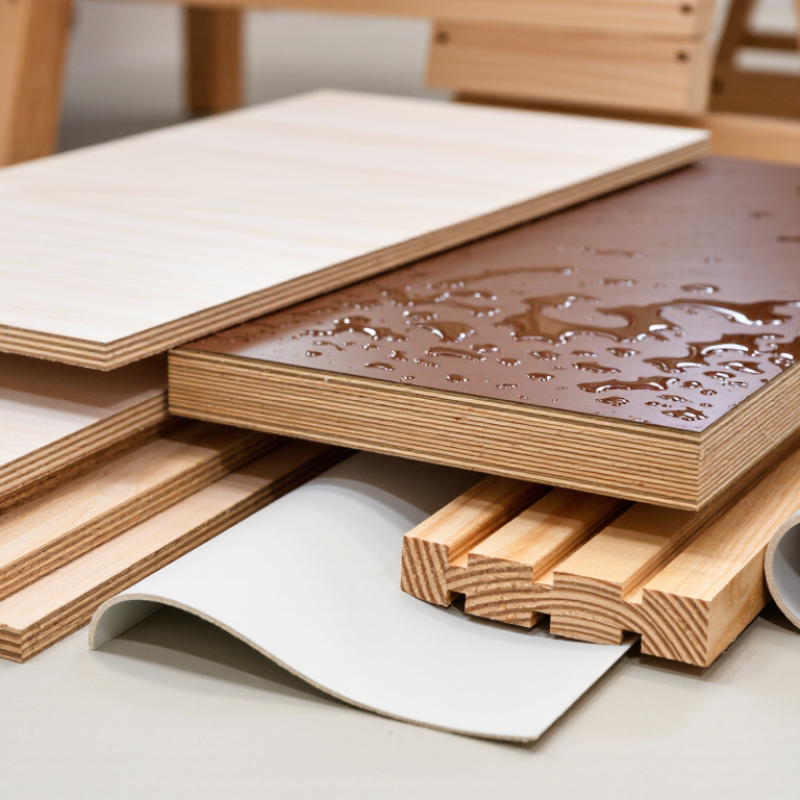
Birch plywood is best classified by veneer quality, core construction, and bonding performance. Veneer grades describe visible faces, not the entire panel. B grade usually offers a clean, sanded surface with very few natural defects. BB grade may contain small knots and repaired areas. CP and C grades allow more patches, color variation, and open defects. The exact limits depend on the declared standard, so labels deserve careful checking.
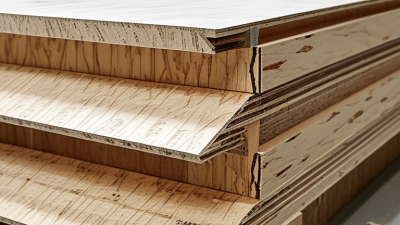
Core construction changes the sheet’s behavior. All-birch cores provide consistent density, sharp edges, and reliable screw holding. Combi cores combine birch with lighter wood layers, reducing weight and cost. Some panels use a lightweight core for easier handling, but edge strength may decline. A cut edge can reveal the truth. Look for even plies, tight joints, and minimal internal gaps.
EN 314 bond classes identify bonding quality under moisture conditions. Class 1 suits dry interior use. Class 2 handles humid interior environments, such as kitchens or covered utility areas. Class 3 is intended for exterior exposure when the complete panel specification supports it. Bond class does not guarantee unlimited weather resistance. Face veneers, edge sealing, and surface protection still matter. In practice, a caliper check, edge inspection, and review of technical documents provide stronger evidence than appearance alone. Taxonomy helps, but it can oversimplify. A beautiful face may hide a weak core.
BB/BB Birch Plywood: ≤0.3 mm Face Repairs for Furniture and Interiors
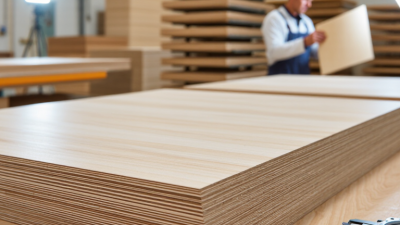
In 2026, BB/BB birch plywood remains a leading choice for furniture and interior panels. Both faces are selected for a clean, balanced appearance. Under a ≤0.3 mm face-repair specification, filled defects should remain tiny after sanding. That difference is visible. A cabinet door can show fewer distracting marks under warm lighting. Small repairs still need careful color matching.
The FAO Global Forest Products Facts and Figures 2023 report places global wood-based panel production at roughly 400 million m³. It confirms the category’s industrial scale, but not every panel offers furniture-grade faces. The UNECE/FAO Forest Products Annual Market Review 2023–2024 also links panel demand with construction and renovation activity. Demand is broad. Yet volume does not guarantee precision.
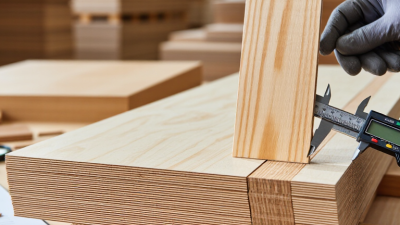
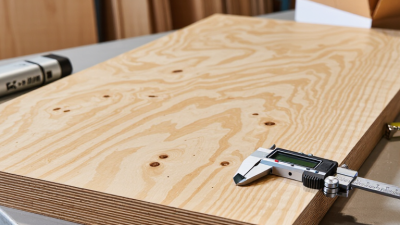
For buyers, inspect four corners, the center, and both long edges. Check thickness with calibrated calipers, then view both faces under angled light. Ask for moisture data and formaldehyde test results, such as EN 717-1 reporting. Edge chipping still matters. One honest concern remains: a perfectly repaired face may look too uniform in a warm, natural interior. I would sample each production batch, not trust one attractive sheet.
Film-Faced Birch Plywood: 120–220 g/m² Phenolic Film for Formwork
What Are the 2026 Top Types of Birch Plywood Sheets?
Film-faced birch plywood remains a practical choice for concrete formwork. Its birch veneer structure offers stable thickness and clean panel edges. A 120–220 g/m² phenolic film creates a dense, water-resistant working surface. Lighter film can reduce cost and weight. Heavier film usually improves abrasion resistance. It is not automatically better. The correct grade depends on pouring pressure, release agent, and cleaning habits. FAO’s Forestry Production and Trade database records recent global plywood output at roughly 170 million cubic metres annually. That scale reflects continuing demand for engineered wood panels.
On site, I inspect film scratches, exposed edges, and swollen corners before every reuse. Small defects can print onto concrete. Sealed edges matter. EN 636-3 classifies plywood for exterior conditions, while EN 13986 links wood panels with construction performance requirements. Formaldehyde classification should also be checked against the supplied technical declaration. The USDA Wood Handbook notes that moisture changes cause wood movement, even in engineered panels. This warning is easy to overlook. Actual reuse counts vary widely, often more than sales literature suggests. Storage on level supports, prompt cleaning, and controlled stacking can extend service life. Still, no film-faced sheet is maintenance-free. A thicker film cannot correct poor handling.
2026 Top Types of Birch Plywood Sheets: Film-Faced Birch Plywood
Film-faced birch plywood for concrete formwork commonly uses phenolic film in the
120–220 g/m² range. Lower grammage is suitable for lighter-duty applications, while
higher grammage generally provides greater surface protection and improved resistance
to moisture, abrasion, and repeated formwork use. Actual service life also depends on
plywood construction, edge sealing, handling, and release-agent practices.
Exterior Birch Plywood: EN 636-3 Panels with EN 314 Class 3 Bonding
Exterior birch plywood is built for demanding outdoor conditions, but its performance depends on more than attractive light-colored faces. EN 636-3 identifies plywood suitable for exterior exposure, while EN 314-2 Class 3 describes the panel’s durable bonding quality. This combination helps the layers resist moisture-related delamination.
The detail matters. A cut edge can absorb water quickly, even when the panel surface looks sealed. Seal exposed edges with a compatible coating, especially around drilled holes and corners. Keep sheets raised from concrete and covered with breathable protection during storage. Trapped moisture causes trouble.
On site, installers should check thickness, flatness, core gaps, and visible damage before cutting. A dense birch structure machines cleanly, but blunt blades may burn the edges. Leave suitable movement gaps in framed applications. Do not treat every EN 636-3 panel as permanently submerged or automatically suitable for marine construction. The specification still needs checking.
Small mistakes remain common. Panels are sometimes installed with unsealed edges, then blamed for swelling after heavy rain. Face veneer quality also affects appearance, not just strength. Before ordering, confirm the declared standard, emissions class, repair quality, and intended exposure with the supplier. A short inspection can prevent expensive replacement work.
Fire-Retardant Birch Plywood: EN 13501-1 Ratings and Code-Driven Uses
What Are the 2026 Top Types of Birch Plywood Sheets?
Fire-retardant birch plywood is selected by performance, not appearance alone. Under EN 13501-1, products may receive reaction-to-fire classes from A1 to F. Smoke and flaming-droplet ratings add important detail. For example, B-s1,d0 indicates limited flame contribution, low smoke production, and no flaming droplets.
The rating belongs to a tested construction. Thickness, veneer arrangement, adhesive, surface coating, and fixing method can change the result. A panel tested at 12 millimetres may not keep the same classification at 18 millimetres. That detail is often missed. Contractors should request the complete classification report, declared performance documents, and installation conditions before ordering sheets.
Code-driven uses can include wall linings, ceiling systems, corridors, stair enclosures, and public interiors. The required class depends on occupancy, building height, escape routes, and local regulations. A fire-retardant panel is not automatically suitable for every protected route. Site moisture also matters, especially where plywood meets cold masonry or poorly ventilated cavities. I have seen attractive specifications fail during review because the supporting frame was excluded from testing. That mistake costs time. Designers should match the EN 13501-1 rating with the entire assembly, then confirm local approval requirements with a qualified fire consultant or building-control professional.