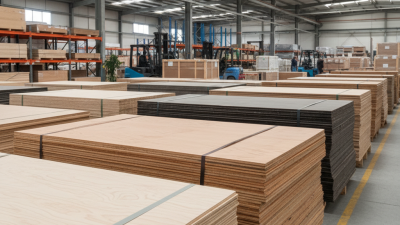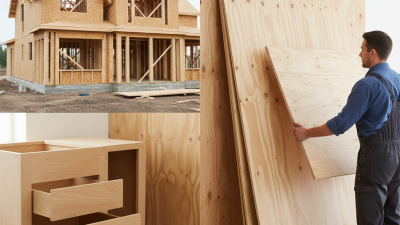
Choosing the right marine plywood sheets in 2026 requires more than comparing thickness, price, and surface appearance. Global buyers must examine veneer quality, core construction, adhesive performance, and documented production controls. A clean face veneer can hide internal gaps, uneven plies, or weak glue lines.
This guide introduces the main marine plywood sheets types available for boats, docks, outdoor furniture, vehicle interiors, and architectural projects. It considers okoumé, meranti, birch, and other commonly specified species. Each option offers different advantages in weight, stiffness, machining behavior, durability, and cost. Okoumé is lightweight and easy to shape, while meranti often provides greater density and impact resistance. Birch can deliver a smooth finish, but its suitability depends on certified bonding and exterior protection.
Look beyond the label.
Reliable purchasing decisions should reference recognized requirements, such as BS 1088 or EN 314-2 Class 3 bonding, where applicable. FSC certification may support responsible sourcing, but it does not replace product-quality verification. Buyers should request technical data sheets, formaldehyde information, tolerance records, and recent inspection reports. Checking sheet edges can reveal voids, delamination, or inconsistent core layers before shipment.
No single panel is perfect. Some suppliers describe exterior plywood as marine grade without providing sufficient evidence. That distinction matters. This overview compares practical sheet types and highlights questions worth asking before placing international orders. It also acknowledges a common weakness in buying decisions: laboratory specifications may look convincing, yet real performance depends on sealing, fastening, storage, and installation quality.
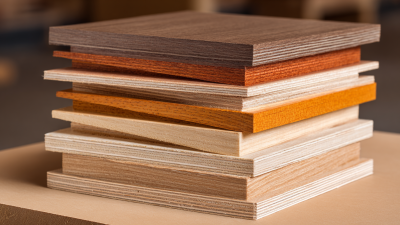
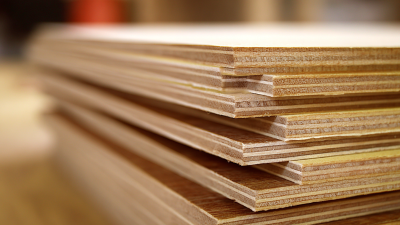
Marine plywood is an engineered panel built from thin wood veneers. Each layer crosses the previous one, improving dimensional stability and load distribution. A durable panel uses closely matched veneers, few core gaps, and moisture-resistant bonding. Its layered edge resembles a tight stack of cards, not a loose bundle.
The term “marine” does not mean permanently waterproof. It mainly describes reliable bonding and controlled veneer quality. BS 1088 is a widely referenced marine-plywood specification, while EN 314-2 Class 3 is often used to assess exterior bonding performance. The FAO’s Global Forest Products Facts and Figures 2023 reports global wood-based panel production at over 400 million cubic metres. That scale matters to buyers because quality can vary across mills, regions, and supply chains. Laboratory strength values also depend on thickness, wood species, moisture, and testing direction. A product sheet alone may not reveal every weakness.
Tips: Ask for test reports, veneer-core details, formaldehyde classification, and moisture limits. Inspect the cut edge for open voids. Check whether the face veneer is decorative or structural. Do not assume a smooth surface proves durability. In field use, exposed edges need sealing, and fastener holes deserve attention. I have seen panels perform well under a roof but fail quickly beside unprotected splash zones. That uncomfortable difference is easy to overlook. FAO, Global Forest Products Facts and Figures 2023; BS 1088; EN 314-2.
2026 Top Marine Plywood Sheets Types for Global Buyers
Key Marine Plywood Types and Their Manufacturing Differences
Marine plywood is not one universal product. Its performance depends on veneer species, core construction, adhesive, and inspection control. FAO’s Global Forest Products Facts and Figures 2023 recorded roughly 410 million cubic meters of wood-based panels produced globally in 2022. That scale makes specification discipline essential for buyers.
Tropical hardwood marine plywood usually uses rotary-peeled veneers. Manufacturers arrange cross-banded layers and remove core gaps before hot pressing. This structure improves impact resistance and dimensional stability. Lightweight species, such as okoumé, reduce panel weight but may dent more easily. Hardwood plywood offers greater surface hardness, though it can increase shipping weight. Birch-based panels often use thinner, carefully calibrated veneers. Their edges look cleaner, but manufacturing costs are usually higher.
Adhesive selection creates another difference. Exterior-grade phenolic or comparable waterproof systems must bond every veneer layer consistently. BS 1088 and EN 314-2 Class 3 are useful reference points, but buyers should verify the exact test scope. Do not trust the word “marine” alone. Ask for veneer thickness records, glue-line test results, formaldehyde data, and third-party inspection documents. The UNECE/FAO Forest Products Annual Market Review 2023–2024 shows that panel markets remain sensitive to construction demand and supply changes. That matters because rushed production can weaken quality control. A small overlooked core void can become a large failure after repeated wetting and drying.
| Marine Plywood Type | Typical Timber Basis | Typical Panel Construction | Key Manufacturing Differences | Common Standards or Classification | Typical Density | Main Advantages | Typical Applications |
|---|---|---|---|---|---|---|---|
| Okoume Marine Plywood | Lightweight tropical hardwood veneers, commonly sourced from Central or West Africa. | Usually an all-wood, multi-ply construction with thin, balanced veneers and a carefully selected face. | Manufacturers focus on low weight, consistent veneer thickness, tight core assembly, and waterproof bonding. Core gaps and open defects are controlled more strictly than in ordinary construction plywood. | BS 1088Marine-grade specifications | Approximately 400–500 kg/m³ | Very light, easy to machine, good strength-to-weight ratio, and suitable for coating or fiberglass sheathing. | Small boats, kayaks, canoes, dinghies, cabin interiors, and lightweight marine structures. |
| Meranti Marine Plywood | Meranti or related Southeast Asian hardwood veneers. | Multi-layer hardwood veneer panel, generally with a more substantial core than lightweight species. | Production emphasizes durable veneers, low-defect inner plies, strong edge bonding, and hot pressing with exterior or marine-grade adhesive systems. Veneer density varies by meranti group. | BS 1088EN 314-2 Class 3 bonding | Approximately 500–650 kg/m³ | Good balance of strength, durability, workability, and cost for many general marine projects. | Boat hulls, decks, bulkheads, seats, transoms, and marine joinery. |
| Sapele Marine Plywood | Sapele or similar durable hardwood veneers. | High-quality multi-ply panel with attractive, relatively dense face veneers and a stable inner core. | Higher-grade logs and selective rotary-cut or sliced veneers are used to improve appearance. Manufacturing normally includes strict veneer grading, balanced lay-up, waterproof bonding, and careful sanding. | BS 1088 when certifiedMarine-grade specifications | Approximately 600–700 kg/m³ | Good durability, smooth surface, attractive grain, and strong screw-holding performance. | Visible boat interiors, trim panels, cabin soles, cabinetry, decks, and premium yacht fittings. |
| Douglas Fir Marine Plywood | Douglas fir softwood veneers, commonly produced from coniferous logs. | Multi-ply softwood panel with relatively large, strong veneers and a structural core. | Manufacturing requires careful control of knots, resin pockets, splits, veneer checks, and core gaps. Compared with hardwood marine plywood, the panel often has a more pronounced grain and may require thorough sealing. | Marine-grade specificationsExterior bonding | Approximately 450–550 kg/m³ | Good structural stiffness, widely available in some regions, and suitable for painted marine construction. | Boat frames, bulkheads, decks, workboats, utility craft, and painted structural components. |
| Birch Marine-Grade Plywood | Birch veneers, usually from temperate-region hardwood logs. | Many thin, cross-banded veneers create a dense and dimensionally stable panel. | Compared with conventional birch plywood, marine-grade production requires waterproof adhesive, improved core quality, fewer internal voids, and tighter control of edge integrity. Birch is not automatically marine-grade without the appropriate specification or certification. | EN 314-2 Class 3 bondingCertification required | Approximately 650–750 kg/m³ | High stiffness, strong edges, excellent machining quality, and good fastener retention. | High-load interiors, equipment platforms, boat components, marine furniture, and protected structural applications. |
| Film-Faced Marine Plywood | Hardwood or softwood core covered with phenolic resin-impregnated film. | Water-resistant plywood core with a smooth or textured phenolic film applied to one or both faces. | After veneer lay-up and hot pressing, the film is bonded under controlled temperature and pressure. Edges generally require separate sealing because the film does not fully protect exposed cut edges. | Exterior or marine bondingSurface-specific product | Approximately 500–750 kg/m³, depending on the core species. | Improved abrasion resistance, easier cleaning, reduced surface water absorption, and reusable formwork performance. | Non-slip decks, walkways, workboat floors, loading areas, and temporary marine platforms. |
| BS 1088 Certified Marine Plywood | Species may include approved hardwoods or other qualifying timber, depending on the certification scope. | Balanced veneer construction with controlled defects, suitable face quality, and durable bonding. | The defining difference is documented compliance with the applicable standard: timber durability, veneer quality, glue-line performance, panel construction, marking, and production controls are verified rather than simply claimed. | BS 1088Third-party or mill certification | Depends on the timber species; commonly 400–700 kg/m³. | Clearer quality benchmark, traceability, predictable construction, and better suitability for demanding boatbuilding. | Hull skins, decks, bulkheads, structural partitions, and professionally built boats. |
| Custom Marine Plywood Panel | Specified hardwood, softwood, or mixed timber selected for project requirements. | Panel thickness, veneer count, face grade, core species, overlay, and edge treatment are customized. | Manufacturing may use special lay-up schedules, calibrated sanding, grooved or laminated faces, low-formaldehyde or phenolic adhesives, sealed edges, and tighter moisture or thickness tolerances. | Project specificationTest reports required | Project-dependent; commonly 450–750 kg/m³. | Can be optimized for weight, stiffness, appearance, fire performance, slip resistance, or unusual panel dimensions. | Commercial vessels, offshore interiors, prefabricated modules, high-performance boats, and specialized marine equipment. |
2026 Top Marine Plywood Sheets Types for Global Buyers
Marine Plywood Standards, Grades, and Certification Requirements
Marine plywood is not automatically waterproof. Its performance depends on veneer quality, core construction, and weather-resistant adhesive. Buyers should request the applicable standard before comparing prices. BS 1088 commonly covers marine plywood quality and bonding requirements. EN 314-2 Class 3 addresses exterior bonding performance. EN 636-3 may support exterior-use classification in European projects. Requirements can differ by destination.
Face grades describe visible veneer quality, while core grades reveal gaps, overlaps, and repairs. A clean face does not guarantee a stable core. Inspect sample edges for voids and uneven layers. Ask for thickness tolerance, density, bending strength, and water-resistance test results. These details matter when sheets face spray, humidity, or repeated wetting. They also expose weak production control.
Certification needs careful checking. FSC or PEFC documents verify responsible forest sourcing, not plywood strength. ISO 9001 shows a quality management system, but it is not product approval. Buyers should verify certificate numbers, testing laboratories, issue dates, and product scope. Formaldehyde reports may follow regional methods, such as EN 717-1 or other accepted requirements. CE marking applies only where relevant. Paperwork can look convincing. I would still compare it with factory records, batch labels, and independent test results. One overlooked detail can invalidate an otherwise careful purchase.
Common nominal sheet thicknesses used for marine and exterior plywood applications
The chart shows commonly manufactured nominal thicknesses used for boat building, marine interiors, decks, bulkheads, furniture, and exterior construction. Marine plywood is typically specified with durable wood veneers and exterior bonding, such as EN 636-3 with EN 314-2 bonding Class 3, while BS 1088 is a widely referenced marine plywood specification. Buyers should verify the applicable standard, veneer species, thickness tolerance, formaldehyde class, and certification documents for each shipment.
Selecting marine plywood starts with the building environment, not the supplier’s product name. For boat interiors, balconies, façades, and wet-room furniture, check the panel’s core structure, adhesive durability, and surface quality. Marine plywood should resist moisture exposure, but it is not permanently waterproof. Unsealed edges can absorb water quickly. That detail is often overlooked.
Choose thickness according to span, load, and support spacing. A 12-millimeter sheet may suit cabinet panels, while flooring often needs a thicker board or added framing. Examine the core for gaps, overlaps, and loose knots. These defects can weaken screw holding and create visible swelling. Confirm whether the panel meets the project’s required standards, emission limits, and testing documents. Requirements vary across regions, so imported material should be reviewed by a qualified engineer or inspector.
Tips: Request samples before bulk ordering. Cut one sample and inspect its layers. Test screw holding when possible. Ask for moisture, bonding, and formaldehyde documentation. Protect sheets from rain during transport and storage. Use compatible sealants on cut edges. A thicker panel is not always the safer choice. Sometimes, better framing matters more. That is an easy decision to get wrong. Consider local climate, installation skills, replacement access, and shipping damage risks before approval.
For global buyers in 2026, marine plywood selection starts with end-use conditions, not appearance. Okoume offers low weight, while meranti and other hardwood cores can provide greater impact resistance. Ask suppliers for panel construction details, face veneer grade, core species, glue type, and production date. A reliable sourcing process compares at least three factories, then checks factory capacity, export records, and independent test reports. Certificates help, but they do not replace physical inspection. Request samples from different production batches.
Pricing changes with veneer availability, thickness, core quality, order volume, and currency movement. A cheap quotation may hide higher moisture, uneven sanding, or weak packaging. Compare a complete landed-cost sheet, including panel price, inland delivery, port fees, insurance, duties, and destination handling. Clarify whether the quote uses FOB, CFR, or another shipping term. Small wording differences can create large bills. My earlier estimates sometimes trusted the unit price too much.
Shipping damage often begins before loading. Panels should be dry, square, strapped, and separated from wet container floors. Confirm pallet dimensions before booking, because unused container height wastes money. During inspection, measure thickness at several points, check diagonal squareness, inspect edges for core gaps, and test glue lines after soaking. Photograph labels, moisture readings, and loading conditions. Hold a few cartons for arrival checks. This is inconvenient. It is still cheaper than discovering delamination after installation. Requirements should be written into the purchase contract, with clear acceptance limits and an agreed remedy.

Signup our newsletter to get update information, promotion or insight.