
Outdoor Lighting shapes how people experience a garden, patio, pathway, or building after sunset. It can make steps safer, highlight textured stone, and create a welcoming entrance. Yet good lighting is not simply about adding more brightness. It depends on purpose, placement, color temperature, beam control, and restraint.
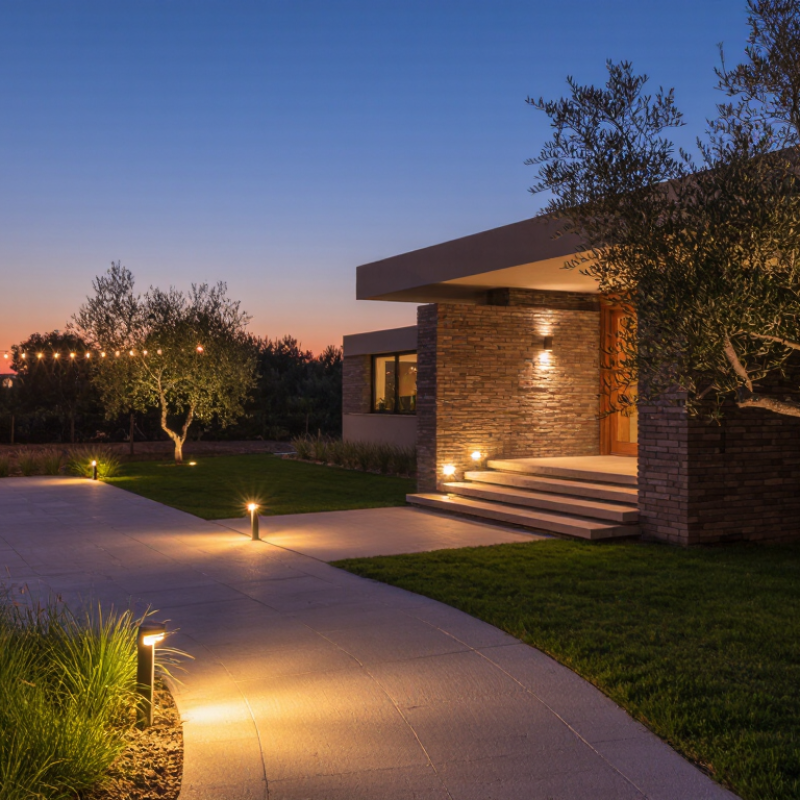
Landscape-lighting designer Janet Lennox Moyer has said, “Light is a tool for revealing the beauty of the landscape.” Her observation explains why effective Outdoor Lighting feels balanced rather than overwhelming. A narrow spotlight can draw attention to an olive tree’s branches. Soft path lights can guide visitors without shining directly into their eyes. Wall-mounted fixtures can add security while preserving architectural character.
This guide examines the top types of Outdoor Lighting and where each one works best. It explores pathway lights, spotlights, floodlights, wall lights, step lights, string lights, and in-ground fixtures. Each option creates a different visual result. Some provide practical illumination. Others build atmosphere.
Small details matter. A warm beam on rough brick feels intimate. A harsh white lamp may make the same space appear cold. Glare can also reduce comfort, even when the area looks bright. That mistake is common. I have found that many outdoor spaces need fewer fixtures, not more. Still, design preferences vary, and no single layout suits every property. Soil, weather, vegetation, wiring access, and local safety requirements can change the final decision.
The most reliable approach combines professional planning with real nighttime testing. Fixtures should be adjusted after installation. Shadows may appear differently than expected. That is part of the process. Good Outdoor Lighting remains useful, comfortable, and visually connected to the surrounding space.
What Are the Top Types of Outdoor Lighting?
Outdoor lighting is easier to plan when its main categories are separated by purpose. Ambient lighting creates general visibility across patios, walkways, and garden areas. Task lighting targets activities, such as grilling, reading, or unlocking a gate. Accent lighting highlights trees, textured walls, sculptures, or architectural edges. Security lighting improves visibility near entrances and darker boundaries. Decorative lighting adds character, but it should not replace safe illumination.
In practical outdoor projects, layered lighting usually feels more natural than one powerful fixture. A warm light can soften a brick wall, while brighter task lighting helps prevent mistakes near steps. Path lights should reveal changes in height without shining directly into someone’s eyes. Weather resistance matters, especially around sprinklers, coastal air, and winter moisture. A beautiful setup can still fail when glare makes people avoid the area.
Tips: Aim lights downward when possible. Use shielded fixtures near seating. Keep cables protected and connections weather-rated. Test the layout after sunset, not only during installation. I have found that shadows shift more than expected. A plan may look balanced on paper, yet feel harsh at night. Recheck brightness from several viewing angles before making the final adjustment.
| Lighting Type | Primary Purpose | Common Locations | Typical Light Distribution | Practical Considerations |
|---|---|---|---|---|
| Path Lights | Illuminate walking routes and help people identify changes in the path. | Garden paths, walkways, and landscape borders | Low-level light directed around the fixture, usually downward or outward. | Position them to avoid dark gaps and glare. Keep fixtures clear of plants that may block the light. |
| Step and Stair Lights | Make steps, level changes, and stair edges easier to see. | Outdoor stairs, retaining walls, decks, and terraces | Focused downward or across the tread surface. | Place light consistently along the route so each step is visible without shining directly into people’s eyes. |
| Wall Lights and Sconces | Provide practical illumination near entrances and along exterior walls. | Entryways, garages, porches, and patios | Downward, upward, or bidirectional, depending on the fixture design. | Choose a suitable height and shielded design to limit glare. Use outdoor-rated fixtures appropriate to their exposure. |
| Floodlights | Illuminate broad areas for visibility, security, or general outdoor use. | Driveways, yards, building exteriors, and work areas | Wide beam spread, often adjustable. | Aim carefully to avoid lighting neighboring properties or shining into windows. Motion sensors can reduce unnecessary operating time. |
| Spotlights and Uplights | Highlight specific landscape or architectural features. | Trees, garden features, columns, and textured walls | Narrow or moderate beam aimed at a selected feature; uplights direct light upward. | Use restrained output and aim precisely to limit glare and unwanted light spill. |
| Post and Bollard Lights | Provide low-level area lighting and help define routes or outdoor boundaries. | Driveways, paths, garden edges, and open areas | Usually distributes light outward and downward from a raised fixture. | Space fixtures to provide reasonably even coverage, and select a height that suits the area and intended use. |
| Deck and Patio Lights | Support visibility and comfortable use of outdoor living spaces. | Decks, railings, seating areas, and patios | Localized light from recessed, surface-mounted, or railing-mounted fixtures. | Combine task lighting with softer ambient light. Select fixtures designed for the location’s exposure to moisture and weather. |
| In-Ground Lights | Mark routes or illuminate nearby landscape and architectural details. | Path edges, paving, driveways, and landscape beds | Light is directed upward or across the ground from a flush-mounted fixture. | Use fixtures rated for installation conditions and expected loads. Keep lenses clean and avoid placing them where water collects. |
| String Lights | Create decorative, ambient lighting for social areas. | Patios, pergolas, balconies, and outdoor dining spaces | Soft, distributed light from a line of lamps. | Secure the cable appropriately and use products rated for outdoor conditions. Avoid placing lights where they obstruct movement. |
| Security Lights | Improve visibility around access points and selected exterior areas. | Entrances, side passages, garages, and yards | Often broad and directed toward a target area; may use motion or dusk-to-dawn controls. | Set sensors and aiming to reduce false activation and light trespass. Lighting supports visibility but does not replace other security measures. |