
Blog

Top 10 Teardrop Pacer Flags for Global Buyers

Choosing among the Top 10 Teardrop Pacer Flags requires more than comparing colorful photographs. Global buyers need dependable visibility, stable construction, and predictable delivery. A flag may look impressive online, yet perform poorly beside a windy road or crowded race village. Fabric density, stitching, pole flexibility, print quality, and base design all influence its real value.

Elena Marquez, an independent outdoor-display consultant with more than fifteen years of event experience, says, “A flag earns attention before it earns trust.” Her observation fits Teardrop Pacer Flags perfectly. Strong graphics attract visitors, but clean edges, readable branding, and secure placement build professional confidence. These details matter at marathons, retail launches, sports venues, and international exhibitions.

This guide examines ten practical options for different purchasing needs. Some prioritize lightweight transport. Others offer larger branding areas or heavier ground bases. Weather exposure also changes the right decision. A beach event may need corrosion-resistant hardware, while an indoor promotion may need only a compact cross base. Buyers should also check artwork templates, fabric certifications, packaging, replacement parts, and production timelines before ordering.

There is no universal winner.

That is worth remembering.

A low price can hide expensive weaknesses, including fading, unstable bases, or difficult assembly. Even experienced buyers sometimes overlook shipping volume and local installation conditions. The following comparison keeps those imperfections visible. It focuses on verified specifications, practical use, and long-term value, helping international purchasers select Teardrop Pacer Flags with clearer expectations and fewer costly surprises.
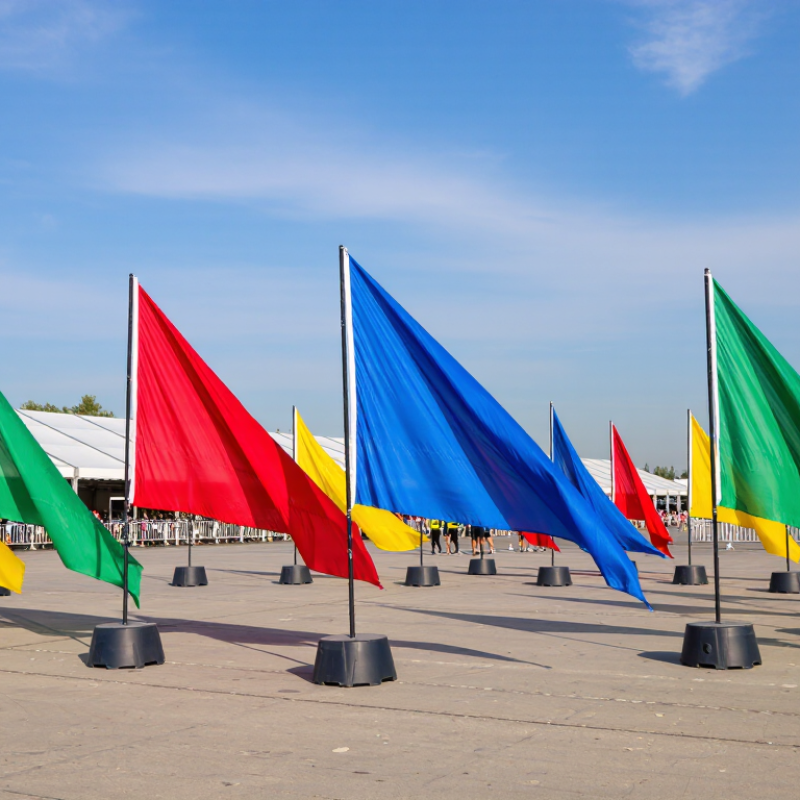
Top 10 Teardrop Pacer Flags for Global Buyers

What Teardrop Pacer Flags Are and How They Work

Teardrop pacer flags are lightweight, mobile signs used during races, training events, and organized group runs. A pacer carries one above the crowd, showing a target finish time or running group. The curved fabric catches air and creates a clear silhouette. Think of it as a moving sign.

The flag usually slides over a flexible pole and attaches near the handle. This structure keeps the printed surface open while the pacer moves. Its narrow top and wider lower section help reduce visual confusion from different directions. However, strong wind can twist the fabric or pull the pole sideways. That limitation matters for outdoor buyers.

During a race, participants look for the flag instead of checking their watches repeatedly. The pacer maintains a planned rhythm, often adjusting for hills, corners, and crowded sections. The displayed time is a guide, not a guarantee. Human pace varies.

For global buyers comparing the top ten teardrop pacer flags, fabric weight, stitching, pole flexibility, and print contrast deserve close attention. Bright colors improve visibility, but excessive graphics may weaken readability. A washable polyester fabric can handle repeated use, though poor drying may cause odor or mildew. Test the assembled flag before an event. Small faults become noticeable when hundreds of runners follow it.

Key Features That Matter to Global Buyers

Top 10 Teardrop Pacer Flags for Global Buyers

Key Features That Matter to Global Buyers

Global buyers should examine fabric quality before choosing a teardrop pacer flag. A dense polyester weave usually supports sharper graphics and better outdoor durability. Look for UV-resistant ink, reinforced stitching, and double-layer stress points. These details matter near busy roads, sports grounds, and entrances. Small defects become obvious in strong sunlight.

The pole system also deserves careful inspection. Fiberglass poles are lightweight, flexible, and easier to ship. Aluminum components can feel stronger, but they may increase package weight. A secure ground base prevents twisting on hard surfaces. For grass, a spike base may work well. For concrete, a weighted base is safer and more practical. Wind tolerance varies by design. No flag is genuinely weather-proof.

Global logistics can affect the purchase more than expected. Buyers should confirm folded dimensions, carton protection, replacement parts, and assembly instructions. Clear color specifications reduce disputes between digital proofs and printed fabric. Local safety rules may also limit placement near walkways or vehicle areas. A supplier with documented material testing, production samples, and responsive quality control offers stronger reliability. Still, printed colors can shift slightly between batches. That limitation should be discussed before payment.

Ten Teardrop Pacer Flag Designs Compared

Top 10 Teardrop Pacer Flags for Global Buyers

Ten Teardrop Pacer Flag Designs Compared

I compared ten teardrop pacer flag designs at outdoor stalls and sports events. Design one uses a compact single-pole frame, making transport simple. Design two adds a reinforced top seam for better shape retention. Design three has a wider teardrop body, offering stronger visual impact but catching more wind. Design four uses lightweight polyester and suits short promotions. Very portable. However, thin fabric may fade sooner under intense sunlight.

Design five includes double-sided printing, which improves viewing from busy walkways. Its heavier construction also needs a stronger base. Design six combines a fiberglass pole with a ground spike, giving reliable stability on firm soil. Design seven uses a cross base and water weight, making it more practical for concrete surfaces. Not always elegant. Design eight has a narrow profile that reduces wind pressure, though the lettering area becomes smaller. Buyers should check stitching, pole flexibility, and base compatibility before ordering.

Design nine uses a curved lower panel, helping graphics remain visible when the fabric moves. Design ten offers a taller format for distant recognition, but assembly takes longer. In my experience, 110–120 gsm polyester balances color, weight, and drying speed well. Still, I may favor portability too much. A flag that survives daily setup needs more than attractive printing. Review wind ratings, replacement parts, packaging quality, and local delivery conditions before choosing a design.

Top 10 Teardrop Pacer Flags for Global Buyers - Ten Teardrop Pacer Flag Designs Compared

No. Flag Design Typical Height Visible Area Recommended Fabric Pole System Base Options Best Use Wind Guidance Key Advantage
1 Classic Standard Teardrop 2.4 m / 7.9 ft Approx. 0.75 m² 110–115 g/m² knitted polyester 4-section fiberglass Cross base or ground spike Road races and finish areas Light to moderate wind; secure base required Balanced visibility and portability
2 Compact Travel Teardrop 1.8 m / 5.9 ft Approx. 0.50 m² 110 g/m² polyester 3-section fiberglass Small cross base or water base Traveling pacers and small events Calm to light wind Fits smaller vehicles and storage bags
3 Large Visibility Teardrop 3.4 m / 11.2 ft Approx. 1.15 m² 115 g/m² knitted polyester 5-section fiberglass Heavy water base or ground spike Large outdoor races and spectator zones Light to moderate wind with ballast Strong long-distance visibility
4 Dual-Sided Pacer Teardrop 2.8 m / 9.2 ft Approx. 0.90 m² Two-layer polyester construction 4-section fiberglass Cross base, water base, or spike Routes requiring messaging from both sides Light wind; increased load in stronger wind Readable from either direction
5 Reflective Night Teardrop 2.4 m / 7.9 ft Approx. 0.75 m² Polyester with reflective vinyl details 4-section fiberglass Weighted cross base or water base Night races and low-light checkpoints Light wind; use additional ballast if needed Improved visibility under vehicle headlights
6 Eco-Recycled Teardrop 2.4 m / 7.9 ft Approx. 0.75 m² Recycled polyester, approximately 110 g/m² 4-section fiberglass Cross base or ground spike Events with sustainability requirements Light to moderate wind Lower virgin-material content
7 High-Color Performance Teardrop 2.8 m / 9.2 ft Approx. 0.90 m² Dye-sublimated knitted polyester 4-section fiberglass Water base or heavy cross base Brand-neutral route identification Light to moderate wind with ballast Smooth full-color graphic coverage
8 Heavy-Duty Training Teardrop 3.0 m / 9.8 ft Approx. 1.00 m² 115–130 g/m² polyester 5-section fiberglass with reinforced sleeve Heavy water base or steel plate base Frequent training sessions and repeated setup Moderate wind with suitable ballast Reinforced construction for regular use
9 Water-Base Beach Teardrop 2.4 m / 7.9 ft Approx. 0.75 m² Quick-drying knitted polyester 4-section fiberglass Fillable water base Beach races, parks, and paved venues Light to moderate wind after filling base Stable base with easy emptying for transport
10 Minimalist Route Marker Teardrop 2.0 m / 6.6 ft Approx. 0.60 m² Lightweight 100–110 g/m² polyester 3-section fiberglass Ground spike or compact cross base Directional markers and small checkpoints Calm to light wind Low transport weight and quick assembly

Specifications are typical planning ranges for teardrop pacer flags. Actual performance depends on fabric construction, print coverage, pole quality, anchoring method, surface conditions, and local wind exposure.

Materials, Sizes, and Customization Options

Top 10 Teardrop Pacer Flags for Global Buyers: Materials, Sizes, and Customization Options

Global buyers usually compare ten practical choices: featherweight polyester, knitted polyester, recycled polyester, single-sided print, double-sided blockout, compact, standard, tall, indoor, and outdoor versions. Knitted polyester offers strong color penetration and easier folding. A 110–120 gsm woven polyester feels lighter and dries faster after rain. Recycled fabric can support sustainability targets, but buyers should request certification and traceability documents. Material claims need evidence.

Most teardrop pacer flags range from 2.4 to 5 meters high. Compact sizes suit indoor courts and crowded entrances. Tall versions provide stronger visibility across sports fields. Aluminum poles reduce weight, while fiberglass poles usually offer better flexibility. Ground spikes suit soil, but cross bases and water bags are safer for hard surfaces. There is no perfect size.

Customization normally includes full-color dye sublimation, reinforced sleeves, double stitching, edge webbing, sponsor panels, and replaceable flag skins. Dye sublimation remains widely used for polyester graphics because the color penetrates the fabric.

Smithers’ 2024 textile-printing market analysis identifies dye-sublimation as a major growth application in decorated polyester. Grand View Research also reported continued expansion in outdoor advertising, valued at over 38 billion US dollars in 2023. These reports are broad, not pacer-specific.

Buyers should still request wash testing, UV exposure results, seam samples, and wind-use guidance. I would not trust vivid samples alone. The pole, base, fabric, and printing process must be evaluated together.

International Buying, Shipping, and Compliance Factors

International buying changes how the top 10 teardrop pacer flags should be evaluated. A strong design is not enough. Buyers should verify fabric weight, stitching quality, pole sections, and base stability. Ask for a measured product drawing. Photos often hide weak seams.

Shipping conditions matter. A complete flag set may include fabric, poles, a ground base, and a carry bag. These parts can ship separately, increasing loss risks and import costs. Confirm packed dimensions, gross weight, carton protection, and replacement procedures before payment. Air freight is faster, but sea freight may suit larger orders. Delivery terms must clearly identify who handles transport, duties, insurance, and customs clearance.

Compliance requires careful paperwork. The commercial invoice should match the actual contents, quantities, values, and country of origin. Confirm the correct customs classification with a qualified broker. Some destinations may require material declarations, chemical information, or fire-performance documents for event textiles. Requirements can differ by venue, region, and use. Do not assume one certificate works everywhere.

Test samples outdoors. Wind exposes poor engineering quickly. A flexible pole, loose sleeve, or undersized base can create practical problems. I would also inspect color consistency under sunlight. This step costs time, but it prevents expensive reprints. My own buying view is imperfect: the cheapest landed price can look attractive, yet missing documents or damaged cartons may erase the savings. Keep written specifications and approve a pre-production sample.