Global demand for wood-based panels gives maple plywood buyers a broad, competitive market. FAO’s Global Forest Products Facts and Figures 2022 reports worldwide wood-based panel production of about 400 million cubic meters that year. That figure covers many panel types, not maple plywood alone. Still, it shows why buyers need to compare suppliers carefully.
Maple’s pale color and fine grain suit cabinets, furniture, interiors, and visible surfaces. But appearance is only part of the specification. Buyers should check face-veneer grade, core construction, thickness tolerance, bonding details, and available test documentation. The USDA Forest Products Laboratory’s Wood Handbook explains how wood properties vary with species, moisture, and grain direction. Those details matter when panels must stay flat and consistent across a large order. Ask for current product data, samples, and clear answers about quality control.
Details matter. A supplier’s published capacity does not guarantee every shipment will match the sample. Ask how defects are handled, how packaging protects edges, and whether production schedules fit your project. Verify applicable certifications and emissions documentation for the destination market; requirements differ by product and location. This guide reviews ten maple plywood suppliers for global buyers, focusing on product range, export readiness, communication, and evidence buyers can check. No list is perfect. Supplier information changes, and a polished website is not proof of reliable delivery. Use the shortlist to start due diligence, not replace it.

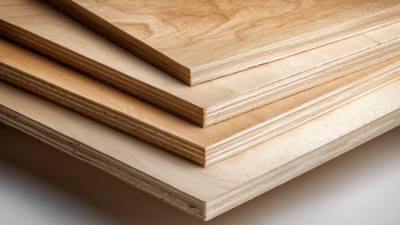
Maple plywood combines a pale, fine-grained face veneer with a layered core. The face may show subtle curl or mineral streaks; these are natural, not automatically defects. USDA Forest Products Laboratory’s Wood Handbook (2021) lists sugar maple’s specific gravity at about 0.63 for clear, dry wood. That figure describes solid maple, not a plywood panel’s strength. Core construction, thickness, and bonding matter too.
Grades mainly describe appearance and allowable face repairs. Under ANSI/HPVA HP-1, an A face is intended for a clean, paint-ready look, while lower grades permit more visible patches, discoloration, or other character. Check both face and back grades. A cabinet door may need a refined front, but a drawer interior can tolerate more variation. Grade names alone are not the whole story.
Maple-faced panels suit cabinets, furniture, shelving, wall panels, and retail fixtures where a light, even surface is useful. For example, a sample door under warm lighting can look noticeably different from one viewed beside a window. Ask for the panel’s core type, thickness tolerance, and finish compatibility, then inspect a full-size sample. One common mistake is choosing by veneer appearance alone; the core can affect screw holding and panel stability. For load-bearing work, verify the panel’s rated construction rather than assuming that a maple face makes it structural.

A reliable maple plywood supplier should prove consistency, not just show attractive face veneers. Request the panel grade, thickness tolerance, core construction, adhesive classification, and recent inspection records. Ask for samples from several production batches. Check the edges for gaps, glue lines, and uneven veneer layers. Small defects can become visible after machining.
Moisture control deserves close attention. The USDA Forest Products Laboratory’s Wood Handbook (FPL-GTR-282, 2021) reports about 9.9% tangential shrinkage for hard maple from green to oven-dry. Plywood’s cross-laminated layers limit movement, but poor drying or storage can still cause warping. Ask suppliers how they condition panels and record moisture content before packing. Then compare their answers with your own sample tests. Not every supplier measures the same way.
Traceability matters, too. Request documented wood origin and applicable chain-of-custody records, and verify that paperwork matches the shipment. For export orders, confirm packaging, fumigation or treatment requirements where applicable, and lead-time history. A low quotation may hide inconsistent core quality or costly rework. I still find supplier claims hard to judge without batch-level evidence. A clear, written specification helps. Keep the details.
| Top 10 Maple Plywood Suppliers for Global Buyers - Key Criteria for Evaluating Maple Plywood Suppliers | |||
|---|---|---|---|
| A practical comparison framework for assessing suppliers. These are evaluation criteria, not a ranking of named companies; confirm requirements against the destination market, product specification, and purchase contract. | |||
| No. | Evaluation Criterion | What Buyers Should Check | Useful Evidence to Request |
| 1 | Maple Face Veneer and Appearance | Specify whether the face is natural maple veneer and define the required appearance, such as color range, grain, patching, and allowable defects. Grade names and grading practices can vary between suppliers. | Current product photographs, written face-grade definitions, and approval samples representative of production. |
| 2 | Core Construction | Confirm whether the panel uses veneer, hardwood, or another core construction. Ask about voids, core gaps, and suitability for the intended use, machining, and edge finishing. | Panel construction specification, cross-section sample, and inspection criteria for core defects. |
| 3 | Dimensions and Tolerances | Agree on panel length, width, nominal thickness, squareness, and permitted tolerances. Requirements should be stated in the order rather than assumed to be universal. | Technical data sheet and a written tolerance schedule tied to the purchase specification. |
| 4 | Adhesive and Emissions Compliance | Match adhesive and formaldehyde-emission requirements to the destination market and end use. For example, U.S. buyers may need documentation for applicable TSCA Title VI requirements; other markets have their own rules. | Applicable test reports, compliance declarations, and product documentation identifying the tested panel construction. |
| 5 | Bond Quality and Intended Use | Verify whether the panel is intended for interior or exterior conditions and which bond-quality classification or test method applies. Do not infer exterior suitability from appearance alone. | Relevant bond-test reports, product-use classification, and written limitations for moisture exposure. |
| 6 | Moisture and Conditioning | Set moisture-related requirements according to the panel’s intended environment and the buyer’s manufacturing process. Storage and acclimation can affect panel performance after delivery. | Production or inspection records, packaging and storage guidance, and agreed measurement method where required. |
| 7 | Quality Control and Consistency | Assess how the supplier controls veneer matching, thickness, bonding, sanding, and defects across batches. Ask how nonconforming panels are identified and handled. | Quality-control plan, inspection checklist, sample inspection report, and documented corrective-action process. |
| 8 | Traceability and Responsible Sourcing | Check whether the supplier can document material origin and maintain traceability through production. If responsible-sourcing certification is required, verify the certificate’s scope and validity. | Chain-of-custody documents where applicable, valid certification details, and shipment-level traceability records. |
| 9 | Export Packaging and Logistics | Review protection against moisture and handling damage, pallet configuration, shipment documentation, lead time, and the supplier’s process for resolving transit claims. | Packaging specification, sample shipping marks, estimated production and transit schedule, and claims procedure. |
| 10 | Commercial Terms and Supply Reliability | Compare minimum order quantity, pricing basis, payment terms, capacity, repeat-order consistency, and communication during production. Evaluate the full landed cost, not unit price alone. | Formal quotation, production schedule, capacity confirmation, references where available, and written terms for delays or quality disputes. |
Selecting among ten maple plywood suppliers should start with the panel, not the sales brochure. Confirm whether maple is used on both faces, and ask for the core species, veneer thickness, adhesive type, and stated grade. The USDA Forest Products Laboratory’s Wood Handbook (FPL-GTR-282, 2021) reports sugar maple density at about 705 kg/m³ at 12% moisture content. This is a solid-wood reference, not a finished-panel rating. Still, it helps explain why a maple face can feel firm while the core determines much of the panel’s weight and stability. Details matter.
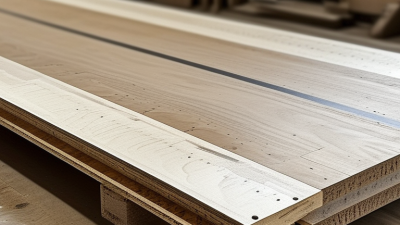
For a global shortlist, compare suppliers’ recent test reports, production capacity, export packaging, and ability to provide consistent thickness and moisture readings. Request a sample with a clear grade description, then inspect the edges for core gaps and the face for patches, sanding marks, or color shifts. Ask how claims are tested, not just whether a panel is “compliant.” A useful answer names the test method and report date. Vague paperwork is a warning.
Shipping can expose weak quality control. Check pallet protection, batch identification, and how the supplier handles damaged or off-spec sheets. Small trial orders help reveal communication delays and variation between batches. Even experienced buyers miss this sometimes. A supplier’s low quote may exclude testing, protective packing, or replacement terms; compare the full landed cost before ranking the ten candidates.
Maple plywood can look nearly identical in a product photo, yet vary in veneer grade, core construction, and sanding quality. Compare written specifications, not just sample images. Ask whether face veneers are graded consistently and whether the core uses hardwood, softwood, or mixed species. A small sample helps, but inspect edges and both faces too. Details matter.
Certification documents should match the product, facility, and shipment being quoted. Check forest-sourcing claims through valid chain-of-custody records, where applicable. For formaldehyde emissions, request current test reports and confirm they meet the destination market’s requirements. Some suppliers provide clear document trails; others offer certificates that need closer review. Ask for proof.
Production capability is more than a large factory or an impressive monthly output figure. Compare available thicknesses, panel sizes, veneer selection, and realistic lead times. Request details on moisture control, sanding tolerances, packaging, and inspection steps. If possible, review recent batch records or arrange a third-party inspection. Capacity claims deserve verification.
A supplier may handle standard panels reliably but struggle with unusual sizes or tight schedules. Discuss trial orders, defect allowances, and how replacements are handled before committing to volume. I would not rank suppliers by price alone; a low quote can hide inconsistent grading or incomplete paperwork. Even careful checks have limits, so keep written specifications attached to the purchase order.
When comparing maple plywood suppliers for international orders, compare like-for-like specifications before judging the quote. A low price can hide differences in face grade, core construction, thickness tolerance, or emissions classification. Ask each supplier for a dated quotation listing sheet size, nominal thickness, grade, quantity, and packing method. Keep the specifications identical. Check whether the price includes export packing, port charges, and inland delivery, or only factory pickup. Small omissions can reshape the landed cost.
Shipping deserves its own review. Request the production lead time, estimated transit window, loading port, and shipment terms in writing. Confirm how many sheets fit in a container and whether pallets protect edges from moisture and impact. Ask for photos of the actual bundle before loading. Useful, not decorative. For a first order, a pre-shipment inspection can verify dimensions, surface defects, and sheet count; agree on the inspection method before production. Transit estimates are not guarantees, and port congestion can add days.
Quality evidence should be specific, not just a polished catalogue. Request recent test reports, mill identification, and traceable batch details, then check that documents match the ordered product. A physical sample helps assess veneer appearance and sanding, but one sample cannot prove every sheet will match. That part is easy to overlook. Include an agreed remedy for shortages or damage in the purchase terms, with clear photo and claim deadlines. Some buyers focus too heavily on price. A slightly higher, transparent quote may be easier to manage than a cheap offer with vague packing, grading, or delivery details.

Signup our newsletter to get update information, promotion or insight.