
Blog

China Top 10 Roller Blind Clutch Manufacturers?

Roller blind systems may look simple, but their performance depends on a small component doing steady work. The Roller Blind Clutch controls lift, holds the fabric at the chosen height, and affects how smoothly a shade operates. For buyers, a poorly matched clutch can mean uneven movement, excess effort, or premature wear. Small part. Real consequences.

Market context helps explain why component sourcing matters. Grand View Research estimated the global window coverings market at approximately USD 30.8 billion in 2023, with a projected compound annual growth rate of 7.6% from 2024 to 2030. This figure covers window coverings broadly; it is not a clutch-market estimate. Still, it signals a substantial and evolving sector where product consistency and dependable supply can influence purchasing decisions.

This guide introduces ten China-based roller blind clutch manufacturers and suppliers for buyers to investigate. It considers visible product range, customization options, manufacturing information, and communication clarity. A polished website is not proof of factory capacity. Buyers should request drawings, load or cycle-test details, sample units, and current quality documents before making a decision. Ask directly. Some public company information is incomplete, so this shortlist should be treated as a starting point, not a verified ranking. Actual suitability depends on tube size, fabric weight, operating method, and order requirements. Those details are easy to overlook, and I would not overlook them.
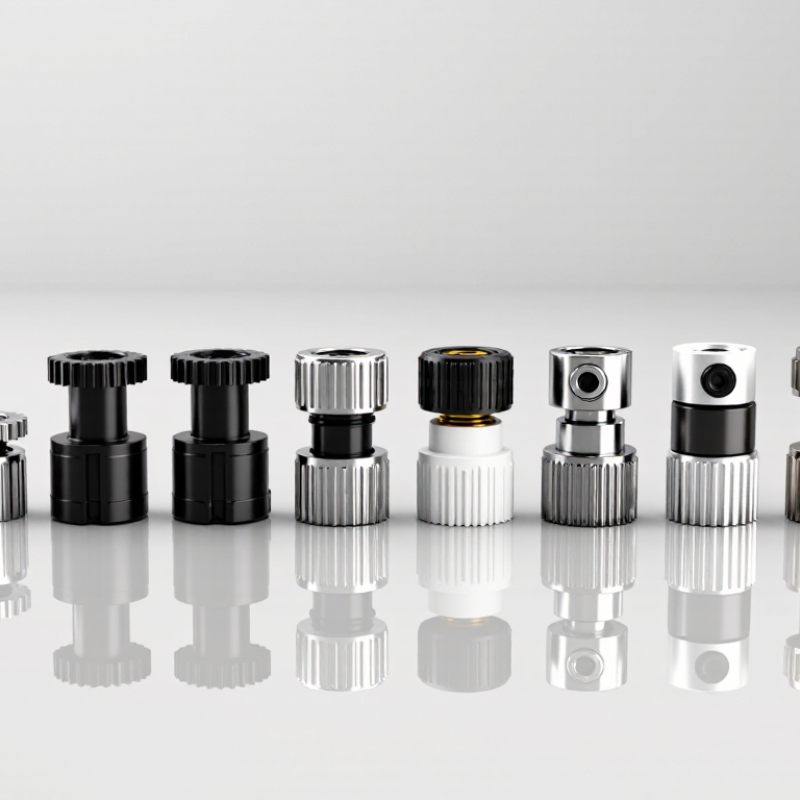
China Top 10 Roller Blind Clutch Manufacturers?

How Roller Blind Clutches Work and Where They Are Used

A roller blind clutch converts a small pull on a chain into controlled rotation of the roller. Inside the side fitting, a drive wheel turns a shaft, while a braking mechanism helps hold the fabric at the selected height. Pull down. The blind lowers. Pull the opposite side, and it rises. Clutches differ in gear design and load capacity, so fabric weight, tube diameter, and mounting alignment matter. A misaligned bracket can make the chain feel stiff; the clutch is not always the culprit.

These mechanisms are used in homes, offices, clinics, and hotels, where blinds manage glare, privacy, and daylight. Roller shades also come in light-filtering and blackout fabrics, but neither fabric type guarantees a particular energy saving. The U.S. Department of Energy’s Energy Saver guidance estimates that heat gain and loss through windows account for 25–30% of residential heating and cooling energy use; shade performance depends on fabric, fit, and position. Grand View Research estimated the global window coverings market at USD 31.5 billion in 2023, a broad market figure rather than a clutch-specific measure. That distinction is easy to miss. A well-matched clutch should move smoothly and hold steadily, yet real installations can still need adjustment.

Key Criteria for Evaluating Roller Blind Clutch Manufacturers in China

Grand View Research estimated the global window coverings market at USD 31.5 billion in 2023, with projected annual growth of 7.6% through 2030. This broad market includes blinds, shades, and other products; it does not measure roller blind clutches alone. Still, it signals why buyers should assess suppliers beyond price. Ask for clutch samples matched to your tube diameter, blind weight, and installation direction. Small details matter.

Request documented cycle-life, load, and slippage tests, including the test method and sample size. A smooth first pull proves little. Check whether the supplier records gear material, spring specifications, and production-batch numbers, then ask how defects are handled. Compare noise and operating effort across samples, not just catalogue figures. Ask for proof. Confirm that stated tolerances remain consistent across repeat orders, and review realistic lead times, minimum order quantities, and change-control procedures. A polished catalogue is not enough. One limitation: factory test results may not reflect years of use in a dusty window or a humid room, so independent verification can be worthwhile for demanding projects.

Key Criteria for Evaluating Roller Blind Clutch Manufacturers in China

Suggested buyer-assigned evaluation weights (%) for comparing manufacturers. These are planning guidelines, not measured market statistics or a supplier ranking.

Prioritize consistent quality control and testing, then verify production capacity and traceability of materials and components. Adjust the weights to match your product requirements, order volume, and destination-market obligations.

Profiles of 10 Notable Roller Blind Clutch Manufacturers in China

China’s roller blind clutch sector includes specialists with different strengths. These ten profiles are capability-based, not a ranked or independently verified company list.

One maker focuses on compact molded housings for standard blinds.
Another combines metal shafts with reinforced clutch wheels for heavier fabrics.
A third offers custom gear ratios for smoother chain operation.
A fourth emphasizes consistent molding and close dimensional checks.
A fifth supports private-label production and tailored packaging.
A sixth supplies components for high-volume window-covering lines.
A seventh makes clutch assemblies suited to narrow headrails.
An eighth focuses on corrosion-resistant parts for humid interiors.
A ninth provides small-batch customization for unusual tube sizes.
A tenth integrates clutches with brackets and related hardware.

The details matter. Ask each supplier for material specifications, load-test results, and sample assemblies. Check chain movement by hand; uneven resistance can signal poor alignment. Request measurements for tube fit and mounting clearance, too. A polished sample is useful, but production consistency matters more. Some suppliers may excel at customization yet lack short lead times. That trade-off deserves a direct conversation before ordering.

Comparing Product Range, Customization, and Quality Standards

When comparing China’s top roller blind clutch manufacturers, look beyond catalog size. A broad range may include bead-chain clutches, cord tensioners, brackets, and options for different tube diameters. Check whether the supplier provides load ratings and clear dimensional drawings. A clutch that fits a sample tube may still perform poorly in a full blind assembly. Small details matter.

Customization is useful when a project needs a specific chain length, housing color, mounting arrangement, or packaging format. Ask how tooling changes affect minimum order quantities and lead times. Request a pre-production sample, then cycle it repeatedly with the intended fabric weight. Listen for grinding, check for chain slippage, and inspect whether the housing develops cracks. A polished sample is not enough. Production consistency needs evidence.

Quality standards deserve careful comparison. Request current inspection procedures, material specifications, and relevant test reports, then confirm that they match the product being quoted. Ask how incoming components and finished clutches are checked, and how defects are recorded. These questions can reveal more than a certificate alone. A checklist cannot catch every issue, though; supplier answers may sound precise while leaving practical gaps. Clarify those gaps with measurements, photos, and written acceptance criteria before placing an order.

China Top 10 Roller Blind Clutch Manufacturers? - Comparing Product Range, Customization, and Quality Standards

This table is a manufacturer-comparison guide, not a verified ranking of ten companies. It contains no company or brand names; confirm each supplier’s specifications, test reports, and certifications directly before purchasing.

Comparison Dimension What to Compare Useful Questions for Suppliers Evidence to Request
1. Product Range Manual chain-operated clutches, brackets, idle ends, chain guides, and compatible roller-tube components. Which clutch types and related components are available for the intended blind system? Current product catalogue, drawings, and component list.
2. Clutch Mechanism Mechanism design and operation can differ by model; compare smoothness, noise, chain movement, and installation requirements. How is operating performance evaluated, and what test method is used? Product specifications and documented operating-test procedure.
3. Tube Compatibility Tube diameter, shape, end fitting, and interface dimensions must match the proposed assembly. Which tube sizes and interface profiles are supported for this exact model? Dimensioned drawings, compatibility chart, and sample-fit confirmation.
4. Load and Blind Size Permitted blind dimensions and operating load depend on the clutch model and the complete blind assembly. What are the stated limits, and under what configuration and test conditions were they established? Model-specific ratings and supporting test conditions; do not rely on a generic range.
5. Customization Potential options include dimensions, component geometry, colors, materials, and packaging, subject to tooling and minimum order quantities. Which changes are available, and what are the tooling cost, lead time, and minimum order quantity? Written quotation, approved drawings, and sample approval record.
6. Materials and Finish Ask for the material and finish of each relevant component; specifications may vary across parts in one assembly. What materials are used for the housing, internal parts, and brackets? Are material changes controlled? Bill of materials, material declarations, and finish specifications.
7. Durability Testing Cycle-life results are meaningful only when the test setup, load, operating conditions, and acceptance criteria are stated. How many operating cycles were tested, at what load, and what constitutes a failure? Model-specific test report with method, conditions, sample size, and results.
8. Safety Requirements For complete internal-blind systems, EN 13120 addresses performance requirements, including relevant safety provisions. Applicability depends on the product and market. Which safety requirements apply to the finished blind system in the target market? Applicable test reports and compliance documentation for the finished product.
9. Quality Management ISO 9001 specifies requirements for a quality management system; it is not, by itself, product certification. Is the manufacturing site covered by a current quality-management-system certificate? Certificate showing the legal entity, site or scope, issuing body, and validity dates.
10. Chemical and Market Compliance REACH obligations depend on the substances and products placed on the EU market. RoHS concerns restricted substances in electrical and electronic equipment and may not apply to a purely mechanical clutch. Which regulations apply to the supplied product and destination market? Are declarations specific to the supplied materials and model? Applicable declarations, material information, and supporting laboratory reports where required.
Standards and regulatory requirements can vary by product configuration and destination market. Verify current requirements with the relevant standards body, regulator, or qualified compliance professional.

How to Choose a Chinese Roller Blind Clutch Supplier

When comparing Chinese roller blind clutch suppliers, start with the blind specifications, not the catalogue price. Provide tube diameter, fabric weight, drop length, and control-side details. Ask for a measured operating torque and the clutch’s rated load. A sample should run smoothly, without chain slipping or a sudden jump near the bottom of the blind. Test more than one unit. One perfect sample proves little.

The IEA’s 2023 Global Status Report for Buildings and Construction estimates that building operations used 30% of global final energy in 2022. That figure does not prove a particular clutch saves energy, but it highlights why dependable operation matters in buildings. Request the supplier’s cycle-test method, sample size, failure criteria, and inspection records. Check whether the clutch fits your tube and bracket tolerances, then confirm that production batches use the same materials and assembly process as approved samples. Ask for written lead times and batch traceability, too. A factory visit or live production video can help, though neither replaces testing. I have seen smooth hand operation mistaken for durability; it is an easy mistake. A small pilot order may reveal fit or noise problems before a full shipment.