
Blog

Top 10 Animatronic Ankylosaurus Suppliers Worldwide

The market for immersive dinosaur attractions is expanding alongside visitor demand for richer, more physical storytelling. Grand View Research valued the global amusement parks market at approximately USD 51.24 billion in 2023. It also projects continued growth through 2030. The TEA/AECOM Theme Index 2023 recorded about 244.6 million visits across the world’s top 25 theme parks. These figures do not measure Animatronic Ankylosaurus sales directly. They still reveal a growing commercial environment for large-scale attractions.

Ankylosaurus models now appear in museums, family entertainment centers, zoological parks, and themed exhibitions. Their appeal depends on more than size. A convincing model needs balanced leg movement, textured armor, controlled tail motion, realistic breathing, and safe visitor spacing. Paleontologist Dr. Victoria Arbour, a leading ankylosaur researcher, has described these animals as “heavily armored, but not biologically simple.” That distinction matters for suppliers. A stiff dinosaur may look impressive in photographs, yet feel lifeless beside a moving habitat.

This guide reviews the Top 10 Animatronic Ankylosaurus Suppliers Worldwide through practical criteria. These include engineering quality, skin durability, maintenance access, customization, delivery experience, and after-sales support. Supplier claims require careful checking. Some brochures promise “museum-level realism” without independent testing. That should invite questions. Buyers should inspect motion samples, control systems, wiring protection, and replacement-part policies before signing contracts. The strongest suppliers combine paleontological research with dependable fabrication. Even then, no ranking is perfect. Project budgets, climate, audience age, and installation space can change the final choice.
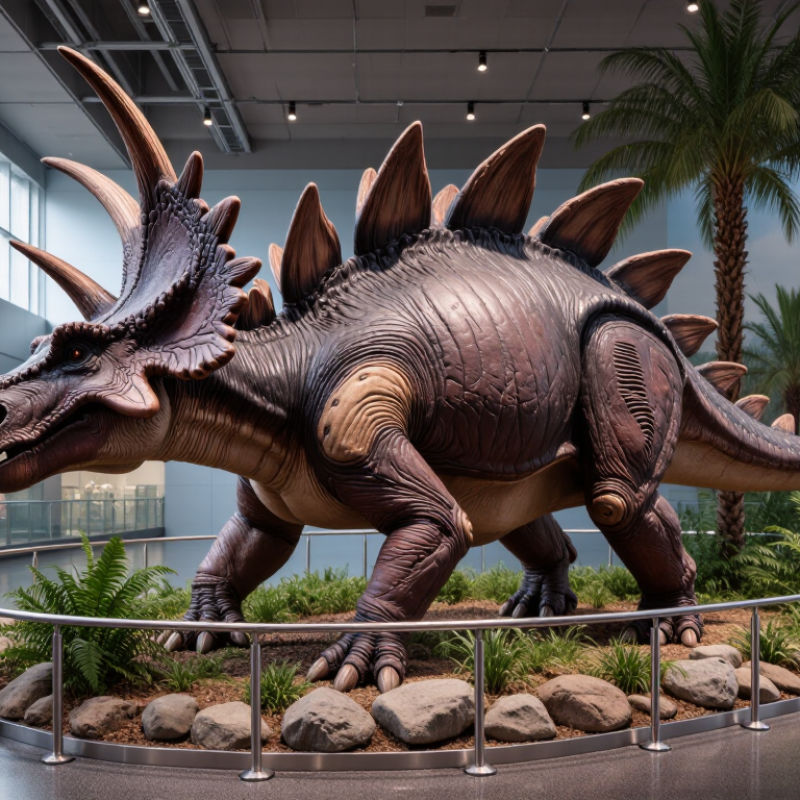
Top 10 Animatronic Ankylosaurus Suppliers Worldwide

Definition and Role of Animatronic Ankylosaurus Suppliers

Animatronic Ankylosaurus suppliers design, manufacture, and support robotic dinosaur figures for museums, themed attractions, educational centers, and touring exhibitions. Their role extends beyond selling a large model. They combine paleontological references, mechanical engineering, sculpting, electronics, programming, and site installation. A credible supplier should explain movement limits, material ratings, maintenance intervals, and operator training in clear documents.

Industry demand supports this specialized work. The TEA/AECOM Theme Index 2023 recorded about 244.6 million visits across the world’s top 25 theme parks, showing the scale of experience-based entertainment. Grand View Research has also identified animatronics as a growing market, driven by immersive attractions and interactive exhibits. These figures do not guarantee every project will succeed. Visitor expectations change quickly.

A professional supplier converts a fossil reference into controlled motion. The tail may swing within a measured radius, while the head turns slowly beside a textured display wall. Pneumatic systems, electric actuators, sensors, and sound controls must work together without creating unsafe pinch points. Suppliers also coordinate shipping crates, assembly schedules, weather protection, and replacement parts. Experience matters here. A beautiful prototype can still fail in dust, heat, or heavy daily operation. Some specifications remain imperfect, especially when budgets restrict testing. Buyers should request factory demonstrations, inspection records, load calculations, and service response terms. Independent verification is wiser than attractive promises.

Key Technologies Used in Animatronic Ankylosaurus Models

Top 10 Animatronic Ankylosaurus Suppliers Worldwide

Key Technologies Used in Animatronic Ankylosaurus Models

Modern animatronic ankylosaurus models combine mechanical engineering, robotics, and practical show-control design. The International Federation of Robotics reported 541,302 industrial robots installed worldwide in 2023. This growth supports better servo motors, precision gearboxes, and compact controllers for dinosaur exhibits. Reliable models often use coordinated actuators for the jaw, tail, shoulders, and eyelids. Each movement needs controlled acceleration. Sudden motion looks artificial.

A convincing skin system usually combines foam, silicone, fiberglass, and flexible polymers. Designers sculpt skin folds around movement zones, especially the neck and tail base. Embedded pressure sensors can detect contact, while infrared or time-of-flight sensors help prevent collisions. Some systems also use pre-programmed motion curves with sound triggers. The result feels more alive. It is not truly intelligent.

Power management remains a difficult engineering issue. Large models may require industrial power supplies, battery backup, and thermal protection inside narrow body cavities. ASTM F24 guidance for amusement rides encourages structured inspection and safety evaluation, although exhibit dinosaurs may follow different local requirements. Weather-resistant connectors and sealed control cabinets are essential for outdoor installations.

Industry experience shows that maintenance access matters as much as appearance. A hidden actuator is useless if technicians cannot reach it quickly. Supplier specifications should include duty cycles, noise levels, operating temperatures, and replacement-part availability. Some designs still overuse dramatic movement. More restraint could improve realism.

Top 10 Animatronic Ankylosaurus Suppliers Worldwide

Top 10 Animatronic Ankylosaurus Suppliers Worldwide

The Top 10 Animatronic Ankylosaurus Suppliers Worldwide should be judged by engineering evidence, not impressive showroom videos. Grand View Research estimated the global animatronics market above US$6 billion in 2023. MarketsandMarkets projects strong growth through 2028, driven by museums, themed attractions, and educational venues.

A reliable supplier should provide movement specifications, service records, and realistic production timelines. Check jaw movement, tail response, foot stability, and skin flexibility. Details matter. A convincing Ankylosaurus needs controlled hydraulic or electric motion, quiet operation, and stable balance on uneven exhibition floors. Ask for cycle-test results, weather-resistance ratings, crate dimensions, and replacement-part procedures. Silicone skin may look lifelike, but careless handling can create visible tears around joints.

Regional strength also matters. Suppliers in Asia may offer broader fabrication capacity, while European and North American workshops often emphasize documentation and project coordination. This is not universal. A ranking is imperfect. My weighting would favor verified installations, engineering transparency, safety testing, and after-sales support over low quotations. The 2024 Global Experience Index from the Themed Entertainment Association shows continued public interest in immersive attractions, but visitor expectations are becoming less forgiving. A supplier that cannot explain maintenance intervals, emergency stopping, or indoor humidity limits deserves careful review. Professional buyers should request references, inspect a working prototype, and compare at least three technical proposals before selecting among the top ten.

Supplier Comparison by Quality, Customization, and Pricing

Top 10 Animatronic Ankylosaurus Suppliers Worldwide

Comparing ten suppliers requires more than attractive catalog photographs. MarketsandMarkets forecasts double-digit growth for the global animatronics market through 2028. This indicates stronger competition, but not equal manufacturing quality. Experienced buyers should inspect frame materials, actuator brands, movement cycles, and control-system stability. Fiberglass shells resist impact, while silicone skin improves facial realism. However, silicone needs careful climate control. Ask for factory videos, load testing, waterproof ratings, and a written warranty. A tail should move smoothly, not jerk like a loose hinge.

Customization separates practical suppliers from ordinary resellers. Confirm height, walking speed, head rotation, lighting, sound effects, and visitor-distance sensors. Outdoor parks may require UV-resistant paint, sealed electronics, and drainage beneath the feet. Indoor museums usually prioritize quiet motors and detailed skin texture. According to Grand View Research, the amusement park market is expected to grow steadily through 2030, increasing demand for distinctive guest experiences. Yet bigger dinosaurs are not always better. Tight exhibition spaces can make a six-meter model difficult to operate.

Pricing should include sculpture, programming, crating, shipping, installation, training, and spare parts. Public quotations often vary widely because these items are separated. Low bids may exclude software updates or weather protection. High bids may reflect genuine engineering, but sometimes they reflect decoration more than durability. Request three comparable specifications and a maintenance schedule. This is imperfect, admittedly. Suppliers rarely publish failure-rate data, so buyers must judge reliability through references, testing records, and direct factory questions.

Top 10 Animatronic Ankylosaurus Suppliers Worldwide - Supplier Comparison by Quality, Customization, and Pricing

An anonymized comparison of supplier profiles for museums, theme parks, educational attractions, exhibitions, and commercial installations.

Data basis: The figures below are indicative market benchmark ranges for custom animatronic dinosaur projects. Final specifications, prices, delivery schedules, compliance documents, and warranty terms should be confirmed through a formal quotation and technical review.
Comparative Supplier Matrix
Rank Supplier Profile Primary Production Region Typical Model Scale Movement System Exterior Skin Customization Capability Quality Control Indicative Unit Price (USD) Typical Lead Time Warranty Range Overall Score
1 Supplier Profile 01 East Asia 5–8 m long; life-size exhibition models Programmable electric actuators; head, jaw, tail, legs, and body motion Silicone or reinforced latex over steel frame Very high; custom colors, armor patterns, sounds, and motion sequences Factory testing, movement-cycle inspection, electrical safety checks $18,000–$42,000 45–75 days 12–24 months 9.1 / 10
2 Supplier Profile 02 East Asia 4–7 m long; indoor and outdoor display sizes Electric hydraulic or servo-assisted motion; programmable control unit Silicone rubber with UV-resistant paint options Very high; pose, texture, lighting, audio, and remote-control options Load testing, paint inspection, water-resistance review $20,000–$48,000 50–85 days 12–24 months 8.9 / 10
3 Supplier Profile 03 North America 3–6 m long; premium museum and attraction models Servo motors with digital motion programming and synchronized audio High-detail silicone with fiberglass or composite support High; strong focus on scientific presentation and visitor interaction Documented inspection procedures and commissioning support $35,000–$85,000 70–120 days 12–36 months 8.8 / 10
4 Supplier Profile 04 Western Europe 4–8 m long; high-detail public installations Electric actuators with PLC-based control and emergency stop system Silicone, latex, and molded composite components High; bespoke anatomy, branded environments, and interactive programming CE-oriented electrical review, movement testing, installation checks $45,000–$110,000 90–150 days 12–24 months 8.7 / 10
5 Supplier Profile 05 East Asia 3–7 m long; standard and custom attraction formats Electric pneumatic-assisted mechanisms; remote-control operation Reinforced latex or silicone with weather-resistant coating High; moderate-to-advanced options for sound, lighting, and movement Pre-shipment operation test and component inspection $15,000–$36,000 40–70 days 12–18 months 8.4 / 10
6 Supplier Profile 06 South Asia 4–6 m long; mid-size commercial display models Electric motors with basic programmable movement cycles Latex or silicone skin; optional protective topcoat Medium to high; custom dimensions, colors, and sound effects Visual inspection, movement test, packing inspection $13,000–$30,000 45–80 days 12–18 months 8.1 / 10
7 Supplier Profile 07 East Asia 5–10 m long; large outdoor display models Heavy-duty electric drive with optional hydraulic components Weather-resistant latex, silicone, and fiberglass armor elements High; strong capability for large-scale body structure and outdoor finishing Frame inspection, weatherproofing review, full-motion testing $22,000–$55,000 60–100 days 12–24 months 8.0 / 10
8 Supplier Profile 08 Eastern Europe 3–6 m long; indoor educational and event models Servo-driven head, jaw, tail, and forelimb movement Silicone or latex with hand-finished texturing Medium to high; emphasis on anatomy, textures, and educational accuracy Assembly inspection, control-system test, final visual review $24,000–$58,000 75–120 days 12–24 months 7.9 / 10
9 Supplier Profile 09 Latin America 3–5 m long; regional attractions and touring exhibitions Basic-to-intermediate electric motion with audio integration Reinforced latex with fiberglass structural elements Medium; custom paint, signage integration, and selected movement options Basic operational testing and installation support $16,000–$38,000 60–100 days 12–18 months 7.6 / 10
10 Supplier Profile 10 Oceania 2.5–5 m long; compact visitor-experience models Servo motors with interactive sensors and pre-set routines Silicone or latex with optional fire-retardant treatment Medium; good for compact footprints, interactive features, and themed finishes Site-oriented testing, electrical checks, and commissioning review $28,000–$65,000 80–130 days 12–24 months 7.5 / 10

Selection Criteria for Buyers and Exhibition Organizers

Top 10 Animatronic Ankylosaurus Suppliers Worldwide

When selecting an animatronic Ankylosaurus, buyers should examine movement quality, construction, and service evidence. A convincing model should show natural tail motion, steady breathing effects, and controlled head movement. Ask for workshop videos, not only polished exhibition footage. Small jerks may reveal weak programming or poor maintenance.

Exhibition organizers must measure more than appearance. Check the dinosaur’s footprint, doorway clearance, operating noise, and power requirements before signing an order. Confirm the supplier provides installation guidance, spare parts, technician support, and a written maintenance schedule. Materials should suit the venue, especially outdoor displays exposed to dust, humidity, or changing temperatures. Local safety requirements and electrical rules also need verification.

Supplier evaluation becomes clearer with a practical scorecard. Compare production experience, delivery records, customization ability, warranty terms, and documented client references. Request realistic timelines for design approval, factory testing, shipping, installation, and repairs. A live test should include repeated starts, stops, lighting changes, and emergency shutdowns. Do not judge from one perfect performance. Real venues are less forgiving. My own selection process has sometimes overvalued visual detail and underestimated service response. That mistake can turn an impressive exhibit into a costly obstruction. A reliable supplier explains limitations openly and records every technical agreement.