China Top 10 Konjac Green Bean Noodles Manufacturers
China has become an important sourcing base for Konjac Green Bean Noodles, serving retailers, foodservice companies, and private-label brands worldwide. This guide introduces ten manufacturers that deserve closer evaluation, not automatic approval. Their product ranges may include dried noodles, instant packs, low-calorie meal solutions, and customized formats for export markets.
The selection focuses on practical evidence. Key factors include ingredient quality, glucomannan content, green bean starch proportions, texture, drying methods, packaging, and production consistency. Factory certifications also matter. Buyers should verify current HACCP, ISO, BRCGS, or other relevant documentation directly with each supplier. Certificates can expire.
Texture reveals a great deal.
A reliable manufacturer should explain its raw material sources, processing controls, shelf-life testing, and allergen management procedures. Sample testing is essential. A noodle may look transparent in a catalog but become fragile after boiling. Another may remain pleasantly chewy but carry an unwanted odor.
This article also considers export experience, minimum order quantities, private-label support, communication quality, and responsiveness to technical questions. These details often affect long-term cooperation more than a low quotation. Still, no ranking can fit every buyer. A restaurant chain may prioritize stable bulk supply, while an online brand may need attractive retail packaging and smaller orders.
The “top ten” label should therefore be viewed as a starting point, not a permanent verdict. Market conditions, equipment, certifications, and customer feedback can change. Careful buyers should request samples, compare specifications, review inspection records, and confirm compliance with destination-market requirements before placing an order. That cautious step may feel slow. It usually saves trouble later.
Konjac Green Bean Noodles: Ingredients, Features, and Production Methods
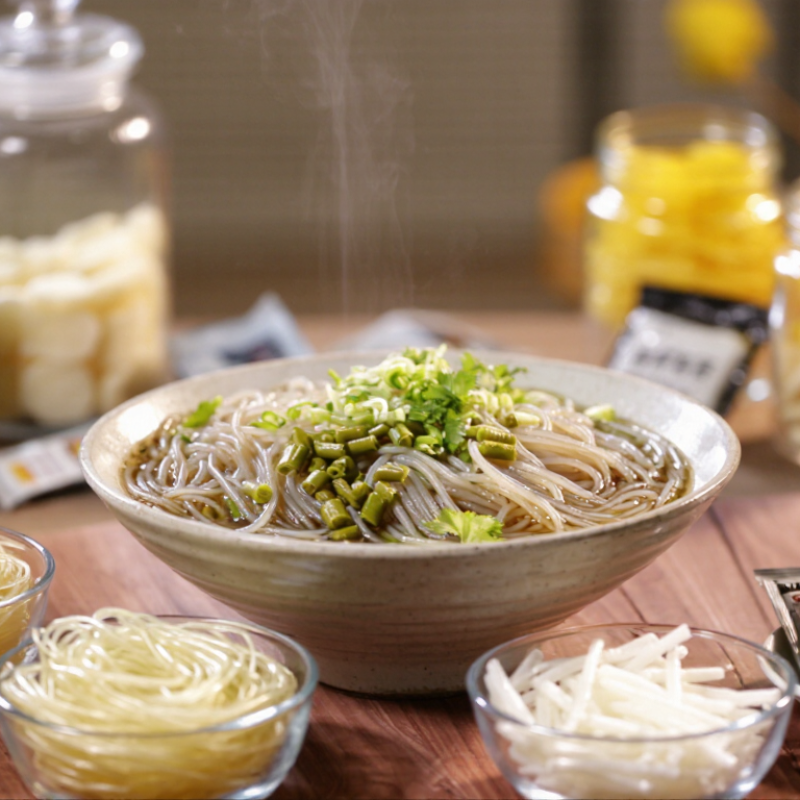
Konjac green bean noodles combine konjac glucomannan with mung bean starch and water. Some formulas add tapioca starch, salt, or a permitted alkaline setting agent. Ingredients vary, so the label matters more than the product name. These noodles are often translucent, springy, and low in fat. Their soft surface holds light sauces well. They also absorb seasoning after a short soak. They are not magic food.
Production begins by hydrating konjac powder and dispersing it evenly through the starch mixture. Poor mixing can create lumps and weak strands. The blended paste is heated, then pushed through a die to form noodle shapes. Heat helps the glucomannan set and gives the noodles their elastic bite. After setting, workers rinse the strands to remove excess surface residue. Some factories sell them fresh in water, while others dry them for longer storage. Moisture control is critical.
A reliable manufacturer checks ingredient identity, viscosity, texture, moisture, and microbiological safety by batch. Traceable records can reveal problems before shipment. Packaging should protect the noodles from leakage, contamination, and excessive heat. In practical evaluations, texture may differ between batches, even with identical recipes. Too much konjac can feel rubbery, while too much starch may produce a dull, fragile bite. This balance still requires adjustment. Claims about nutrition should match verified testing, not attractive assumptions.
How to Evaluate China’s Konjac Green Bean Noodle Manufacturers
Evaluating China’s konjac green bean noodle manufacturers requires more than comparing prices. Industry reports from Grand View Research and IMARC place the global konjac market near USD 1 billion in 2023–2024, with continued growth expected. This expansion attracts new processors, but market growth does not guarantee manufacturing quality. Ask for recent production records, ingredient specifications, and batch-level traceability.
A reliable factory should explain its konjac powder source, mung bean content, water ratio, and drying temperature. Request certificates for ISO 22000 or HACCP, then verify their validity with the issuing body. Do not treat certification alone as proof. Independent laboratory testing should cover moisture, microbial limits, heavy metals, additives, and nutritional claims. China’s food safety framework, including GB 2760, should guide additive checks for products sold domestically or exported.
Inspect the noodles physically. Good strands should remain elastic after boiling, without a strong alkaline smell or excessive surface starch. Review at least three recent batches, not one perfect sample. Production capacity also needs evidence: check equipment, shift records, packaging lines, and monthly output. A low quotation may hide unstable raw materials or weak quality control. I would also test a small shipment before signing a long contract. That step costs more initially. It can expose texture changes, broken strands, or labeling errors that documents miss. Manufacturer evaluation should balance technical evidence, transparent communication, and repeatable product performance.
China’s Top 10 Konjac Green Bean Noodle Manufacturers
China’s Top 10 Konjac Green Bean Noodle Manufacturers reflect a growing focus on low-calorie, plant-based foods. The strongest producers usually combine konjac flour with mung bean starch for a springy texture. Their factories often use automated mixing, steaming, cutting, and drying lines. During supplier reviews, I look for stable noodle width, clean packaging rooms, and batch records. These details reveal more than attractive product photos. Reliable manufacturers should provide ingredient specifications, microbiological reports, and traceable production dates. They should also explain how they control moisture, odor, and breakage during transport.
A practical ranking should consider more than production volume. Export experience, response speed, customization ability, and quality consistency also matter. Some factories perform well in samples but struggle with large orders. That weakness deserves attention. A careful buyer can request three production batches and compare cooking time, firmness, and soup clarity. Independent testing adds confidence, especially for overseas distribution. Certifications may support credibility, but they do not replace factory audits or clear communication. Rankings can change each year.
Tips: Request a small trial order before signing a long-term agreement. Check the ingredient list carefully. Confirm whether the noodles require refrigeration or special storage. Ask for shelf-life evidence under realistic conditions. Visit the facility when possible, or use a qualified inspection service. Keep written records of every agreed specification. Even small differences can affect customer satisfaction.
OEM Services, Export Capabilities, and Buyer Selection Tips
China Top 10 Konjac Green Bean Noodles Manufacturers
When comparing leading konjac green bean noodle manufacturers, inspect more than product photos. Ask for ingredient specifications, allergen controls, production flow, and recent test reports. A dependable supplier should explain the konjac-to-mung-bean ratio clearly. Texture matters. Noodles should remain springy after eight to ten minutes of cooking, without a strong odor or excessive breakage. Request samples from different batches, not one carefully selected carton.
OEM service should cover formula adjustment, noodle diameter, serving size, packaging materials, artwork checks, and private-label documentation. Confirm minimum order quantities and pilot-batch costs in writing. A useful factory can discuss moisture control, sealing quality, storage temperature, and expected shelf life. Details like carton strength and pallet configuration affect damage rates during ocean transport. Communication may still be imperfect, especially across time zones. Record every specification.
Export capability requires practical evidence. Review food safety certifications, traceability records, customs documents, and experience with your destination market. Ask whether the factory can provide commercial invoices, packing lists, certificates of origin, and compliant labels. Verify the responsible contact, inspection process, lead time, and Incoterms before paying a deposit. Video tours help, but they do not replace independent audits or pre-shipment inspections. No checklist is perfect. A polished presentation can hide weak batch control, so buyers should compare test results, factory answers, and delivered samples before choosing a long-term partner.
China Top 10 Konjac Green Bean Noodles Manufacturers: Buyer Selection Priorities
This buyer-weighted framework highlights the main factors used when comparing konjac green bean noodle manufacturers. Product consistency, OEM support, export compliance, and food safety systems typically receive the highest priority because they directly affect retail acceptance, regulatory clearance, and supply reliability.