Top Tips for Choosing the Best Medical Air Purifier?
Indoor air quality is crucial for health, particularly in medical settings. A reliable medical air purifier can significantly reduce airborne contaminants. According to a report by the World Health Organization, indoor air pollution is linked to 4.3 million deaths annually. This statistic emphasizes the urgency of choosing an effective air purification system.
Not all medical air purifiers are created equal. Some models might fail to capture harmful particles like viruses or allergens. Studies show that certain HEPA filters can remove up to 99.97% of particles as small as 0.3 microns. Yet, many consumers overlook certification and specifications when selecting these devices. An informed pick can make a significant difference in health outcomes.
Understanding your space and its specific needs is essential. For instance, hospitals may require advanced purifying technologies, while home users might need simpler solutions. This variation highlights the importance of careful consideration. The right medical air purifier not only improves air quality but also enhances overall well-being. Make your choice wisely.
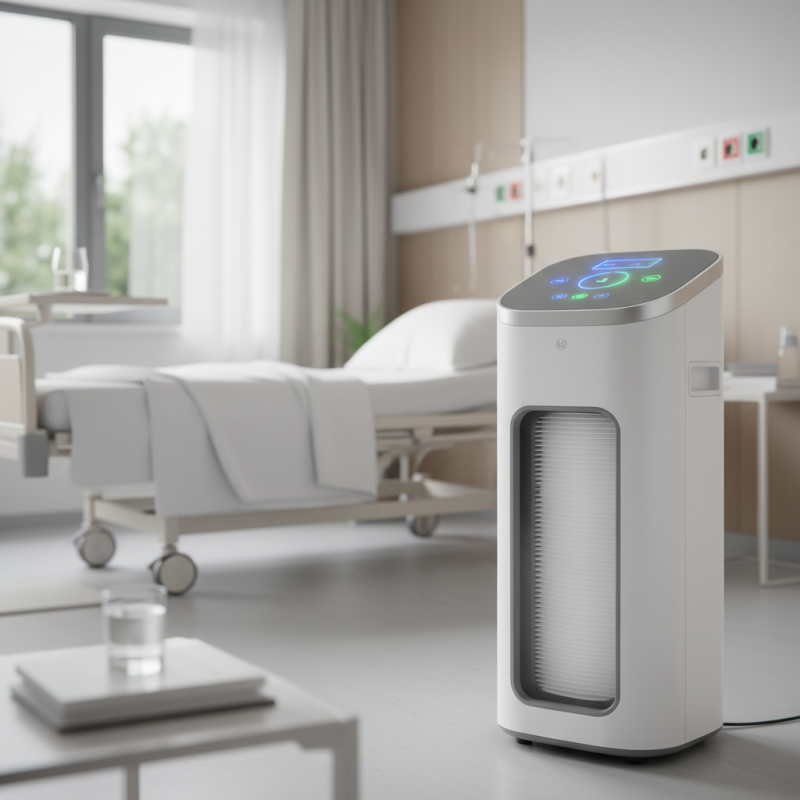
Understanding the Importance of Air Purification in Healthcare Settings
Air quality plays a crucial role in healthcare settings. According to the World Health Organization, about 4.2 million deaths annually result from exposure to indoor air pollution. Patients with compromised immune systems are particularly vulnerable. Therefore, ensuring a clean air environment is essential for recovery and overall health.
When choosing a medical air purifier, consider the type of particles it removes. HEPA filters can capture particles as small as 0.3 microns. This includes bacteria and viruses. An air purifier with activated carbon can also eliminate odors and VOCs. These components can significantly improve the air quality in hospitals and clinics.
Tip: Always check the Clean Air Delivery Rate (CADR). A higher CADR means the purifier works more efficiently. Another consideration is the noise level. A quieter device is typically better for patient comfort. Don’t overlook maintenance; regular filter changes are key to optimal performance. These choices can transform a healthcare facility's air quality and influence patient recovery positively.
Top Tips for Choosing the Best Medical Air Purifier
| Feature | Importance | Recommended Specifications |
| HEPA Filter | Captures 99.97% of particles as small as 0.3 microns, improving air quality. | True HEPA filter, compliant with ANSI/ISEA Z87.1 standards. |
| CADR Rating | Indicates the volume of filtered air delivered, essential for room size efficiency. | Minimum of 100 for small rooms, higher for larger areas. |
| Noise Level | Important for maintaining a quiet environment in healthcare settings. | Less than 50 dB on the highest setting. |
| Maintenance Requirements | Ease of filter replacement is crucial to ensure ongoing performance. | Filter replacements available every 6-12 months. |
| Certifications | Ensures the purifier meets necessary safety and efficacy standards. | Certifications from AHAM, Energy Star, or ETL listed. |
Key Features to Look for in a Medical Air Purifier
When choosing a medical air purifier, you should consider several key features. Filtration efficiency is critical. Look for purifiers that can capture particles as small as 0.3 microns. High-Efficiency Particulate Air (HEPA) filters are a popular choice. They trap allergens, dust, and even some viruses effectively.
Noise level is another important factor. Some purifiers can be loud, distracting in a quiet home or clinic. Consider checking decibel ratings. A quieter model may create a more calming atmosphere.
Portability is a useful feature too. If you need to move the purifier between rooms, lightweight models are ideal. Some even have wheels for easy transportation. It's essential to find a balance between size and power. A compact unit might not clean effectively in a larger space.
Maintenance should not be overlooked. Some filters require regular replacement, while others might need cleaning less often. Evaluate the cost and convenience of filter changes. An air purifier that is easy to maintain will save you time and money in the long run.
Types of Air Filters Commonly Used in Medical Purifiers
When selecting a medical air purifier, it is essential to understand the types of air filters available. HEPA filters are often a top choice. These filters can capture 99.97% of particles as small as 0.3 microns. This is crucial in environments where pathogens proliferate. Recent studies suggest that improving indoor air quality can reduce respiratory illnesses by up to 30%.
Ultraviolet (UV) light filters are another common type. They work by destroying bacteria and viruses at a molecular level. However, not all purifiers utilize UV filters effectively. Some reports indicate that a poorly designed UV system may not attenuate airborne germs adequately.
Activated carbon filters also come into play. They are designed to absorb odors and volatile organic compounds. Yet, they need replacement every few months for optimal efficacy. A survey from a leading health organization revealed that 45% of users overlook this critical maintenance step. This oversight can significantly diminish the purifier's overall performance. Understanding each filter's function is vital for selecting the right purifier for medical settings.
Evaluating the Effectiveness of Air Purifiers for Germ Removal
When evaluating air purifiers for germ removal, efficiency is key. Look for models that feature HEPA filters. These filters can capture particles as small as 0.3 microns. This includes many bacteria and viruses. A good air purifier can significantly reduce airborne germs, creating a healthier environment.
Consider the Clean Air Delivery Rate (CADR). This rating helps you understand how effectively an air purifier can clear the air of smoke, dust, and pollen. While CADR is important, it doesn’t always tell the whole story. Some models may excel in just one area but fail in others. Reading user reviews can provide insight into real-world performance.
Noise levels are another factor. A powerful purifier may be noisy, affecting your comfort. Some purifiers offer quiet modes, which are useful for night use. Don’t overlook maintenance costs too. Filter replacements can add up over time. Balancing initial cost with long-term upkeep can be challenging, but it's worthwhile to consider.
Effectiveness of Air Purifiers for Germ Removal
Cost Considerations: Investing in a Quality Medical Air Purifier
Investing in a quality medical air purifier involves careful cost considerations. Prices can vary widely, with some units costing a few hundred dollars and others reaching thousands. It's essential to understand what you're paying for. Higher prices often reflect better filtration systems and advanced features. However, not every expensive model is necessary.
Consider your specific needs when evaluating costs. For instance, if you're dealing with allergies, a basic HEPA filter might suffice. On the other hand, individuals with respiratory issues may benefit from more sophisticated models. Take the time to research different types. This can prevent overspending on features you won’t use.
Make room in your budget for ongoing costs as well. Filter replacements can add up over time, so factor this into your decision. Quality usually means durability, but costs remain a critical aspect. Pay attention to warranty details. A longer warranty can provide peace of mind, making the investment worthwhile.
Ultimately, balancing quality and cost is key to finding the right air purifier for your space.