
How long does plywood delivery from China take? In a normal ocean-freight shipment, the practical answer is often 35 to 70 days from factory readiness to final warehouse arrival. Export preparation may require 5 to 12 days. Port handling and documentation can add another 3 to 8 days. Sea transit commonly takes 20 to 40 days, depending on the Chinese port, destination, routing, and transshipment schedule. Final inland delivery may require 2 to 10 additional days.
The wider logistics environment explains this variation. UNCTAD’s Review of Maritime Transport reports that shipping carries more than 80% of global merchandise trade by volume, making port capacity and vessel schedules crucial to plywood delivery. The World Bank’s 2023 Logistics Performance Index also shows that customs, infrastructure, and shipment-tracking quality strongly influence delivery reliability. China ranked 19th, with a logistics performance score of 3.7 out of 5. These figures provide context, not a guaranteed arrival date.
Martin Christopher, a respected supply-chain specialist, wrote, “The supply chain is the network of organizations that are involved, through upstream and downstream linkages, in the different processes and activities.” That idea matters for plywood buyers. A mill can finish panels on time, yet congestion, inspections, weather, or missing documents can still delay the container. Small delays compound. A realistic plan should include buffer time, especially before construction deadlines. Thirty-five days may happen. Sixty days is safer for planning. Even that can be wrong. The best estimate combines factory experience, current carrier schedules, destination customs data, and a written delivery plan.
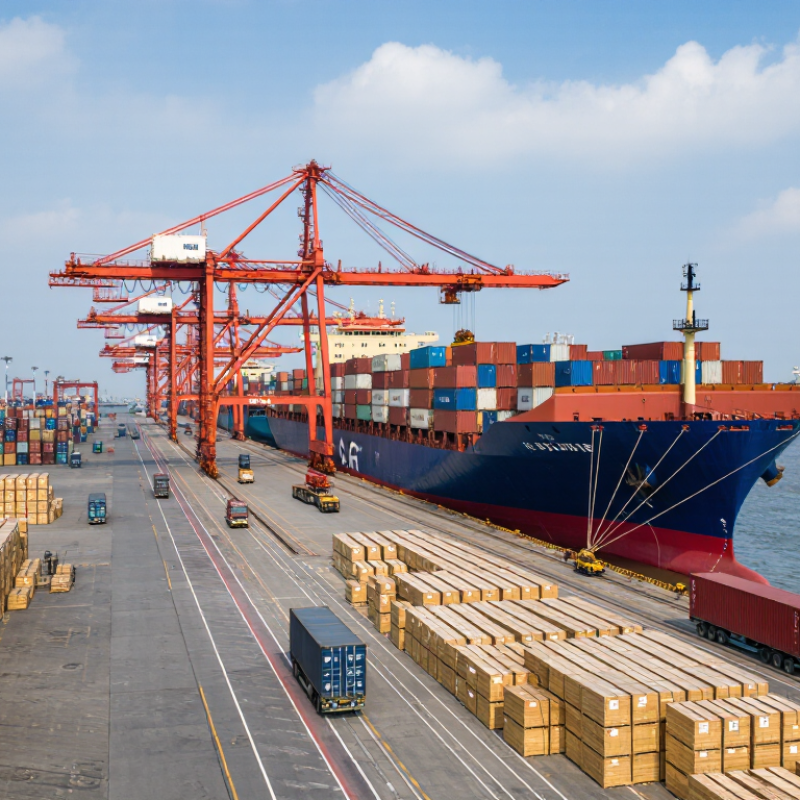
Plywood delivery from China often takes 25 to 50 days by sea, but the sailing time is only part of the schedule. Production usually requires 7 to 20 days, depending on panel thickness, grade, quantity, and inspection requirements. A container may then spend several days waiting for loading. Small delays matter.
UNCTAD’s Review of Maritime Transport 2024 states that shipping carries over 80% of global merchandise trade by volume. This dependence makes port congestion and vessel changes important risks. Sea-Intelligence’s Global Liner Performance reports have shown schedule reliability near 50% to 60% during disrupted periods. A vessel can arrive late before customs processing even begins.
The destination port also changes the final delivery date. The World Bank’s Logistics Performance Index 2023 evaluates customs, infrastructure, shipment tracking, and delivery timeliness as major logistics factors. Import clearance may take one day in an efficient port, but several days when documents, inspections, or duties require correction. Inland trucking adds another 1 to 7 days, especially for remote warehouses. Weather can interfere. So can incomplete packing lists.
A practical estimate is 30 to 45 days for standard sea freight, with a buffer of 7 to 10 days. That buffer is not wasteful. It is often the difference between a planned installation and an expensive rescheduling.

Typical sea-freight planning estimates for standard plywood orders are shown in calendar days. Production preparation, export handling, ocean transit, and import or inland delivery all affect the final lead time. Actual schedules may change because of order quantity, port congestion, customs clearance, holidays, weather, and the selected shipping service.
Plywood delivery from China usually begins with a production period of 7 to 15 working days. Standard panels move faster than custom sizes, unusual thicknesses, or special surface finishes. In my experience, factories need confirmed drawings, core specifications, and packaging instructions before scheduling production. A small error in moisture requirements can delay the order by several days. Clear documents matter.
Quality inspection commonly takes 1 to 3 working days after production. Inspectors may check panel length, width, thickness, moisture content, bonding strength, and surface defects. They often select samples from different pallets, not only from the top layer. Photos of calipers, moisture meters, pallet labels, and loading conditions can provide useful evidence. However, photographs cannot replace physical testing. That limitation deserves attention.
Tips: Request a written production schedule before payment. Allow two or three extra working days for rework. Ask for inspection criteria in advance, including acceptable color variation and repaired knots. Keep one approved sample for comparison. Do not rely on “finished” as proof of quality; inspection reports should show measured results, sample quantities, and rejected pieces. For urgent projects, weekly progress updates help reveal delays early, although schedules can still change when materials arrive late or inspection finds inconsistent panels.
How Long Does Plywood Delivery From China Take?
Ocean freight is usually the practical choice for plywood because it handles heavy, dense cargo efficiently. A full-container shipment from China to major European ports often takes 25–40 days. Routes to the United States commonly require 30–45 days, depending on the destination port and transshipment schedule. These figures exclude factory preparation, customs clearance, and inland delivery.
According to UNCTAD’s Review of Maritime Transport, maritime shipping carries over 80% of global merchandise trade by volume. However, port congestion and schedule changes can extend delivery times. Less-than-container-load shipments may add three to seven days because plywood must be consolidated and unloaded at multiple facilities. Rail freight to Europe generally takes about 18–30 days, offering a middle option between ocean and air transport. It is faster, but usually costs more.
Air freight can arrive in roughly three to seven days after pickup. That speed rarely suits large plywood orders. Charges are based heavily on shipment volume and dimensional weight. The World Bank’s Logistics Performance Index 2023 shows that customs efficiency, infrastructure, and shipment timeliness strongly affect supply-chain results. In practice, a port delay matters more than a perfect sailing estimate. Allowing an extra seven to ten days is sensible, though even that buffer can fail during peak seasons. Plywood also needs careful moisture protection, because a delayed container may face condensation before delivery.
How Long Does Plywood Delivery From China Take?
Plywood delivery from China often takes 25–50 days by sea. Customs clearance, port handling, and final delivery can change that estimate significantly. The World Bank’s 2023 Logistics Performance Index reports that shipments spend about 44 days moving from a country’s port of entry to their final destination. This figure covers many product types, not plywood alone, but it shows why ocean transit is only one part of the schedule.
Documents matter early. Customs brokers usually review the commercial invoice, packing list, bill of lading, product description, and tariff classification. Incomplete details can trigger questions or physical inspection. Plywood may also require supporting documents for wood origin, emissions, or packaging, depending on the importing country. A small classification error can create several days of storage charges. Sometimes longer.
Port handling adds another variable. Congestion, terminal appointments, container availability, and examination queues may extend processing by three to seven days. UNCTAD’s Review of Maritime Transport 2023 confirms that maritime shipping carries over 80% of global merchandise trade by volume, so ports remain vulnerable to capacity pressure. After release, trucking may take one to five days for nearby destinations, or longer for inland delivery. Build in a buffer. A spreadsheet can look precise and still be wrong. The most reliable plan tracks the container number, customs status, free-storage deadline, and delivery appointment daily.
| Delivery Stage | Typical Duration | What Happens | Main Factors Affecting Time | Planning Notes |
|---|---|---|---|---|
| Order Confirmation and Production Preparation | 2–7 days | Specifications, packaging, payment, and production scheduling are confirmed. | Product grade, thickness, quantity, customized sizes, and factory capacity. | Allow additional time when laboratory reports, inspection, or special labeling is required. |
| Plywood Manufacturing and Packing | 7–25 days | Panels are produced, dried, graded, inspected, bundled, and prepared for export. | Core and face materials, adhesive requirements, order volume, and seasonal demand. | Standard stock items may ship faster than made-to-order or certified products. |
| Export Documentation and Customs Clearance in China | 1–4 working days | Commercial documents, packing details, export declarations, and shipment instructions are processed. | Document accuracy, customs inspection, commodity classification, and export-control requirements. | Incorrect descriptions, quantities, or values can cause document amendments and delays. |
| Factory-to-Port Trucking and Container Loading | 1–3 days | Cargo is moved to the export port, loaded into a container, and delivered before the vessel cut-off. | Factory location, port distance, truck availability, weather, and terminal cut-off times. | Late arrival at the terminal may result in a missed sailing and an extra 3–10 days. |
| Ocean Freight: East and Southeast Asia | 5–15 days | The container travels by sea to a nearby regional destination. | Port pair, direct or transshipment service, vessel schedule, and weather conditions. | Short sailing time does not include origin and destination port procedures. |
| Ocean Freight: South Asia and the Middle East | 15–30 days | The shipment moves through a direct route or one transshipment hub. | Transshipment connections, vessel availability, seasonal congestion, and route disruptions. | Add schedule buffer when the shipment depends on a connecting vessel. |
| Ocean Freight: Europe and the Mediterranean | 30–50 days | The container is transported on a long-haul ocean service, sometimes with transshipment. | Shipping route, canal or security conditions, port congestion, and blank sailings. | Port-to-port transit is not the same as total door-to-door delivery time. |
| Ocean Freight: North America | 18–40 days | The container sails to a North American gateway port, with timing varying by coast and service route. | West or East Coast routing, transshipment, port congestion, and inland rail capacity. | Shipments routed through a different gateway may require longer inland transport. |
| Destination Port Handling | 2–7 days | The container is discharged, recorded, and made available for customs or release procedures. | Terminal workload, container availability, port appointments, inspections, and storage limits. | Port congestion can extend handling time beyond the normal range. |
| Import Customs Clearance | 1–5 working days | Import documents are reviewed, duties and taxes are assessed, and the shipment is cleared. | Country regulations, tariff classification, customs value, inspections, and broker response time. | Wood-product regulations may require treatment records, declarations, or additional inspections. |
| Final Delivery to Warehouse or Job Site | 1–10 days | The released container or cargo is transported from the port to the final delivery address. | Distance, truck or rail availability, delivery appointments, unloading access, and local traffic. | Remote locations, restricted delivery hours, or special unloading requirements need extra time. |
| Estimated Total Door-to-Door Time | Approximately 25–75 days | The total depends on production time, destination, shipping route, customs processing, port congestion, and inland delivery conditions. | ||
Note: All durations are practical planning ranges for standard sea freight and are measured in calendar days unless “working days” is stated. Actual delivery times may change because of vessel schedules, holidays, inspections, severe weather, congestion, or changes in import regulations.
How Long Does Plywood Delivery From China Take?
Estimating total plywood delivery time requires more than checking the ocean transit schedule. A practical estimate includes production, port handling, customs clearance, and inland transportation. Standard plywood may need 3–10 days for production and packing. Sea transit commonly takes 15–35 days, depending on the destination and shipping route. Port handling and clearance can add another 3–10 days. Inland delivery may require 2–7 days. The total often falls between 25 and 55 days, but this range is not guaranteed.
Product details can change the schedule. Special thicknesses, moisture-resistant treatment, custom cutting, or stronger packaging may extend production time. I have seen apparently simple orders delayed because the packing list did not match the actual cargo. Small document errors can create large delays. Weather, port congestion, and vessel changes also affect arrival dates. My earlier estimates were sometimes too optimistic because I ignored the final inland delivery stage.
Tips: Ask for a written production completion date, vessel departure date, and estimated arrival date. Request updates when the cargo is packed and loaded. Build a buffer of 7–10 days for important projects. Keep the delivery address precise. Also confirm who handles customs clearance and local transport, because unclear responsibilities often create avoidable waiting time.

Signup our newsletter to get update information, promotion or insight.