7 Essential Tips for Choosing the Best Saucier Pan for Your Business
Choosing the right Saucier Pan can influence cooking speed, sauce quality, and daily operating costs. A busy restaurant needs more than attractive cookware. It needs dependable heat control, comfortable handling, and a shape that supports repeated stirring. The wrong pan may scorch cream sauce, strain wrists, or waste valuable preparation time. Small details matter, especially during a crowded service.
Thomas Keller, an acclaimed chef and culinary educator, writes, “A recipe has no soul. You, as the cook, must bring soul to the recipe.” His principle also applies to cookware selection. A capable Saucier Pan does not replace skill, but it gives that skill better support. Buyers should examine material, base thickness, capacity, handle design, lid fit, cleaning demands, and compatibility with induction or gas equipment. Rounded sides can help a whisk reach the edges, while a broad base supports reduction and controlled evaporation. Check the balance by lifting the pan with one hand. It should feel stable, not awkward. Test the handle, too. A beautiful pan can still become tiring after several hours.
No checklist is perfect. Kitchen teams differ. A pastry kitchen may value gentle responsiveness, while a catering operation may need durability above all else. I have sometimes focused too heavily on price and overlooked long-term comfort. That mistake is easy to repeat. These seven essential tips create a practical framework, but real staff feedback should influence the final decision. Reliable sourcing, warranty terms, and consistent quality deserve equal attention before placing a business order.
Define Your Business’s Cooking Needs and Saucier Pan Applications
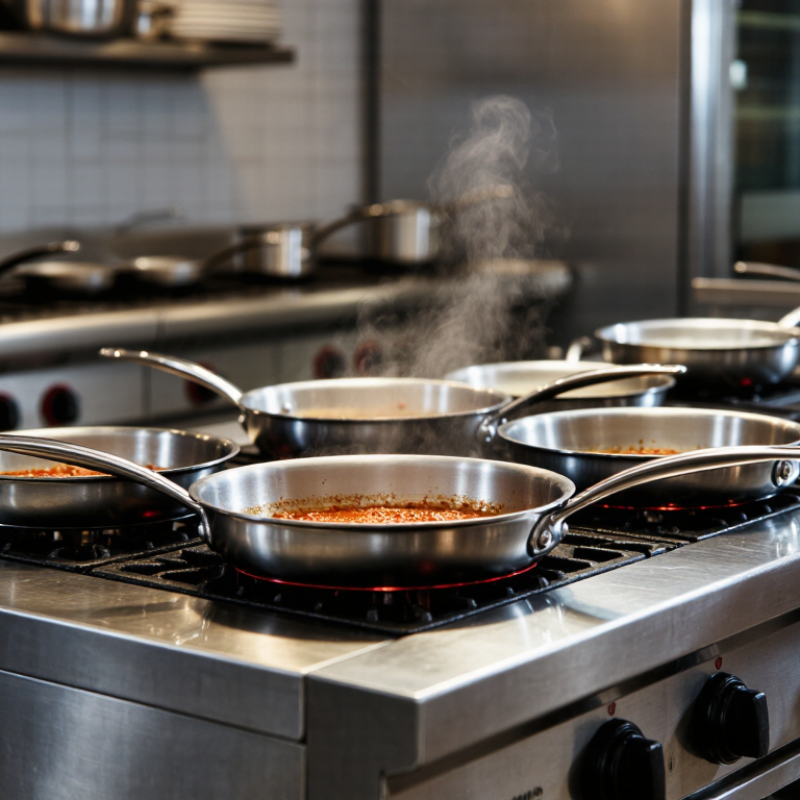
In a commercial kitchen, a saucier pan should solve a specific problem, not simply look professional. Define what you cook during a normal service. For reduced sauces, select a pan with sloped sides and steady heat control. For shallow braises, extra surface area may matter more than depth. If cooks move between burners, choose a balanced handle and a manageable weight. A pan that feels impressive in a showroom can become tiring during a busy dinner service. I once selected a deep pan for large batches. It held plenty, but stirring became awkward near the base. That mistake changed how I evaluate cookware.
Tips: Observe your busiest station before purchasing. Record batch sizes, burner space, stirring movements, and cleaning time. Ask cooks to test the pan with a thick sauce, not only water. Small details reveal practical weaknesses. A narrow handle may touch another pan. A heavy base may heat slowly on a weak burner. These issues are easy to miss.
Match the saucier pan to its applications, including emulsifying, simmering, reducing, and finishing. If sauces are portioned frequently, a lighter pan may improve speed. If the kitchen prepares large volumes, capacity and heat recovery become more important. Still, larger is not always better. Excessive size can waste energy and make small reductions difficult to judge. Review your choice after a full service, because real use often exposes assumptions that product specifications cannot.
Compare Materials for Heat Control, Durability, and Maintenance
For a busy kitchen, a saucier pan must control heat without slowing service. Material choice matters more than a polished finish. Stainless steel resists staining, acidic sauces, and daily scrubbing. Its heat response is moderate, so sudden temperature changes can punish delicate reductions. A bonded aluminum or copper core improves responsiveness and spreads heat evenly. This design costs more, but it reduces scorched spots near the rounded base.
Aluminum heats quickly and keeps the pan relatively light. That helps during repeated sautéing, but thin aluminum can warp or develop hot zones. Hard-anodized surfaces improve durability, though scratched interiors deserve careful replacement decisions. Copper offers excellent control for custards and wine sauces. However, it needs more upkeep and may require lining to prevent reactions with certain foods. No material wins every service. For high-volume work, choose construction that balances recovery speed with cleaning tolerance.
Ask staff to test the pan on your actual burners, not a showroom display. Watch how quickly butter foams, how evenly a roux colors, and how the handle feels after ten minutes. Check rivets, lid fit, oven rating, and dishwasher guidance before ordering several units. I once favored maximum heat response; later, cleaning time changed the calculation. A slightly slower pan may serve better when labor, maintenance, and replacement costs are included. Keep records of warping, discoloration, and sauce sticking during the first month. Those notes are more reliable than vague claims.
7 Essential Tips for Choosing the Best Saucier Pan for Your Business — Compare Materials for Heat Control, Durability, and Maintenance
Use these practical criteria to compare common saucier pan materials and choose a pan suited to your menu, equipment, and cleaning routine. | Selection Tip | Stainless Steel-Clad | Copper | Aluminum | Cast Iron |
| 1. Compare heat response | Often combines a stainless cooking surface with an aluminum or copper core. The core spreads heat more evenly than stainless steel alone. | Very responsive to temperature changes. Copper conducts heat exceptionally well, making it useful for sauces that need precise adjustment. | Heats quickly and distributes heat well. Its light weight can make frequent stirring and pouring easier. | Heats and cools slowly, retaining heat well. Temperature changes take longer, so it is less responsive for delicate sauces. |
| 2. Check the material’s conductivity | Performance depends on the core as well as the steel layers. Stainless steel itself has relatively low thermal conductivity. | Typical pure copper conductivity is about 385–400 W/m·K at room temperature. | Typical pure aluminum conductivity is about 205–235 W/m·K at room temperature. | Cast iron is typically around 45–55 W/m·K at room temperature; actual values vary by composition. |
| 3. Match the pan to your cooking tasks | A versatile choice for reducing sauces, whisking, and general commercial kitchen use; the stainless surface is nonreactive with acidic foods. | Suited to cooks who prioritize precise heat control. Check the interior lining: many copper pans use stainless steel or tin. | A practical option for quick heating and high-volume work. An uncoated aluminum surface can react with acidic foods. | Best where heat retention is useful, though its weight and slower response may be drawbacks for frequent sauce work. |
| 4. Assess durability and construction | Look for securely bonded layers and a sturdy handle. Clad construction can protect the aluminum or copper core from direct food contact. | Copper is durable but can dent, and its exterior may tarnish. A lined interior must be checked for wear over time. | Lightweight and useful in busy kitchens, but can dent or warp if thin or exposed to sudden temperature changes. | Very durable but heavy and brittle compared with many other pan materials; avoid dropping it or striking it hard. |
| 5. Consider maintenance needs | Generally straightforward to clean. Follow the manufacturer’s instructions, especially for bonded layers and handles. | Usually needs extra exterior polishing to maintain its appearance. Avoid abrasive cleaning on delicate linings. | Follow the finish-specific care instructions. Avoid harsh cleaners that may damage anodized or coated surfaces. | Uncoated cast iron needs thorough drying and a light layer of oil to help prevent rust; cleaning guidance varies by finish. |
| 6. Verify cooking-surface and equipment compatibility | Check that the pan’s base is suitable for your cooktop. For induction, it must have a magnetic layer in the base. | Pure copper is not induction-compatible unless the pan has a compatible magnetic base or layer. | Pure aluminum is not induction-compatible unless it has a magnetic base or layer. | Many cast iron pans work on induction because cast iron is magnetic. Confirm the pan sits flat on the cooking surface. |
| 7. Choose a workable size and weight | Compare capacity, base diameter, handle comfort, and total weight with your burners and typical batch size. | Account for the pan’s weight and handle balance when staff will lift, swirl, or pour frequently. | Often lighter than copper or cast iron, which can help with repetitive handling. Check that the base is thick and stable enough for your use. | Test the weight when full, not just when empty. Its mass can make lifting and pouring more demanding. |
Conductivity figures are approximate values for the named metals near room temperature; alloys, pan thickness, cladding, and construction affect real-world performance. Always confirm care and cooktop compatibility with the pan’s manufacturer.
Choose the Right Capacity, Shape, and Interior Depth
Tip 1: Match capacity to the batch, not the menu description. A 3-quart saucier may suit finishing a small sauce, while larger batches need room for whisking without splashes. The National Restaurant Association’s 2024 State of the Restaurant Industry projected U.S. restaurant sales of $1.1 trillion, highlighting the scale and pace many kitchens must manage. That figure does not determine pan size, though; your own covers and batch records should.
Tip 2: Check the curve and base. A rounded interior helps a whisk reach the sides and reduce unmixed pockets. A wider base can speed evaporation, but it also gives delicate sauces less margin for neglect. Test the pan on your actual burner. Small details matter.
Tip 3: Measure interior depth, not just capacity. Deeper sides contain bubbling liquids and help reduce splatter; shallower sides make stirring and visual checks easier. Compare the usable depth with your usual fill line, leaving space for a vigorous simmer. I still find capacity labels imperfect—two pans with the same stated volume can feel very different in service. Choose one your staff can lift, stir, and clean comfortably.
7 Essential Tips for Choosing the Best Saucier Pan for Your Business
Compare common saucier pan capacities with their practical commercial applications. Choose a size that matches batch volume while preserving enough interior depth for whisking, reducing, and controlled pouring.
Selection guide: Smaller pans suit individual portions and finishing sauces, medium pans support regular à la carte production, and larger pans are better for batch preparation. Always confirm the pan’s shape, interior depth, handle clearance, heat compatibility, and working capacity before purchasing.
Evaluate Handle Design, Weight, Balance, and Kitchen Safety
A saucier pan should feel predictable when filled, not merely comfortable while empty. Test it with water and a damp cloth: grip the handle, lift, then pour into a low container. A rounded, heat-resistant handle with enough clearance helps keep knuckles away from the hot rim. Check that rivets sit flush and that the handle does not twist under a controlled load. Small details matter.
Weight and balance affect repeated service. A pan that feels light in the showroom may pull forward once filled with sauce. Choose a manageable weight for the staff member who will use it most, and check whether the pan stays level when held at its usual grip point. The U.S. Bureau of Labor Statistics reported 2.6 million nonfatal workplace injuries and illnesses in private industry for 2023; that broad figure is not cookware-specific, but it reinforces the value of reducing avoidable strain. A little awkwardness adds up.
Kitchen safety deserves the same hands-on test. The National Fire Protection Association’s report on U.S. eating and drinking establishments found cooking equipment involved in 61% of reported structure fires during 2014–2018. Keep handles from projecting into aisles or over adjacent burners, and confirm they remain stable when the pan is set down. A dry, nonslip grip helps. Yet no handle design compensates for crowded workstations or rushed handling, so trial the pan in the actual kitchen before buying several.
Check Commercial Standards, Supplier Reliability, and Total Cost
Choosing a commercial saucier pan begins with compliance, not appearance. The 2022 FDA Food Code calls food-contact surfaces smooth, durable, corrosion-resistant, and easily cleanable. Check whether the pan’s construction supports these requirements. NSF/ANSI 2 is another useful benchmark for commercial food equipment. Ask for material specifications, thickness, weld details, and heat-limit documentation. Seven practical checks matter: capacity, base stability, handle strength, lid fit, pour control, cleaning access, and replacement availability. Test the grip with a wet towel. Small details matter during a busy service.
Supplier reliability affects total cost more than the invoice suggests. Request a written lead time, batch traceability, warranty terms, spare-handle access, and a clear response process. Deloitte’s 2023 Global Chief Procurement Officer Survey identifies supplier risk management as a major procurement priority. That concern is practical. A delayed replacement can disrupt prep and increase labor waste. The National Restaurant Association’s 2024 industry report projected restaurant sales above one trillion dollars, showing the scale of cost pressure. The U.S. Bureau of Labor Statistics also reported roughly 4% annual food-away-from-home inflation in 2024. Compare landed cost, not unit price. Include freight, import charges, cleaning labor, energy use, and expected service life. A cheaper pan may warp sooner. I would record heat performance after repeated shifts, although this test is easy to overlook. Reliability is rarely dramatic. It is consistent.