
Choosing the right wooden door is about more than color or style. It affects privacy, comfort, durability, and how a room feels every day. A solid oak door may suit a busy hallway, while a lighter pine option can work well in a quieter room. Yet appearance alone can mislead. A beautiful door may warp if its construction or finish does not suit your home’s humidity and temperature changes.
This guide explains how to compare wood species, core construction, finishes, dimensions, and hardware. It also considers where the door will be installed, since a bathroom door faces different moisture demands than a bedroom door. Check the manufacturer’s specifications, measure the opening carefully, and ask an experienced installer about fitting and clearance. Small details matter. A few millimeters can affect how smoothly a door closes. Price matters, too, but the cheapest option may need more maintenance or replacement sooner. That is not always easy to judge from a showroom sample. Wooden Doors can bring warmth and lasting character to a home, but no single choice fits every space. The best decision balances your budget, practical needs, and the look you genuinely want to live with.
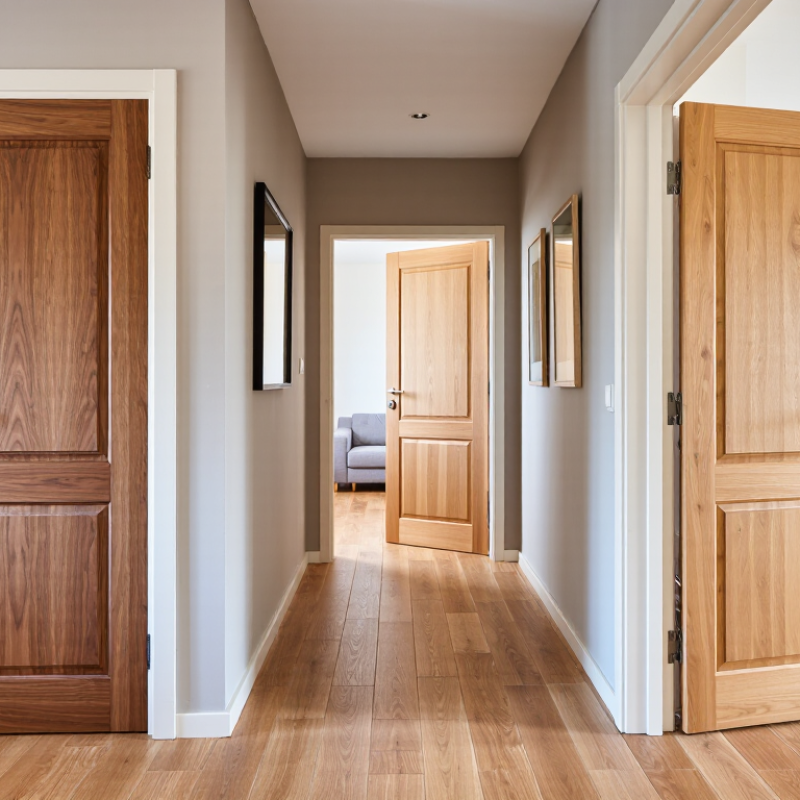
A wooden door should fit the way your household actually moves through a room. Measure the opening, wall thickness, floor clearance, and swing arc before comparing styles. A door that looks right in a showroom may scrape a thick rug or block a narrow hallway. For an accessible route, the 2010 ADA Standards specify at least 32 inches of clear opening; check whether that standard applies to your project.
For exterior doors, assess weather exposure, security needs, and drafts around the frame. For interior doors, consider noise, privacy, and daily wear from children or pets. Wood also responds to moisture. The USDA Forest Products Laboratory’s Wood Handbook reports that green-to-oven-dry shrinkage is typically 6–12% tangentially and 3–6% radially, with variation by species. That is not a prediction of seasonal movement, but it explains why climate and installation matter. Ask how the door was dried and finished, including its top and bottom edges. Small details matter. I would recheck measurements after flooring changes, too; that step is easy to overlook.

Common U.S. interior door slab widths and typical applications
Narrower slabs can suit closets and compact spaces, while wider doors can make everyday access easier. These are nominal slab widths, not clear opening widths; the actual opening is smaller and depends on the door and hardware. Check your opening measurements and local requirements before choosing.
Oak has a pronounced grain that remains visible beneath many finishes, making it a practical choice when you want texture and everyday durability. Maple is smoother and often suits a clean, painted look, while walnut brings darker color and distinctive grain at a higher cost. Pine is lighter and usually less expensive, but it dents more readily. Species alone does not determine performance. Room humidity and finish matter too.
Look closely at construction. A solid-wood door uses joined pieces of lumber and can move as moisture levels change. An engineered door has a stable core with wood veneers, helping reduce warping while retaining a natural surface. For busy rooms, a solid-core door can feel substantial and block more sound than a hollow-core option. Check the edges and corners; thin veneer may reveal itself there. The core is easy to overlook.
Match the door to its setting. A bathroom door needs a suitable finish and careful ventilation, while a bedroom may benefit from greater sound control. Ask how the rails, stiles, and panels are joined, and inspect a full-size sample if possible. Grain and color can vary between pieces, even from the same species. That variation is attractive to some people, but it can be frustrating when two adjacent doors look noticeably different. A small sample may not show the whole picture.
Choose a door style that suits the room’s proportions. A simple flat panel can keep a narrow hallway feeling open, while raised panels add depth to a formal entry. Look at the floor, trim, and nearby furniture together. The grain should feel intentional, not like an unrelated feature. I still find this easy to underestimate.
Finish is more than color. The USDA Forest Products Laboratory’s Wood Handbook explains how moisture changes can make wood expand or shrink. For bathrooms and exterior doors, choose a finish suited to damp conditions, and ask whether edges and the top and bottom will be sealed. Check the sample in morning and evening light. Small detail. For hardware, match the handle’s shape and scale to the door, then consider daily use: a heavy entry door needs sturdy hinges and a comfortable grip. The 2024 Cost vs. Value report estimated a 188.1% cost recoup for steel entry-door replacement, but that figure is not specific to wooden doors or a promise of resale value. Treat it as renovation context, not a reason to overspend. Test the handle before deciding.
| How to Choose the Best Wooden Doors for Your Home - Choose a Style, Finish, and Hardware | |||
|---|---|---|---|
| Decision | Options to Consider | What to Know | Practical Guidance |
| Door location | Interior room, sheltered entry, or exposed exterior | Exterior doors face greater exposure to moisture and temperature changes. Wood can expand or contract as humidity changes. | Choose a door specifically rated for its location, and follow the manufacturer’s installation and maintenance instructions. |
| Construction | Solid wood, engineered wood, or wood veneer over a core | Solid wood has natural grain variation and can be refinished, but it may move with changes in humidity. Engineered construction is designed to improve dimensional stability. | Compare the door’s construction, warranty, and intended use rather than assuming that every wooden door performs the same way. |
| Style | Flush, panel, glazed, or divided-light | Flush doors have a simple, flat face; panel doors add depth and detail. Glazing can bring daylight into a room or entry. | Match the door’s proportions and panel details to the home’s architecture. For exterior glazing, check applicable safety and building requirements. |
| Finish | Clear coat, stain, or paint | Clear finishes and stains show more of the wood’s grain. Paint provides an opaque color and conceals much of the grain. Exterior finishes need to be suitable for outdoor exposure. | Test the color on a sample where possible. Plan to inspect and maintain exterior finishes as directed, since weather exposure can wear them down. |
| Color and grain | Natural wood tone, darker stain, or painted color | Natural wood varies in color and grain, even among doors made from the same species. Stain results can also differ with the wood and preparation. | Review a physical sample in the room’s lighting, and ask how the door will be prepared before staining or painting. |
| Hardware function | Passage, privacy, keyed entry, or deadbolt hardware | Passage hardware suits spaces that do not need to lock; privacy hardware is commonly used for bedrooms and bathrooms. Exterior entries generally require hardware intended for security and outdoor use. | Choose the function for the room first. Check that the hardware is compatible with the door’s thickness, preparation, and intended location. |
| Hardware finish | Coordinating or contrasting finish for handles, hinges, and locks | Hardware finishes affect the overall look, while exterior hardware must also withstand the conditions at the entry. | Coordinate finishes across visible hardware, and prioritize durable, location-appropriate components for exterior doors. |
| Size and swing | Door width, height, thickness, handing, and swing direction | Door dimensions and handing affect fit, clearance, hinge placement, and hardware compatibility. | Measure the existing opening and confirm the swing direction before ordering. For a replacement, check the frame and rough opening as well as the door slab. |
Measure the existing slab, jamb depth, and rough opening before choosing a wooden door. Record width at the top, middle, and bottom; older frames can be uneven. Check floor clearance and swing direction, too. The U.S. Access Board’s 2010 ADA Standards specify a 32-inch minimum clear opening for covered accessible doorways. That figure is not a universal rule for every home, but it is a useful reference when planning access.
For exterior doors, compare the NFRC label’s U-factor and solar heat gain coefficient (SHGC); lower U-factor generally means less heat transfer. ENERGY STAR’s criteria vary by climate zone and product type, so compare products against the criteria for your area. For fire-rated locations, check local requirements and the rating of the complete door assembly—not just the wooden slab. A strong rating can still underperform if installation leaves gaps.
Tips: Measure twice, then confirm the manufacturer’s rough-opening instructions. Check that the frame is square and plumb, and use suitable flashing and weather sealing for exterior openings. A tape measure can make a doorway seem simpler than it is; small errors matter. If the opening is out of square or the door is unusually heavy, ask a qualified installer to assess the frame before ordering.
Wooden doors can look warm and substantial, but their real cost includes installation and upkeep. Remodeling magazine’s 2024 Cost vs. Value report places national entry-door replacement averages at $2,355 for steel and $4,430 for fiberglass. These are useful benchmarks, not direct prices for wood: species, solid or engineered construction, custom sizing, and finish all change the quote. Ask for a written estimate that separates the slab, frame, hardware, and labor.
Durability depends on both material and exposure. The USDA Forest Products Laboratory’s Wood Handbook explains that wood gains and loses moisture, which can cause swelling and shrinkage. A sheltered entry, sealed edges, and sound installation help limit weather damage. Check the bottom edge and corners; water often shows there first. A solid-wood door may need periodic refinishing, while a well-finished engineered door can reduce movement. Neither is maintenance-free. I would not choose by species name alone; construction and finish matter too.
Tip: Compare the full-life cost, not just the purchase price. Ask how often the finish needs renewal, what routine care involves, and whether the door is suited to your local humidity and exposure. A sunny, rain-beaten entrance needs more attention than a protected hallway.

Signup our newsletter to get update information, promotion or insight.