
Choosing a China-based Outdoor Garden Buddha Statue supplier requires more than comparing catalog prices. Buyers should examine stone type, carving depth, surface finish, drainage, packaging, and quality-control records. A finely carved face can lose its detail when exposed to harsh weather or careless transport. Small samples matter.
The market context is growing, but the data needs careful interpretation. Grand View Research valued the global outdoor furniture market at approximately USD 50.73 billion in 2023 and forecast continued growth through 2030. That report does not measure Buddha statues specifically. It offers a broader signal: consumers continue to invest in outdoor living spaces, while demand for this statue category remains difficult to quantify independently.
Garden writer Michael Pollan expressed a useful design principle: “The garden suggests there might be a place where we can meet nature halfway.” A Buddha statue can support that feeling, but scale and placement matter. A heavy stone figure beside a narrow path may feel imposing; a smaller piece beneath bamboo may sit more quietly. Not every setting benefits from one.
For buyers, supplier credibility is practical evidence, not polished sales language. Ask for close-up carving photos, material specifications, packing tests, and references from comparable orders. Confirm whether color variation is natural, and how defects are handled. These details are easy to overlook. They can also reveal gaps in a supplier’s process.
This guide examines how to assess Chinese suppliers, compare materials, and reduce purchasing risk. The category lacks widely published, statue-specific benchmarks, so some judgments still require direct inspection. That limitation deserves attention.
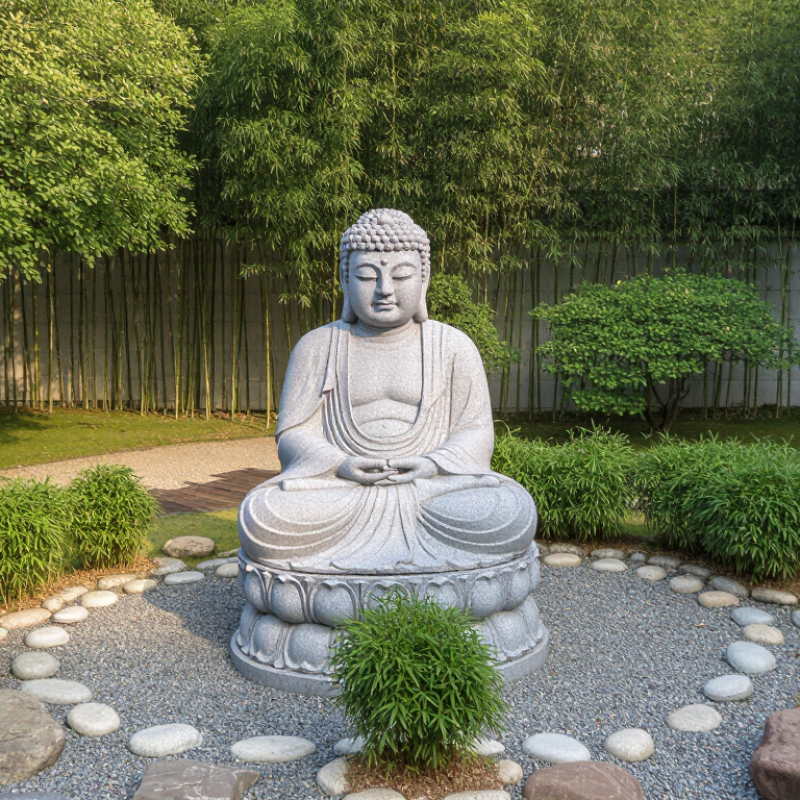
An outdoor garden Buddha statue is defined less by appearance than by its ability to suit the site and withstand exposure. Material matters: dense stone and outdoor-rated, properly fired ceramic are often more dependable than thin, porous pieces. Inspect the base closely. A broad, level footprint helps keep the statue stable on paving or compacted soil. Facial details should remain clear from the garden path, not just at arm’s length. Scale matters, too.
Tips: Check drainage. Feel the weight. Look for hairline cracks, uneven joins, and a base that rocks on flat ground. Ask how the material handles frost, strong sun, and repeated wetting. A seller’s care guidance is useful, but local conditions still matter.
Placement shapes the experience. Set the statue where plants will not trap water around its base, and leave enough space for easy cleaning. A sheltered corner may reduce weathering, though deep shade can encourage dampness on some surfaces. There is no perfect material for every garden. Even a sturdy piece may need seasonal inspection, and that small maintenance detail is easy to overlook.

Garden Buddha statues are commonly made from natural stone, cast stone, concrete, resin, or metal. Each material behaves differently outdoors. Natural stone has varied grain and subtle color changes, so no two pieces look exactly alike. It feels grounded. Its weight can make delivery and installation more demanding.
Cast stone and concrete allow crisp details, such as carved robe folds and calm facial features. They are heavy, and porous surfaces may absorb moisture. Ask about the finish and suitable care for your local climate. Resin is lighter and easier to position, but its surface can look less natural up close. Metal statues, including bronze, develop a changing patina over time. That change is not always what a buyer expects.
Styles range from simple seated figures to standing designs with lotus bases or hand gestures. Choose proportions that suit the garden: a small statue can disappear beside dense shrubs, while an oversized one may crowd a narrow path. Check dimensions, drainage details, surface samples, and packing protection with the supplier. Photos can hide texture. A sample helps, though it may not show how the statue will age outdoors. No material is perfect; the right choice depends on placement, climate, and the finish you enjoy seeing every day.
Typical material density provides a useful point of comparison when considering garden statue materials.
Values are approximate typical densities in kilograms per cubic metre; actual density varies with composition and manufacturing. Finished statue weight also depends on its size and construction. Common garden Buddha styles include seated, standing, and reclining figures.
China Best Outdoor Garden Buddha Statue Supplier?
How to Evaluate a Chinese Buddha Statue Supplier
Choosing a Chinese supplier for an outdoor Buddha statue takes more than comparing prices. Ask what the statue is made from, and request clear photos of the surface, base, and finished details. For stone, check whether the color and texture vary naturally; for cast materials, ask how the finish handles rain, frost, and strong sunlight. Ask for proof. A sample can reveal carving quality, but it may not represent every piece in a large order. That is a limitation worth remembering.
Look closely. Request measurements, packed weight, and photos showing the statue beside a familiar object. Ask how the base is secured and how fragile details, such as fingers or robe edges, are protected during shipping. A reliable supplier should explain production timing, inspection steps, packaging, and what happens if goods arrive damaged. Compare written specifications with the sample before paying a deposit. Keep the questions practical and the answers documented. Even with careful checks, natural stone can differ from a photograph; a little variation may be acceptable, but it should never be a surprise.
A reliable outdoor garden Buddha statue supplier should explain how each piece is made, not just show polished photos. For stone or cast materials, ask for documented material grades, curing or drying times, and inspection records. Details matter. A face may look smooth indoors yet show pinholes after rain. Production checks should cover dimensions, surface defects, stability, and finish consistency across a batch. For larger statues, request photos of the base and a basic balance assessment. A supplier’s answers can reveal more than a catalog.
Customization works best with a written specification. Share the target height, color, pose, mounting method, and expected exposure to sun, frost, or salt air. A measured drawing or approved sample can reduce misunderstandings. Small variations may remain in hand-finished work. That is normal, but agree on acceptable limits before production. Ask how changes affect lead time and whether a pre-shipment inspection is available. One detail is easy to miss: drainage around the base can matter as much as the statue’s finish.
Quality checks should happen at several stages, not only before packing. Review a first-piece sample, then compare finished units with agreed measurements and reference images. Inspect edges, repaired areas, color coverage, and packaging protection. Request clear, dated photos or a short video in natural light. These records are useful, though they cannot replace an independent inspection for a large order. Some flaws may still be missed, so specify which defects require correction and keep the criteria practical.
When choosing a China-based supplier for an outdoor garden Buddha statue, confirm the material, dimensions, weight, and finish in writing. Request close-up photos of the face, base, and painted details, plus a sample if the order is large. A sample can reveal uneven coloring or a hollow base that photographs conceal. Small details matter.
Before paying a deposit, agree on production time, export packing, and who handles each shipping step. Ask for protective wrapping, a fitted inner box, and a reinforced crate for heavier stone pieces. UNCTAD’s Review of Maritime Transport 2024 reports that more than 80% of global trade by volume moves by sea. Sea freight can suit bulky statues, but transit time and port handling vary. Get a current freight quote and confirm whether it covers delivery to your destination or only the departure port. That difference can change the landed cost.
For importing, request a commercial invoice, packing list, and accurate product description. Give these documents to your customs broker before shipment, and check your country’s import requirements directly. Keep the agreed specifications and payment records together. I would not rely on a supplier’s estimate alone; freight surcharges and handling fees can shift. There is room for error. A cracked corner on arrival is a useful reminder that packing instructions need to be specific, not assumed.

Signup our newsletter to get update information, promotion or insight.