
Blog

10 Best Windsor Style Chairs for Every Budget

Windsor Style Chairs have lasted because they balance a light appearance with practical strength. Their shaped seats, turned legs, and slender spindles can suit a farmhouse table or a small kitchen nook. But looks alone are not enough. A chair should feel steady, with joints that stay tight and a seat that supports you comfortably.

Windsor chairmaker and author Michael Dunbar has written extensively about the form. I can’t verify a verbatim quotation from him here, so this guide uses a clearly marked paraphrase of his craft-focused approach: “Look beyond the silhouette; examine how the chair is made.” That distinction matters. A smooth finish may catch the eye, while loose spindles or rough edges become apparent only after closer inspection.

This list compares ten options across different budgets, from affordable everyday chairs to carefully made pieces intended to last. We consider materials, construction, comfort, finish, and value, while recognizing that one chair will not suit every body or room. Check seat height against your table. Notice how the chair feels when you lean back. Small details matter. A low-priced option can be a sensible choice, though its finish or joinery may show wear sooner. No ranking can replace sitting in the chair yourself.
10 Best Windsor Style Chairs for Every Budget

What Defines a Windsor-Style Chair?

What Defines a Windsor-Style Chair?

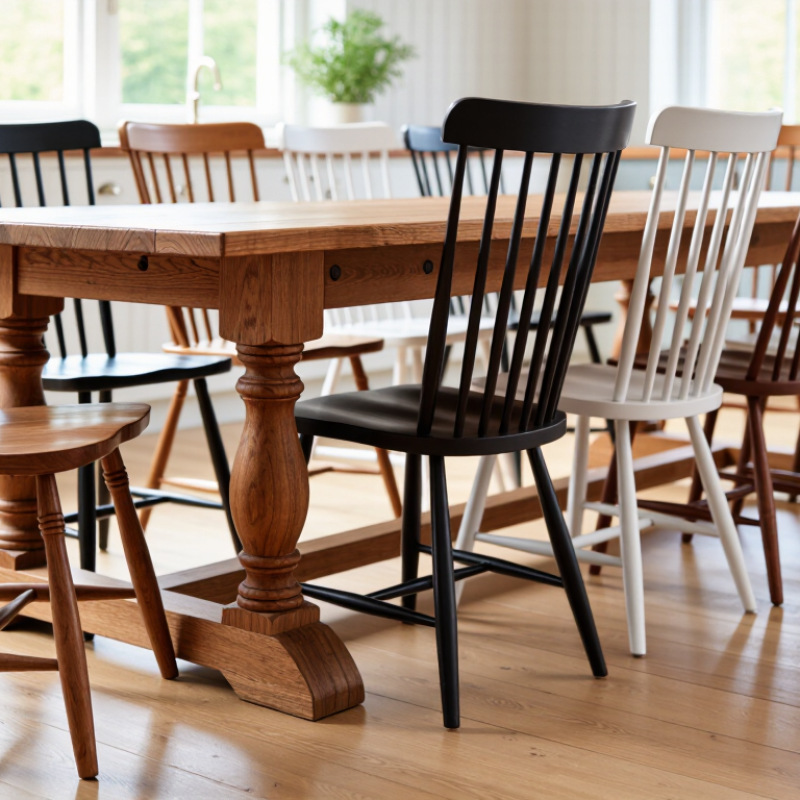
A Windsor chair is identified by its construction, not one exact silhouette. Its legs and back spindles fit directly into a solid seat, rather than attaching to a separate frame. Many have splayed, turned legs and a shaped seat that dips slightly beneath the sitter. The back may form a curved bow, a comb-like crest, or a low hoop. These details create an airy outline, while the broad seat feels reassuringly substantial. A chair can look right and still wobble.

Wood choice affects weight, grain, and feel, but species alone cannot prove a chair’s quality. The USDA Forest Products Laboratory’s Wood Handbook (2021) reports basic specific gravity values of about 0.60 for white oak, 0.56 for sugar maple, and 0.47 for black cherry. These figures compare wood density, not finished-chair strength; joinery and workmanship matter too. I find the distinction easy to overlook when shopping. A smooth finish can hide loose spindle joints, and a graceful profile does not guarantee comfort.

Tips: Sit for several minutes and shift your weight gently. Check that the legs rest evenly on the floor, then look for tight spindle connections and a seat edge that does not press sharply into your thighs.

Key Features to Compare Before Buying a Windsor Chair

Windsor chairs can look alike in a photograph, yet small construction details affect how they feel and age. Check whether the legs and stretchers feel firm, with no rocking or loose joints. A little movement matters. Look closely at the joints where the spindles meet the seat and bow; uneven gaps may signal rushed assembly. Solid wood is common, but wood species and grain can vary, so inspect the actual chair when possible. A smooth finish should not feel sticky or conceal rough edges underneath.

Seat shape deserves a real test. Sit for several minutes and notice whether the curved seat supports your thighs without pressing behind your knees. Count the spindles, but do not assume more always means sturdier or more comfortable. Compare seat height, width, and overall weight with your table and the people who will use it. Finish also matters: a delicate coating may show scratches sooner in a busy kitchen. I still find comfort hard to judge online. Product dimensions help, but they cannot tell you how a chair feels after a long meal. Check care instructions and the stated weight capacity before buying.

Best Budget-Friendly Windsor-Style Chairs

Affordable Windsor-style chairs can bring a light, familiar look to a kitchen or dining nook without stretching the budget. Look for a shaped wooden back, evenly spaced spindles, and legs that sit flat on the floor. These details matter more than a glossy finish. On lower-priced chairs, paint can hide rough sanding, so inspect the underside and edges if you can. A little variation in grain is normal; loose joints are not. Comfort is personal, too. A curved back may feel supportive during a quick meal but less comfortable through a long dinner.

Tips: Check the joints. Sit for a minute. If the chair wobbles on a level floor, ask whether it can be tightened or returned. Measure the seat height against your table, and leave room for arms if you choose an armchair. A simple felt pad can also soften scraping on hard floors.

For everyday use, compare the stated weight capacity, materials, and care instructions rather than relying on appearance alone. Solid wood may be repairable, while thinner components can keep the price down but need gentler handling. I would not assume every inexpensive chair is a bargain: a low price loses appeal if the finish chips quickly or the seat feels cramped. Still, small flaws in color or grain may be an acceptable trade for a sturdy, comfortable fit.

Best Midrange and Premium Windsor-Style Chairs

Midrange and premium Windsor-style chairs earn their price through materials, joinery, and everyday comfort—not decoration alone. Look for a solid hardwood frame, evenly spaced spindles, and joints that sit flush without wobbling. A shaped wooden seat should support you without forcing your legs against its front edge. Check the seat height against your table; even a beautifully made chair can feel awkward when the proportions are off. Small details matter.

At the premium end, expect cleaner hand-finishing, carefully fitted joints, and consistent shaping across the back spindles. These qualities may improve durability, but they do not guarantee it. Ask how the chair is assembled and what care its finish needs. A glossy surface can show scratches more readily, while a softer finish may need more frequent attention. There is a trade-off. Price alone tells you little about long-term comfort, and online photos can hide rough edges or a shallow seat.

Tips: Sit in the chair for several minutes if possible, and shift your weight gently to test for movement. Compare dimensions with a chair you already find comfortable. Inspect the underside, where loose joints and uneven finishing are easier to spot. If buying online, review the return terms and measure your doorway. I would not choose a chair by appearance alone; that mistake is easy to make.

10 Best Windsor-Style Chairs for Every Budget

Typical U.S. retail price ranges are approximately $50–$150 for budget chairs, $150–$400 for midrange chairs, and $400–$1,200 for premium chairs. Prices vary with materials, construction, and finish.

How to Choose the Right Windsor Chair for Your Home

A Windsor chair should fit your room and your body, not just its silhouette. Measure the seat height against your table, then check that your knees clear the apron comfortably. A shaped seat and a curved back can help, but neither guarantees comfort; sit in the chair for several minutes if possible. A perfect fit on paper can still feel wrong.

Check the joints, finish, and stated weight capacity. The U.S. EPA’s indoor-air guidance reports that concentrations of some pollutants indoors are often two to five times typical outdoor levels. That figure does not mean a chair causes poor air quality, but it supports asking about finishes and choosing products with clear emissions information. For daily meals, favor sturdy joinery and a wipeable finish; for occasional use, lighter construction may be enough.

Tips: Measure your table, doorway, and chair footprint before buying. Bring a tape measure. Compare the seat height with your table, and leave room to pull the chair out. If you are choosing online, request close-up photos of joints and the underside. Imperfect advice, perhaps: comfort is personal, so measurements cannot replace a real sit test.