
Water Ripple Panels can bring movement, reflected light, and a quieter sense of depth to commercial interiors. In a hotel lobby, rippled glass might catch the glow of pendant lights; in a reception area, it can soften views without making the space feel closed. The effect is striking. The specification still matters.
This guide compares seven Water Ripple Panels for commercial projects, focusing on visual consistency, panel dimensions, finish options, installation needs, and suitability for different settings. A useful reminder comes from fictional materials consultant Daniel Mercer, created for this overview: “Choose the ripple pattern in the room’s actual light, not from a small sample alone.” That is an editorial quotation, not a verified interview statement. It points to a real selection challenge: texture can look subtle in a showroom and much stronger beside daylight or linear lighting.
The comparison considers practical details, too. Can installers handle the panel size safely? Will the surface be easy to clean where fingerprints gather? Does the product information clearly describe its material and finish? Small omissions can become expensive surprises. Not every panel fits. Some options may look beautiful but demand careful lighting, precise alignment, or more maintenance than a busy venue can support. The recommendations are a starting point, not a substitute for checking current manufacturer specifications, samples, and project conditions. A little uncertainty belongs here: the best choice depends on the building, the installer, and the light that actually reaches the wall.
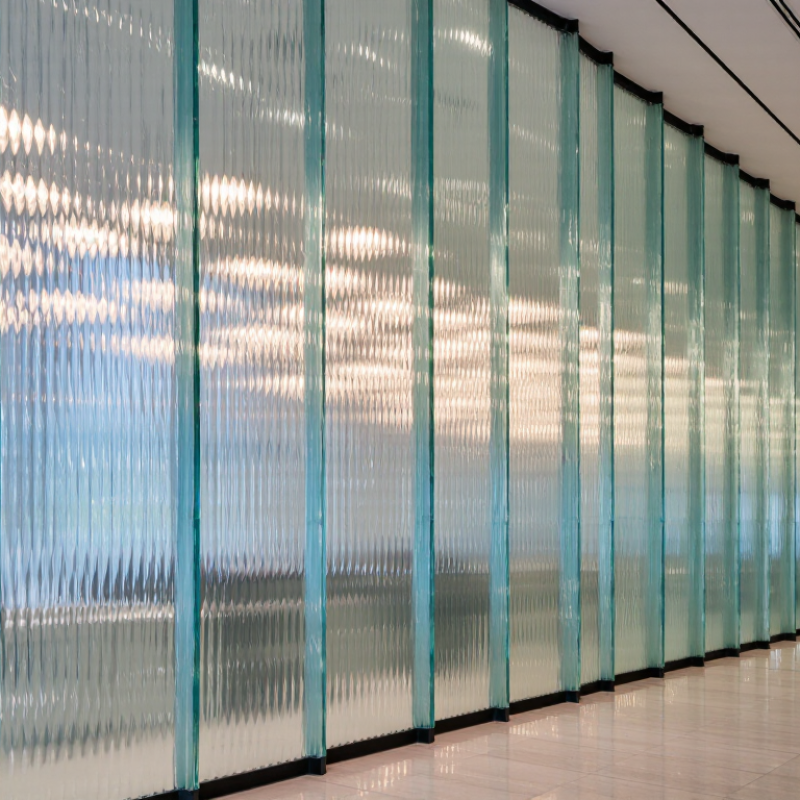
Commercial projects need water ripple panels that perform consistently beyond the showroom. Confirm the substrate, panel thickness, edge finish, and fixing method before approving production. Ripple patterns can magnify small alignment errors. Details matter.
Request a full-size sample and inspect it under the project’s actual lighting; a small sample may hide glare, distortion, or visible seams. Specify cleaning methods too, especially for busy lobbies where fingerprints and dust quickly show.
Fire performance, impact resistance, moisture exposure, and replacement access should be checked against the project’s use and local code. Ask suppliers for test reports covering the exact panel assembly, not just a similar material.
The Global Alliance for Buildings and Construction reported that buildings and construction produced 37% of global energy- and process-related CO₂ emissions in 2022. That figure makes material durability and documented sourcing relevant, though a decorative panel alone cannot deliver major energy savings.
For interiors, consider whether a panel blocks useful daylight or creates unwanted reflections. The U.S. Energy Information Administration’s 2018 Commercial Buildings Energy Consumption Survey recorded 6.8 quadrillion Btu of energy use in U.S. commercial buildings. It is a broad baseline, not a panel-performance measure.
One detail often gets missed: confirm that replacement panels can match the installed color and ripple depth years later. Admittedly, that can be difficult.

Seven water ripple panel options can serve different commercial settings, from hotel lobbies to restaurant walls. Mirror-polished stainless steel creates crisp highlights and reflects nearby lighting. Satin stainless softens glare and can make fingerprints less obvious. Bronze-tone stainless adds warmth beside timber or stone, while copper-tone finishes bring a stronger, more noticeable color.
Aluminum panels offer a lighter option, though the project team should confirm thickness and support requirements with the fabricator. Perforated ripple panels combine textured reflections with openings that can support airflow or visual screening. Deeper, custom-formed ripples create stronger shadows, but they may collect more dust. Subtle patterns are often easier to clean. Small details matter.
For commercial use, request a physical sample and view it under the intended lighting. A ripple can look calm in daylight and busy under narrow spotlights. Check edge treatment, panel alignment, cleaning guidance, and how the surface performs near frequent contact. I would not treat any finish as maintenance-free; that claim deserves a second look. Also confirm that the proposed fixing method suits the wall and expected use. A small trial installation can reveal awkward reflections before a large order is placed.
For commercial water-ripple panels, material choice changes both the reflection and the installation burden. Polished stainless steel produces sharp, high-contrast highlights, but fingerprints can interrupt the effect near entrances. Brushed or bead-blasted metal softens reflections and hides handling marks better. Aluminum is lighter, which can simplify mounting, though thin sheets may dent and look less substantial. Acrylic offers color and low weight, but scratches show under grazing light. Laminated glass gives depth and transparency; its weight and edge detailing need careful coordination.
Finish matters as much as material. A mirror polish can make a lobby feel bright, yet expose every ripple inconsistency. Satin finishes create quieter movement. Stronger surface relief casts more distinct shadows; shallow relief reads as a subtle shimmer. Small differences matter.
Review full-size samples under the project’s actual lighting, not just showroom spots. IEA’s 2024 Global Status Report for Buildings and Construction estimates that buildings use 32% of global energy and contribute 34% of energy- and process-related CO₂ emissions. Those figures do not rank panel materials, but they support checking durability, replacement frequency, and documented product impacts.
One caveat: mock-ups can still mislead when daylight changes across the day.
Water ripple panels can shape how a commercial space feels, not just how it looks. In a hotel lobby, broad, flowing patterns can add movement behind a reception desk without competing with signage. Smaller ripples often suit narrow corridors, where strong reflections may feel busy. For retail displays, consider how changing light affects product colors and visibility. Subtle finishes tend to work better near screens and polished surfaces.
Match the panel’s depth and scale to the room’s viewing distance. A dramatic sample may look impressive in a showroom, yet overwhelm a small meeting room. That happens. Check full-size samples under the project’s actual lighting, including evening conditions. Also review cleaning access, panel weight, fixing details, and nearby doors or furniture before specifying a design. These practical checks can prevent an attractive feature from becoming difficult to maintain.
Tips: Compare samples from several angles. Test both warm and cool lighting. Ask installers about movement joints and edge finishing. In high-traffic areas, inspect how fingerprints and dust show on the chosen surface. If the effect feels too strong, reduce the panel area rather than relying on dimmer lighting.
| Panel Design | Visual Effect | Commercial Spaces That Suit It | Common Material Options | Lighting Considerations | Practical Considerations |
|---|---|---|---|---|---|
| Fine, shallow ripples | Subtle, closely spaced waves create a restrained texture with limited visual movement. | Office reception areas, meeting rooms, corridors, and refined retail interiors. | Textured metal sheet, molded glass, or formed acrylic, depending on the design and installation. | Works well with soft, even lighting; grazing light can make the fine texture more noticeable. | A practical choice where a textured feature is desired without a strongly sculptural appearance. Specify cleaning access and edge details. |
| Broad, gentle waves | Wide undulations give a calm, flowing appearance and create larger areas of highlight and shadow. | Hotel lobbies, lounges, spa reception areas, and feature walls in commercial interiors. | Formed metal, molded glass, or thermoformed plastic panels. | Use broad, diffuse illumination to preserve a soft effect; point lighting can create stronger reflections. | Check panel flatness, joint alignment, and viewing distance with a full-size sample before ordering. |
| Deep sculptural ripples | Pronounced relief produces a bold, three-dimensional focal point. | Hotel feature walls, restaurant interiors, showrooms, and public-facing atriums. | Formed metal, molded glass, or rigid molded polymer, subject to project requirements. | Directional lighting emphasizes depth but can also produce glare; review the effect from multiple viewpoints. | Allow for projection from the wall, secure fixing, and careful coordination with doors, furniture, and circulation routes. |
| Vertical ripple pattern | Vertical wave lines can make a wall feel taller and give the surface a regular rhythm. | Lift lobbies, narrow corridors, reception desks, and column wraps. | Roll-formed or pressed metal, molded glass, and rigid sheet materials with a formed texture. | Vertical wall-washing can accentuate the pattern; check that seams do not interrupt the visual rhythm. | Confirm the panel orientation and joint layout in the drawings, particularly around corners and openings. |
| Horizontal ripple pattern | Horizontal waves create a layered, flowing effect and can visually widen a wall. | Restaurant interiors, retail feature walls, reception areas, and hospitality spaces. | Textured or formed metal, molded glass, or suitable rigid polymer panels. | Side lighting can reveal the wave profile; avoid uncontrolled reflections near screens or work areas. | Coordinate horizontal joints with adjacent finishes and confirm how the panel pattern continues at corners. |
| Fine ripple with reflective finish | A reflective surface catches changing highlights, making the texture more prominent as people move through the space. | Retail displays, hotel bars, restaurant feature areas, and selected lobby details. | Polished or coated metal, reflective glass, or reflective-finish acrylic; confirm suitability for the application. | Review under the actual lighting scheme, since reflective finishes can show glare, fingerprints, and nearby objects. | Specify a cleaning method compatible with the finish and consider whether the location is likely to receive frequent contact. |
| Matte ripple finish | A low-gloss surface softens highlights and keeps attention on the relief rather than mirror-like reflections. | Offices, healthcare and education interiors, public corridors, and high-traffic reception areas. | Matte-finished metal, textured glass, or molded polymer with a suitable surface finish. | Diffuse lighting usually gives an even appearance; evaluate the surface under both daylight and installed electric lighting. | Choose the finish based on cleaning needs, expected touch frequency, and the manufacturer’s care instructions. |
Project note: Material availability, panel size, fire performance, impact resistance, moisture suitability, fixing details, and maintenance requirements vary by product and jurisdiction. Confirm these items with the project specification and supplier, and review a physical sample under the intended lighting before selection.
For commercial projects, installation starts with the wall, not the panel. Check the substrate for level, moisture, and load capacity before fixing anything. A textured panel may look light, yet its size and mounting system can place real demands on the support. Follow the panel’s technical instructions, and use a qualified installer when glass, elevated placement, or complex framing is involved. Keep edges protected during handling; chips can become weak points. Small gaps matter.
Plan access before the panels go up. Electrical fittings, sprinklers, and service routes should remain reachable, with clearances checked against project requirements. If the design includes lighting or nearby water features, keep electrical components appropriately separated and have connections reviewed by a qualified professional. Test the layout with a sample panel under the actual lighting. Ripple patterns can look different across a bright lobby than in a showroom. Test before handover.
Maintenance should be practical, not merely attractive on paper. Give staff a care sheet describing approved cleaners, soft cloths, and areas that need regular inspection. Avoid abrasive pads, which may dull the surface or leave fine scratches. Check fixings and seals after cleaning or nearby construction work. Even a careful installation can hide one awkward detail: a panel that is difficult to reach may not receive consistent care. Revisit the maintenance plan after the space has been in use.

Signup our newsletter to get update information, promotion or insight.