
Choosing reliable door hardware is rarely a simple matter of appearance. For global buyers, the right Door Hinge Stainless Steel must balance corrosion resistance, load capacity, movement, finish quality, and installation practicality. A bright hinge may look impressive in a showroom, yet its internal bearing can still wear quickly under repeated use.
Michael A. Nelson, a door-hardware engineering consultant, explains, “A hinge is a small component, but it carries the daily history of an entire door.” This observation matters in hotels, hospitals, offices, coastal homes, and busy warehouses. Salt air, humidity, dust, temperature changes, and uneven door weight can expose weak designs within months.
This guide examines ten stainless steel door hinges selected for international purchasing decisions. It considers common grades such as 304 and 316, hinge thickness, bearing construction, screw quality, load claims, finishing consistency, and installation feedback. Product documentation also deserves attention. Vague specifications should create doubt.
The details are tangible. A hinge pin should turn smoothly. The knuckles should align without sharp edges. Screw holes should fit the supplied fasteners. A door should close without dragging across the frame. Small faults become expensive when hundreds of units are installed.
No ranking is perfect. Some manufacturers publish limited testing data, while real-world conditions differ between regions. That weakness should be acknowledged, not hidden. Buyers should confirm dimensions, door weight, environmental exposure, and local installation requirements before ordering. This practical approach makes the comparison more useful, honest, and dependable.
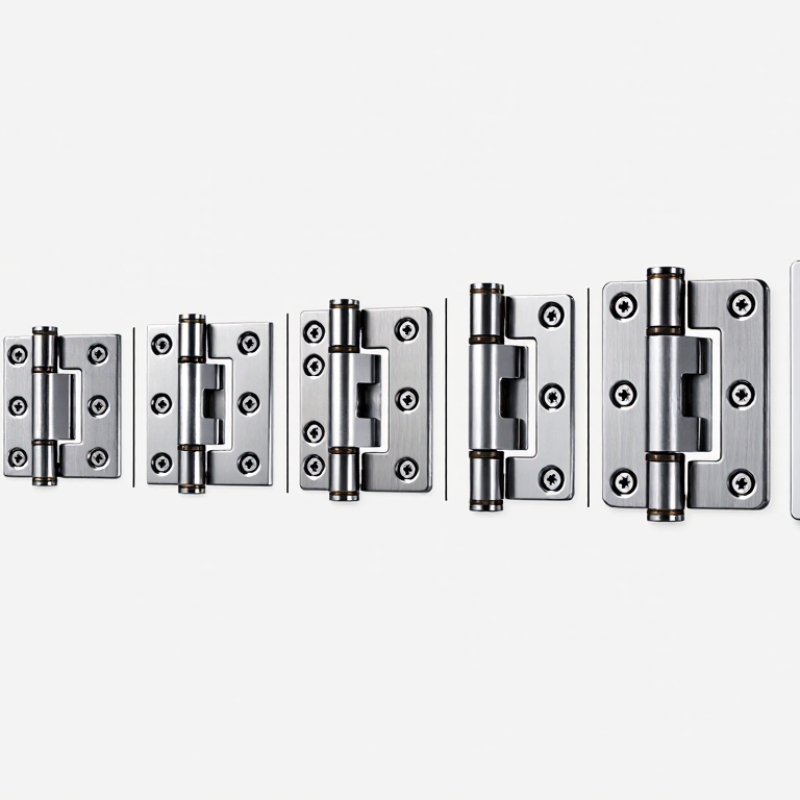
Stainless steel door hinges earn trust through material strength, accurate construction, and consistent performance. For global buyers, reliability begins with the correct steel grade. Grade 304 resists everyday moisture, while grade 316 performs better near saltwater and harsh coastal air. That difference matters. A smooth finish also limits dirt buildup and makes cleaning easier. However, appearance alone proves little. A polished hinge can still contain weak welds or uneven edges.
Hinge design affects service life as much as steel quality. Thick leaves distribute door weight more evenly and reduce twisting around the screws. A firmly fitted pin prevents unwanted movement, while washers or bearings can support frequent opening cycles. During practical inspections, I check the pin for straightness and test the hinge under repeated movement. Small gaps may create noise later. No component is perfect. Sample testing remains essential before large orders, especially when doors are heavy or frequently used.
Global purchasing adds technical and logistical concerns. Reliable documentation should state steel grade, load guidance, dimensions, finish, and corrosion-testing results. Buyers should request samples and compare them with production batches. Packaging matters too. A crushed carton can expose hinges to scratches and moisture before installation. Clear installation instructions reduce alignment errors across different construction teams. Door weight, frame material, screw selection, and local weather should all influence the final choice. Specifications can still fail when installers ignore these details.

Stainless steel door hinges serve different purposes, and the hinge type should match the door’s weight, movement, and environment. Butt hinges suit common interior doors, utility rooms, and light commercial entrances. Their simple leaves fit neatly into the frame and door edge. For heavier wood or metal doors, ball-bearing hinges reduce friction during repeated opening. They are practical for offices, apartment entrances, and busy service corridors.
Small detail. Correct sizing matters.
Continuous hinges, also called piano hinges, support the full door height. They help control sagging on tall, wide, or frequently used doors. These hinges work well on schools, public buildings, and equipment rooms. Concealed hinges create a cleaner appearance for modern interiors and selected security doors. However, installation requires accurate routing and strong frame preparation. A neat finish cannot repair a weak mounting surface.
Spring hinges can help a door return toward its closed position. They fit some residential, storage, and controlled-access applications, but adjustment is often overlooked. Strap hinges provide visible support for gates, barn-style doors, and heavy architectural designs. In coastal or humid areas, stainless steel resists corrosion better than ordinary steel, though it is not maintenance-free. Field checks should include screw tightness, hinge alignment, and surface staining. I have seen oversized hinges installed on unsuitable frames, creating stress instead of stability. Load charts and site conditions deserve another review before selection.
Choosing stainless steel hinges starts with the door, not the catalog. In field inspections, I check door weight, opening frequency, frame alignment, and exposure to moisture. The ten leading options include plain-bearing butt hinges, ball-bearing hinges, spring hinges, rising hinges, concealed hinges, adjustable hinges, heavy-duty hinges, security-pin hinges, weld-on hinges, and lift-off hinges. Each solves a different installation problem.
Plain-bearing hinges suit light interior doors and controlled traffic. Ball-bearing hinges reduce friction on heavier doors. Spring hinges help doors close automatically, but tension needs careful adjustment. Rising hinges lift the door slightly during opening. Concealed hinges create a cleaner appearance, though installation requires accurate routing. Adjustable hinges correct minor alignment issues. Heavy-duty hinges support frequent movement and thicker doors. Security-pin hinges resist unauthorized pin removal. Weld-on hinges fit fabricated steel frames. Lift-off hinges simplify maintenance, but they need suitable door positioning.
Material grade matters in humid or coastal environments. Grade 304 stainless steel often fits general indoor and outdoor use. Grade 316 offers stronger resistance in salty air, but costs more. Check the hinge leaf thickness, pin diameter, bearing design, and stated load rating. Confirm that the rating applies to the full hinge set. Some sellers present ideal laboratory figures, not working conditions. That detail deserves skepticism. I would also request samples, surface-finish records, and dimensional drawings before a large order. A hinge can look polished and still bind after installation. Small clearance errors remain easy to overlook.
10 Best Stainless Steel Door Hinges for Global Buyers
How to Evaluate Load Capacity, Durability, and Corrosion Resistance
A reliable hinge assessment begins with the complete door assembly, not the hinge alone. Check door weight, width, opening frequency, wind pressure, and installation position. A heavy door with three hinges may still overload the top hinge during movement. Ask for the tested working load, not only the maximum static load. I usually prefer a clear safety margin of at least two times the expected service load.
Durability depends on more than stainless steel content. Inspect the pin diameter, knuckle length, washer design, weld quality, and screw-hole strength. A tight pin reduces sagging and unwanted movement. Cycle-test records are useful, especially for entrances used hundreds of times daily. Ask how many opening cycles were completed and under what conditions. Do not accept vague claims.
Corrosion resistance requires matching the hinge to its environment. Grade 304 stainless steel can suit many indoor and mild outdoor applications. Grade 316 usually performs better near saltwater, industrial moisture, and de-icing chemicals. Surface finish also matters. Rough welds and trapped water can create early rust spots, even on good material. Salt-spray results help, but they do not perfectly predict real service life. I have seen attractive test reports fail to reflect poor drainage on site. That detail deserves another inspection. Use corrosion-resistant fasteners, seal exposed joints, and confirm maintenance access before purchasing.
Comparative reference based on typical stainless steel hinge specifications. The index scores are normalized against the highest value in this comparison; hover over each bar to view the reference load, cycle life, and salt-spray resistance.
Load capacity is shown per hinge pair. Durability refers to representative opening-and-closing cycles. Corrosion resistance is expressed as neutral salt-spray exposure in hours. Actual results vary with hinge geometry, installation, door weight, environment, and test method.
For global buyers, stainless steel door hinges should be selected against project conditions, not appearance alone. Confirm the required performance standard, test method, and local building requirements before ordering. Standards vary between markets, so a supplier’s general “compliant” statement is not enough. Request test reports, material declarations, and batch traceability. A hinge for a coastal entrance may need stronger corrosion resistance than one used indoors.
Measure the frame. Check the swing. Record door weight, thickness, hinge spacing, and screw-hole positions. Common hinge sizes may look interchangeable, but a few millimeters can create poor alignment. Load ratings should include a safety margin, especially for heavy glass, timber, or fire-rated doors. Bearing hinges often provide smoother movement, while plain hinges can suit lighter applications. This choice is easy to underestimate.
Finishes deserve practical inspection. Brushed surfaces hide small scratches, while polished surfaces reveal handling marks quickly. Grade 304 stainless steel suits many interior and moderate exterior uses; grade 316 may perform better near saltwater, but it is not automatically the best choice for every budget. A polished sample can mislead. Inspect edges, welds, pin fit, and coating consistency.
When evaluating suppliers, compare samples, drawings, packaging, lead times, replacement policies, and quality records. Ask whether production checks cover hardness, dimensions, surface defects, and load performance. Independent inspection can reduce surprises before shipment. Still, even careful sourcing has weak points: reports may represent one batch, not every production run. That is why written specifications and pre-shipment checks matter.
| No. | Hinge Type | Recommended Material | Typical Size | Typical Door Load* | Bearing / Feature | Common Finishes | Relevant Standards | Best Application | Preferred Supplier Type |
|---|---|---|---|---|---|---|---|---|---|
| 1 | Ball-Bearing Butt Hinge | AISI 304 stainless steel; AISI 316 for marine exposure | 100 × 75 × 3 mm or 100 × 100 × 3 mm | Up to approximately 80–120 kg per 3-hinge set, subject to testing | Stainless ball bearings; reduced friction for frequent use | Satin, brushed, polished, PVD-coated | EN 1935; ANSI/BHMA A156.1 | Commercial entrances, offices, hotels, apartment buildings | Architectural hardware wholesaler or certified door-hardware distributor |
| 2 | Plain Bearing Butt Hinge | AISI 304 stainless steel | 89 × 64 × 2 mm or 100 × 75 × 2.5 mm | Approximately 40–70 kg per 3-hinge set, depending on installation | Simple pin-and-knuckle construction; economical maintenance | Satin, brushed, bright polished | EN 1935; ANSI/BHMA A156.1 | Interior doors, light commercial doors, residential projects | General hardware importer or local building-material distributor |
| 3 | Heavy-Duty Ball-Bearing Hinge | AISI 316 stainless steel preferred for exposed locations | 100 × 100 × 3.4 mm or 127 × 102 × 3.4 mm | Approximately 120–200 kg per 3-hinge set when properly tested | Thicker leaves and ball bearings for heavier doors | Brushed, satin, electropolished | EN 1935; ANSI/BHMA A156.1; project fire-door requirements where applicable | Steel doors, security doors, warehouses, public buildings | Industrial door-hardware manufacturer or project-specification supplier |
| 4 | Rising Butt Hinge | AISI 304 stainless steel | 100 × 75 × 2.5 mm or 100 × 100 × 3 mm | Approximately 40–80 kg per 3-hinge set | Cam action raises the door slightly while opening | Satin, brushed, polished | EN 1935 where the complete hinge design is classified | Doors requiring clearance over thresholds or floor coverings | Specialty architectural hardware supplier |
| 5 | Weld-On Barrel Hinge | AISI 304 or AISI 316 stainless steel | Barrel diameter 16–25 mm; length 60–120 mm | Project-specific; verify weld design and tested load rating | Welded installation; compact and tamper-resistant | Mill finish, brushed, polished | Material specification to ASTM A240 or EN 10088, as applicable | Fabricated gates, equipment enclosures, stainless-steel frames | Metal-fabrication component supplier with welding documentation |
| 6 | Adjustable Lift-Off Hinge | AISI 304 stainless steel; AISI 316 in coastal environments | 100 × 75 × 2.5 mm or 120 × 80 × 3 mm | Approximately 50–100 kg per 3-hinge set | Removable door leaf; adjustable fixing holes on selected designs | Satin, brushed, powder-coated over stainless steel | EN 1935 for classified products; verify adjustment mechanism separately | Maintenance rooms, service doors, modular partitions | Maintenance-hardware distributor or modular-door supplier |
| 7 | Concealed Door Hinge | AISI 304 stainless steel body and pivot components | Typical body length 150–220 mm; opening angle commonly 90–180° | Approximately 60–120 kg per 2-hinge set, subject to model testing | Hidden when closed; 3D adjustment available on selected designs | Satin, brushed, black, architectural plated finishes | EN 1935 where applicable; confirm frame compatibility | Flush doors, minimalist interiors, high-end commercial fit-outs | Architectural-accessory specialist or concealed-door-system supplier |
| 8 | Glass Door Patch Hinge | AISI 304 stainless steel; AISI 316 for wet or coastal areas | Glass thickness commonly 8–12 mm; door height and width must be specified | Commonly 40–80 kg per pair; confirm glass-system testing | Clamping or patch fitting; no conventional door-frame preparation | Satin, brushed, polished, matte black | EN 12150 or applicable tempered-glass requirements; system-specific testing | Shower doors, retail interiors, office glass partitions | Glass-fittings specialist or architectural-glass contractor |
| 9 | Self-Closing Spring Hinge | AISI 304 stainless steel with stainless spring components | 100 × 75 × 3 mm or 100 × 100 × 3 mm | Approximately 40–80 kg per 2-hinge set, depending on adjustment | Adjustable closing tension; may require two hinges for alignment | Satin, brushed, polished | ANSI/BHMA A156.17 for spring hinges where applicable | Residential entries, pantry doors, small commercial rooms | Residential hardware distributor or door-accessory wholesaler |
| 10 | Hygienic Radius-Corner Hinge | AISI 316 stainless steel recommended for washdown areas | 100 × 100 × 3 mm; radiused corners typically 3–6 mm | Approximately 60–120 kg per 3-hinge set, subject to testing | Reduced dirt traps; sealed or smooth-surface construction | Brushed, satin, electropolished | EN 1935 where classified; material verification to ASTM A240 or EN 10088 | Food processing, healthcare, laboratories, cleanrooms | Hygienic-design hardware supplier with material traceability |
| Buyer note: Load figures are indicative purchasing ranges, not universal guarantees. Final selection should consider door mass, width, frequency of use, hinge quantity, frame construction, wind load, fire-door certification, corrosion exposure, local building codes, and the supplier’s tested documentation. For stainless steel identification, request material certificates confirming the stated grade and finish. | |||||||||

Signup our newsletter to get update information, promotion or insight.