
Choosing the best High Backed Office Chair in 2026 is not just about finding the tallest backrest or the thickest cushion. It means matching support to your body, work habits, and desk. A chair that feels comfortable during a quick showroom test may press behind your knees after a long afternoon. Small details matter: adjustable lumbar support, a headrest that meets your neck, armrests that clear the desk, and a seat pan that leaves room behind your knees.
Chair designer Peter Opsvik is widely associated with the principle, “The best posture is the next posture.” It is a useful reminder, not a promise that one chair can prevent every ache. High-backed models can offer welcome support during focused work, yet they may feel restrictive if the fit is wrong. Taller is not always better. That deserves a closer look.
This guide compares the features that shape everyday comfort, including adjustability, materials, build quality, and value. It also considers who may benefit from a high back and who might prefer a more flexible design. Product claims and published specifications can help narrow the options, but fit still depends on the person. Measure your desk, consider your sitting habits, and treat bold comfort claims with a little caution. The best choice should support your work without asking you to sit perfectly still.
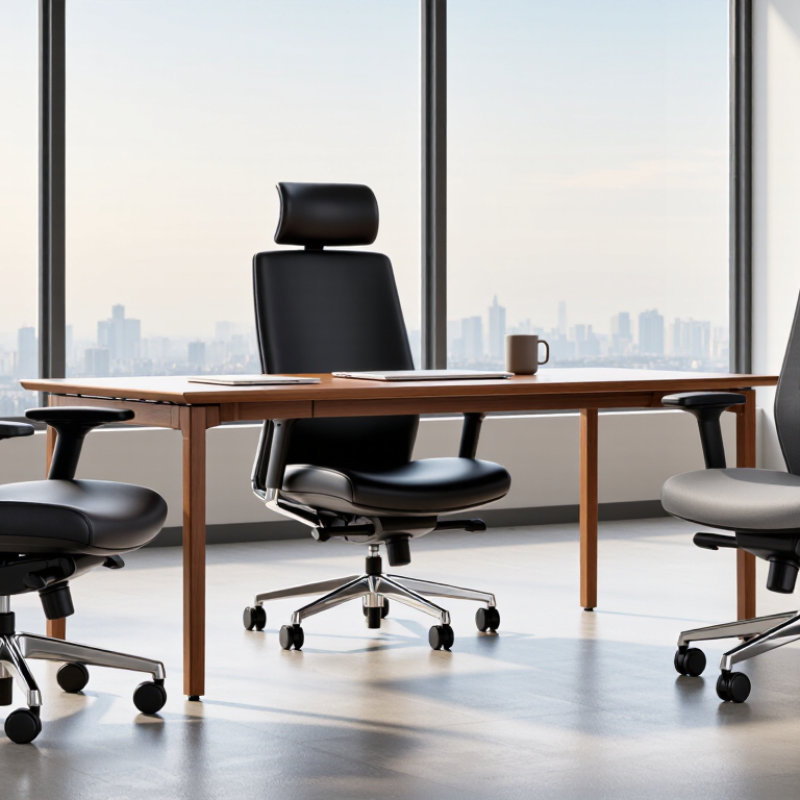
A high-backed office chair generally extends above the shoulders and supports more of the upper back than a mid-back chair. There is no single universal height threshold for the label, so compare the measured backrest with your torso. The lower curve should meet your lumbar area, while the upper section should support your shoulders without nudging your head forward. A headrest is optional, not proof of better support. Fit still varies.
ANSI/BIFMA X5.1 is a voluntary performance standard for general-purpose office chairs. Its laboratory tests evaluate areas such as stability, strength, durability, and structural integrity under controlled loads and repeated-use cycles. A compliance claim is more useful when supported by test documentation for the specific chair configuration.
Check that the tested version matches the chair being sold, including its base and adjustments. The standard does not establish that a chair fits every body, feels comfortable, or prevents pain. That distinction matters.
For a 2026 comparison, treat testing as evidence of performance, not a comfort guarantee. If possible, sit back, adjust the seat, and check that your feet rest flat. I would still allow for some uncertainty: a brief showroom trial cannot reproduce a full workday.

A high-backed office chair should fit your body before its extra features matter. Seat-height adjustment is a practical place to start. Start with the floor. Set the seat so both feet rest flat, your knees bend near 90 degrees, and your thighs feel supported. If raising the chair to reach a desk leaves your feet dangling, a footrest may help. Check the chair’s stated height range against your own measurements, not just its appearance.
A 90°–110° recline range can support different tasks, from upright typing to a more relaxed reading posture. At about 90 degrees, check that the backrest supports your lower back without pushing your shoulders forward. A slight recline, such as 100 to 110 degrees, may feel easier during breaks. Small changes matter. Recline figures are not always measured or presented the same way, so test the movement and look for clear adjustment details.
During a longer trial, adjust the seat height and recline separately; otherwise, it can be hard to tell what improved comfort. Notice pressure behind your knees, whether your lower back stays supported, and if the chair shifts when you lean back. A specification sheet cannot capture every body shape. That is an imperfect way to choose, but it is more useful than relying on a single “ideal” angle.
Which High Backed Office Chair Is Best in 2026?
A 275-lb capacity claim is useful only when you can verify what it means. Check the chair’s manual and product documentation, not just a sales headline. Does the rating apply to the complete chair, and are the test conditions described? A stated capacity is not a guarantee of long-term performance. Look for details on the frame, base, and fasteners, plus clear warranty terms. Small print matters.
Stability is easier to assess in person. Sit upright, recline gently, and notice whether the base shifts or the chair feels top-heavy. Check that the casters suit your floor and that the seat stays level during normal movement. Durability claims deserve similar scrutiny: ask what was tested, how many cycles were completed, and whether results came from an independent lab. Test methods vary. I would not treat an impressive number as proof by itself.
Tips: Inspect joints and wheels for looseness, then repeat the check after a few weeks of regular use. Keep the chair on a level surface. If you cannot confirm the test method, say so plainly; uncertainty is better than pretending every claim is verified. A chair can feel solid in a showroom and still develop play over time. That part is easy to overlook.
A high-backed office chair should feel comfortable after an hour, not just during a quick showroom test. Check the upholstery where your back and thighs make contact. Mesh allows airflow and can help during warm afternoons, though its tension may feel firm against thin clothing. Padded fabric feels softer, but it can hold heat and show wear along the seat edge. Faux leather wipes clean easily; it may also feel sticky in a sunlit room. Small details matter.
Lumbar support should meet the curve of your lower back without pushing you forward. Look for height or depth adjustment, then sit with both feet flat and your shoulders relaxed. A fixed lumbar pad can suit one person and miss another by several inches. Try the chair for at least 15 minutes if possible. Comfort is personal, and I may give breathability too much weight on cooler days.
Read the warranty before comparing prices. Check how long the frame, adjustment mechanism, and upholstery are covered, and whether labor or shipping is excluded. A long warranty sounds reassuring, but narrow exclusions can change its value. Save the terms. Also check whether the chair’s parts can be replaced; a worn cushion should not automatically end the chair’s useful life.
This brand-neutral comparison describes common chair constructions. Comfort ratings are practical guidance, not laboratory test results. Warranty terms vary by model, region, and component; confirm the written coverage before purchasing.
| Chair Type | Typical Upholstery | Breathability | Lumbar Support | Best For | Typical Warranty Pattern | Overall Fit |
|---|---|---|---|---|---|---|
| Full-mesh high-back chair | Mesh seat and back; some models use a padded seat. | High Open-weave mesh allows more airflow than solid upholstery. | Often adjustable by height or tension; verify that the support can be positioned to suit your lower back. | Warm rooms and people who tend to feel hot while seated. | Often several years for the frame, with separate or shorter coverage for fabric and moving parts. Check exclusions. | Strong airflow; mesh tension and seat comfort are important to try. |
| Fabric high-back chair | Woven textile over foam padding. | Medium Breathability varies with the weave, backing, and padding. | May be fixed, height-adjustable, or built into a shaped backrest; features differ by model. | Everyday desk work and users who prefer a softer, less slippery surface. | Coverage commonly differs between the chair structure and upholstery; review the stated term and wear exclusions. | Balanced; check fabric durability and cleanability. |
| Genuine-leather high-back chair | Leather on specified surfaces; other areas may use different materials. | Low to medium Solid leather generally passes less air than mesh. | Usually depends on the backrest shape and adjustment features, rather than the upholstery material. | Users who value a smooth, structured surface and are prepared for material-specific care. | Read the terms closely: leather, stitching, frame, and mechanisms may have different coverage. | Premium feel; can feel warm and needs appropriate care. |
| Coated-fabric high-back chair | Fabric or composite substrate with a leather-like surface coating; exact construction varies. | Low to medium A coated surface is typically less airy than open mesh. | Can include adjustable lumbar support, but the coating itself provides no lumbar benefit. | People seeking a wipe-clean surface; inspect care instructions and finish quality. | Ask whether peeling, cracking, and surface wear are covered; these may be treated differently from structural defects. | Easy-care option; long-term surface durability depends on materials and use. |
| Hybrid mesh-and-fabric high-back chair | Mesh back with a padded fabric seat. | Medium to high The mesh back promotes airflow while the seat provides cushioning. | Often available with a separate adjustable lumbar element; confirm its range and locking positions. | Users who want a cooler backrest with a softer seat. | Coverage can vary across the mesh, seat upholstery, frame, and mechanisms; compare each component’s terms. | Versatile choice; a useful balance for mixed comfort preferences. |
For a 2026 high-backed chair ranking, score ergonomic fit before appearance: adjustable seat height, usable lumbar support, and a seat depth that lets users sit back without pressure behind the knees. OSHA’s computer-workstation guidance recommends a neutral posture, supported feet, and a chair that fits the user; those are practical checks, not proof that one model suits everyone. Start with fit. Then examine published test evidence: look for clearly described durability and safety methods, such as tests aligned with BIFMA seating standards, rather than vague “ergonomic” claims. The U.S. Bureau of Labor Statistics recorded 2.6 million nonfatal workplace injuries and illnesses in private industry in 2023. That figure covers many causes, so it cannot show that a particular chair prevents injury.
For a useful price comparison, group chairs under $300, from $300 to $700, and above $700. These are comparison bands, not official market averages. In the lowest band, favor basic adjustments and a stable base over extra features. In the middle band, give higher marks to independently documented testing and a wider range of fit adjustments. At the top, expect stronger evidence or more precise adjustment—not automatic ergonomic superiority. A high back can feel reassuring, yet it may push the head forward if its shape misses the user’s shoulders. That detail is easy to overlook. My ranking would reward fit first, test transparency second, and price value third; individual bodies still complicate any neat score.

Signup our newsletter to get update information, promotion or insight.