
Blog

What Is the Best Flour PP Woven Bag from China?

Choosing the best Flour Pp Woven Bag from China requires more than comparing prices. The bag must protect flour from moisture, tearing, contamination, and rough warehouse handling. Its performance depends on polypropylene quality, fabric density, lamination, stitching, printing, and the accuracy of its filling weight.

Chen Hao, a China-based woven-packaging engineer with more than fifteen years of factory experience, explains, “A reliable flour bag is judged by its weakest seam, not its brightest print.” This practical warning matters. During production audits, buyers should inspect seam strength, valve construction, liner fitting, and bag dimensions. A small opening near the bottom can spread flour across a pallet. An uneven gusset can make stacking unstable.

Material evidence matters.

The best Flour Pp Woven Bag usually uses consistent virgin or carefully controlled polypropylene material. However, “best” depends on the supply chain and intended market. A 25-kilogram retail bag needs different handling features from a 50-kilogram industrial sack. Buyers should request tensile-test results, drop-test records, sample approval, and food-contact documentation where applicable. Factory photographs help, but they do not replace physical inspection.

There is no perfect specification.

A thicker bag may improve durability, yet increase cost and shipping weight. A glossy laminated surface may improve moisture resistance, but poor lamination can peel during transport. This guide examines Chinese suppliers through measurable quality, production experience, customization ability, communication, and after-sales reliability. It also questions common assumptions, because attractive packaging can hide weak construction.
What Is the Best Flour PP Woven Bag from China?

What Is a Flour PP Woven Bag?

What Is the Best Flour PP Woven Bag from China?

What Is a Flour PP Woven Bag?

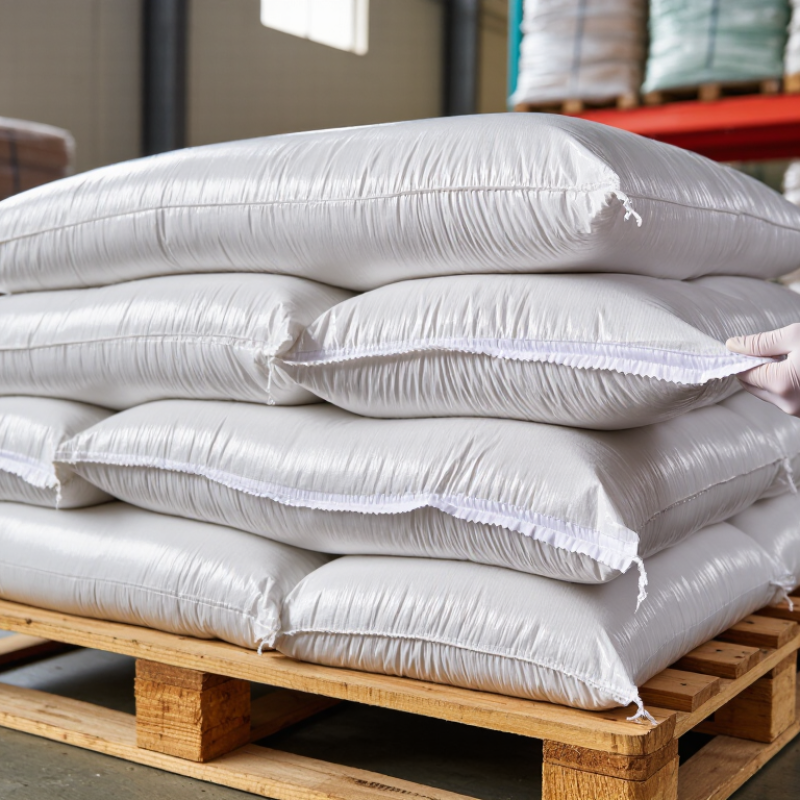
A flour PP woven bag is made from woven polypropylene tapes. These tapes form a strong, lightweight fabric. The bag may include a laminated outer surface or an inner polyethylene liner. Both options reduce moisture entry and powder leakage. A square-bottom design improves stacking on warehouse pallets. A stitched or heat-sealed mouth supports cleaner filling.

The material choice matters. Polypropylene resists water, tearing, and repeated handling. However, it is not automatically airtight. Flour can absorb moisture through weak seams, damaged coatings, or poor closures. I would not judge a bag by tensile strength alone. Check seam performance, drop tests, fabric weight, and actual filling trials. A dusty floor often reveals weaknesses faster than a catalog.

FAO’s 2023 food-loss reporting estimated that 13.2% of food was lost before retail globally. Packaging cannot solve every loss problem, but it can protect flour during transport and storage. The UNEP Food Waste Index Report 2024 recorded 1.05 billion tonnes of food waste in 2022, mainly at retail, food-service, and household stages. This supports careful packaging design, even when the bag is used earlier in the supply chain. For Chinese supply, request food-contact documentation, batch samples, odor checks, and test records. A lower-cost bag may look efficient, yet inconsistent weaving can create hidden losses. Surface printing also needs review. Some inks may rub onto warehouse equipment.

What Is the Best Flour PP Woven Bag from China? - What Is a Flour PP Woven Bag?

Bag Type Basic Construction Typical Flour Capacity Common Fabric Weight Moisture Protection Printing Options Main Advantages Best Application
Standard PP Woven Bag Woven polypropylene tapes with stitched top and bottom 10–50 kg Approximately 60–100 g/m² Basic protection; not fully waterproof Flexographic printing, usually 1–4 colors Lightweight, economical, tear-resistant, and recyclable where facilities exist Short-distance transport and dry warehouse storage
Coated PP Woven Bag PP woven fabric with an additional polypropylene coating 10–50 kg Approximately 70–110 g/m², including coating Improved resistance to surface moisture and dust Flexographic or surface printing Better sealing and improved protection than uncoated fabric General flour distribution where moderate moisture resistance is needed
BOPP Laminated PP Woven Bag PP woven fabric laminated with a printed BOPP film 10–50 kg Approximately 80–120 g/m², depending on the film and fabric Good barrier against surface moisture, dust, and scuffing High-resolution gravure printing with detailed graphics Strong visual appearance, sharp printing, abrasion resistance, and good shelf presentation Best overall choice for retail flour packaging
PP Woven Bag with Inner PE Liner PP woven outer bag combined with a loose or attached polyethylene liner 10–50 kg Outer fabric commonly 60–100 g/m²; liner thickness varies Enhanced internal protection against humidity and product leakage Printing on the outer woven bag Useful where flour powder control and added moisture protection are important Longer storage, humid climates, and fine flour products
Valve-Type PP Woven Bag PP woven bag fitted with a filling valve for automated packing 10–25 kg is common Approximately 70–110 g/m² Depends on coating, liner, and valve design Flexographic or laminated film printing Fast machine filling, clean handling, and consistent package shape High-volume automated flour filling lines
Open-Mouth Sewn PP Woven Bag Open top filled from above and closed by sewing or tape stitching 10–50 kg Approximately 60–110 g/m² Depends on the closure and optional liner Flexographic, laminated, or pre-printed film graphics Flexible filling method and suitable for many packing machines Small and medium-scale flour packing operations

Selection guidance: A BOPP laminated PP woven bag is generally the best all-around option for retail flour because it combines woven strength, attractive high-resolution printing, and improved surface protection. For humid storage, consider adding a polyethylene liner or selecting a coated structure. Actual performance depends on fabric strength, seam quality, liner specifications, closure design, and storage conditions.

Which Materials and Construction Features Matter Most?

What Is the Best Flour PP Woven Bag from China?

Which Materials and Construction Features Matter Most?

For flour packaging, woven polypropylene is usually the practical foundation. It is light, strong, and resistant to rough handling. The fabric should have consistent tape thickness and tight weaving. Uneven surfaces can reveal weak production control. A laminated inner layer helps block moisture and fine flour dust. However, excessive coating may make the bag stiff and harder to fill. The correct balance depends on storage conditions and filling equipment.

Bag construction matters as much as the plastic material. A well-formed gusset improves stacking and reduces bulging. Strong stitching should hold the top and bottom without cutting through the fabric. For fine flour, a sealed inner liner can reduce leakage. A valve opening may speed filling, but it needs accurate dimensions. Poor alignment creates spillage. Simple details matter.

Testing

Testing should support every specification. Ask for fabric weight, tensile strength, seam strength, and drop-test records. Sample bags should be filled and stacked before approval. Check them after transport simulation, not only on a clean factory floor. Food-contact documentation must match the actual raw materials and production process. I would also inspect several production batches, because one attractive sample proves little. A minor weakness may remain hidden until humidity rises or pallets move. That is where many purchasing decisions become less certain.

How to Compare Chinese Flour Bag Manufacturers

Choosing the best flour PP woven bag from China starts with comparing manufacturers, not catalog pictures. A reliable factory should explain fabric weight, bag size, valve design, lamination, and liner options clearly. Ask for production samples. Measure the width, check the seam, and inspect the printed surface under strong light.

I usually compare suppliers through several practical details. Can they provide batch records and material test reports? Do they control polypropylene quality from incoming material to final packing? A useful manufacturer should discuss tensile strength, drop resistance, moisture protection, and filling performance without avoiding technical questions. Request a sample test with your actual flour weight. A bag that looks strong may split during pallet handling.

Factory experience matters, but it is not enough. Visit the workshop when possible, or arrange a live video inspection of looms, printing lines, sewing areas, and storage conditions. Check whether production dates, quantities, and inspection results are traceable. Confirm lead times, minimum order quantities, replacement policies, and communication procedures in writing. Food-contact requirements also need careful verification for your destination market. Certificates help, but outdated documents can mislead buyers. I once treated fast replies as proof of reliability; that was a weak assumption. Manufacturing consistency deserves more attention. Small flaws matter. Compare samples from different batches before approving a large order.

What Quality Standards Should the Bags Meet?

The best flour PP woven bag from China should meet clear, verifiable quality standards. The material should be virgin, food-grade polypropylene, not recycled plastic from unknown sources. It should comply with the destination market’s rules, such as EU food-contact requirements, FDA regulations, or China’s GB 4806.7 standard. Ask for recent migration test reports from an accredited laboratory. Supplier declarations alone may not be enough.

Strength matters during filling, stacking, and transport. Check fabric weight, tensile strength, seam strength, and drop-test performance. A 25-kilogram bag needs stable dimensions and reinforced stitching. The inner liner should resist flour dust and moisture. Its seal must remain intact after folding and pallet storage. Printing ink should not contact the flour directly. Low odor is essential.

Look closely.

A bright surface can fool the eye. Inspect random samples for broken threads, loose stitching, pinholes, contamination, and uneven cutting. Production records, batch numbers, and traceability documents add useful reliability. An AQL-based inspection can control defects before shipment. However, no inspection system is perfect. I would combine factory checks, laboratory testing, and loading supervision. Suppliers should also provide clear specifications, including bag size, tolerance, color, liner thickness, and safe working conditions. Cheap pricing often hides thinner fabric or weaker seams. That risk deserves careful review.

What Is the Best Flour PP Woven Bag from China?

Fabric weight is a key quality indicator for flour PP woven bags. The ranges below represent common procurement benchmarks for uncoated or lightly laminated bags by rated filling capacity. Final specifications should be confirmed through tensile, seam-strength, drop, and food-contact testing.

Quality standards to check: PP woven sacks should be manufactured to an agreed buyer specification and tested for fabric tensile strength, seam strength, dimensional accuracy, stitching quality, leakage resistance, and filled-bag drop performance. ISO 21898 can be referenced for thermoplastic woven packaging sacks, while ISO 7965-1 is commonly referenced for filled-sack drop testing. For flour packaging, the material and any coating or ink must also comply with the applicable food-contact regulations in the destination market, such as EU Regulation (EU) No 10/2011 or relevant U.S. FDA requirements.

How to Choose the Best Flour PP Woven Bag for Your Needs

Choosing the best flour PP woven bag from China starts with the filling line, not the catalogue. I check flour weight, packing speed, and storage climate before reviewing samples. A 25-kilogram bag may need tighter weaving than a small retail sack. The fabric should resist tearing at the corners and remain stable when stacked. For humid warehouses, an inner polyethylene liner can reduce moisture exposure. It is not a cure for poor storage.

Ask for a sample made with the same fabric weight, seam style, valve design, and liner thickness as production bags. Rub the surface. Check loose threads, uneven coating, and weak stitching. A clean valve supports automatic filling, while a flat bottom improves pallet stability. I also recommend a drop test from a practical handling height. One sample may pass easily, yet another can split after repeated movement. That difference is easy to miss.

Reliable sourcing also depends on evidence. Request material specifications, batch records, food-contact documentation, and test results from the manufacturer. Confirm whether printing ink stays outside the flour-contact layer. Review moisture, tensile, and seam-strength results instead of trusting attractive photographs. Cost matters, but the cheapest bag may create flour dust, rework, or damaged pallets. I have seen buyers overlook handle comfort for workers. That small detail can affect daily efficiency. Leave room for correction after the first trial.