
A Ceiling Panel Light can make a room feel brighter, calmer, or more practical, depending on its size and color temperature. The best choice is not simply the panel with the highest lumen rating. It should suit the room, fit the ceiling, and provide light that feels comfortable during everyday use.
This guide to the 10 best ceiling panel lights to buy in 2026 focuses on details that matter at home and at work. We consider brightness, color options, dimming controls, energy use, installation style, and manufacturer support. A slim panel may sit neatly against a low ceiling, while a recessed model can create a cleaner finish when the ceiling allows it. Small details count. Light changes everything.
Product specifications can vary by model and region, so check the manufacturer’s current information before buying. Pay close attention to the panel’s dimensions, compatible dimmers, and any installation requirements. A cool, bright setting may suit a laundry room, but it can feel harsh above a dining table. There is no perfect panel for every space. That matters. This shortlist aims to make comparisons easier, not to promise that one fixture will suit every room. Consider your ceiling height, room size, and preferred light before choosing.
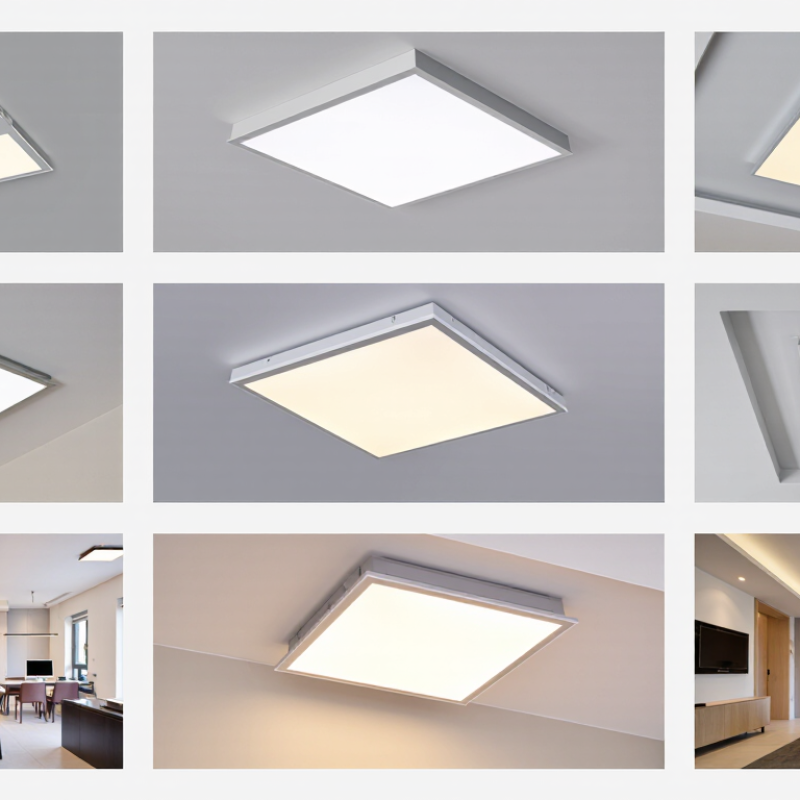
A ceiling panel light is a broad, shallow fixture that spreads light across a room instead of concentrating it in one spot. Inside, LED chips produce light when electrical current passes through semiconductor material. A driver regulates the current supplied to those chips. Light passes through a diffuser, a frosted cover that softens glare and hides individual bright points. Some panels place LEDs around the edges; others position them behind the diffuser. Both designs aim for an even, ceiling-wide glow. That is the idea.
The U.S. Department of Energy’s LED Lighting guidance says LEDs use at least 75% less energy than incandescent lighting. It also reports lifespans up to 25 times longer. These are general LED comparisons, not guarantees for every panel. Driver quality, heat management, and dimmer compatibility still matter. A poorly matched dimmer may cause flicker. In a real room, color temperature changes the feel: 2700 K looks warm, while 4000 K feels cleaner. Poor placement can also leave the ceiling looking uneven. Not always obvious.
Tips: Check lumens for brightness, not watts, and compare color temperature and color-rendering information. Confirm that the panel fits the ceiling opening and works with your dimmer. In a kitchen, consider glare from glossy counters. A paper mock-up can help you judge placement, though it cannot reproduce the final light perfectly.
Ceiling panel lights are broad, flat luminaires that spread light across a diffuser. Most use LEDs and a driver that converts mains electricity to the power required by the light. The options below are practical, brand-neutral buying profiles; output and performance are typical ranges and vary by model.
| No. | Panel-light option | Typical size | Typical power and light output | Common color temperature | Installation | Best suited to | What to check before buying |
|---|---|---|---|---|---|---|---|
| 1 | 2 × 2 ft LED panel | Approximately 24 × 24 in | About 30–40 W; roughly 3,000–4,000 lm | 3000–5000 K | Recessed grid ceiling; surface or suspended kits may be available | Offices, classrooms, and other rooms with a suspended ceiling grid | Confirm the ceiling-grid dimensions, panel depth, driver access, and whether a mounting kit is included. |
| 2 | 2 × 4 ft LED panel | Approximately 24 × 48 in | About 40–60 W; roughly 4,000–6,000 lm | 3000–5000 K | Usually recessed in a compatible suspended ceiling grid | Large offices, corridors, and classrooms needing broad, even illumination | Check the grid size, lumen output, glare information, and local electrical requirements. |
| 3 | 1 × 4 ft LED panel | Approximately 12 × 48 in | About 30–40 W; roughly 3,000–4,000 lm | 3000–5000 K | Recessed, surface-mounted, or suspended, depending on the kit | Narrow rooms, hallways, and ceiling layouts that suit a rectangular fixture | Measure the opening and confirm the chosen mounting method is supported. |
| 4 | Round LED panel | Commonly 6–12 in diameter | Often about 8–24 W; roughly 600–2,000 lm | 2700–5000 K | Recessed or surface-mounted, depending on design | Bathrooms, kitchens, entryways, and smaller rooms | Check cutout diameter, fixture depth, damp-location rating where needed, and whether a driver is included. |
| 5 | Square LED panel | Commonly 6–12 in per side | Often about 8–24 W; roughly 600–2,000 lm | 2700–5000 K | Recessed or surface-mounted | Small rooms or layouts where a square fixture matches the ceiling design | Compare cutout dimensions, total fixture depth, and the stated lumen output. |
| 6 | Ultra-slim surface panel | Commonly 12–24 in across | Varies by size; many household models provide about 1,000–3,000 lm | 2700–5000 K | Mounted directly to the ceiling | Rooms without a recessed opening or suspended ceiling grid | Check ceiling clearance, mounting hardware, junction-box compatibility, and access to the driver. |
| 7 | Selectable-color-temperature panel | Available in several shapes and sizes | Depends on size; compare the rated lumens at each setting | Often selectable across 3000, 4000, and 5000 K | Recessed or surface-mounted, depending on model | Multi-use rooms where warm or cooler white light may be preferred at different times | Find out how the setting is changed and whether it can be adjusted after installation. |
| 8 | Dimmable LED panel | Available in common panel sizes | Output varies by size; dimming range depends on the panel and control | Usually 3000–5000 K | Recessed, surface-mounted, or suspended, as specified | Work and living spaces where adjustable brightness is useful | Verify compatibility between the driver, dimmer type, and any wall controls; not all LED panels dim. |
| 9 | Low-glare panel for work areas | Commonly 2 × 2 ft or 2 × 4 ft | Often about 3,000–6,000 lm, depending on size and model | Commonly 3500–5000 K | Typically recessed in a suspended ceiling grid | Offices, study areas, and screen-based workspaces | Look for published glare data, such as UGR where provided, and consider room layout and mounting height. |
| 10 | Moisture-rated LED panel | Available in round, square, and rectangular formats | Varies by size and rating; use the fixture’s published lumen value | Commonly 3000–5000 K | Recessed or surface-mounted, according to the product design | Bathrooms and other locations where moisture exposure may be a concern | Check the IP rating and local rules for the exact installation zone; a moisture rating does not automatically make a fixture suitable for every wet location. |
Comparison note: lumen output, wattage, color temperature, dimensions, dimming, and environmental ratings are model-specific. Match the fixture to the ceiling opening, room size, intended brightness, and applicable electrical and building requirements.