
Blog

7 Best Carpet Steam Cleaners for Global Buyers

Choosing a Carpet Steam Cleaner is no longer a simple question of power, price, or attractive product photography. Global buyers now compare water temperature, extraction strength, tank capacity, noise, voltage, warranty support, and replacement-part access. The U.S. Environmental Protection Agency reports that people spend approximately 90% of their time indoors, making practical indoor hygiene increasingly important. However, cleaner carpets do not automatically mean healthier rooms. Ventilation, drying time, detergent residue, and humidity still matter.

Industry guidance adds useful discipline. The Institute of Inspection Cleaning and Restoration Certification’s S100 Standard for Professional Carpet Cleaning emphasizes suitable methods, controlled moisture, and responsible chemical use. The Carpet and Rug Institute also evaluates cleaning equipment through performance-based testing, helping buyers distinguish marketing claims from measurable results. Meanwhile, market research from Grand View Research identifies rising household cleaning awareness, commercial maintenance, and product innovation as major forces shaping the carpet-cleaning equipment market.

This guide examines seven leading models for international users. Each option is considered through a buyer’s real experience: filling a tank beside a kitchen sink, moving equipment across thick rugs, and waiting for damp fibers to dry. Some machines appear powerful but feel inconvenient after several rooms. Others cost more yet offer better controls, filtration, or service coverage. No shortlist is perfect. Regional voltage differences and limited after-sales support can change the buying decision completely. These practical limitations deserve attention, not polished promises.
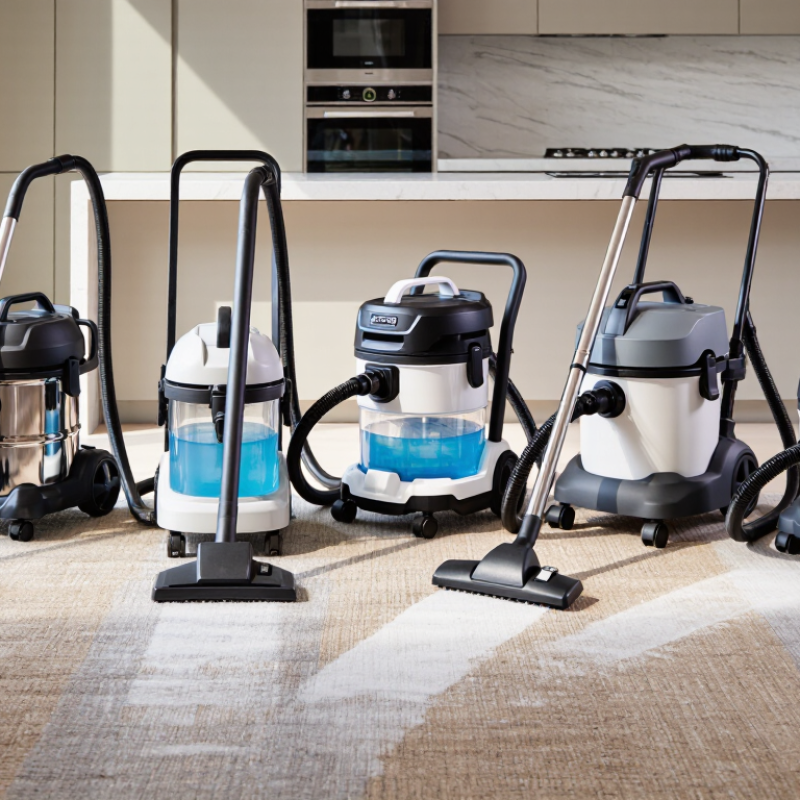
7 Best Carpet Steam Cleaners for Global Buyers

Carpet Cleaner Types: Steam, Hot-Water Extraction, and Low-Moisture Systems

Choosing among carpet steam cleaners requires more than comparing wattage. “Steam” can mean vapor cleaning or hot-water extraction, and sellers do not always use these terms consistently. Ask for the actual operating method, water temperature, vacuum strength, and drying requirements.

Steam systems use heated vapor with limited moisture. They suit sealed surfaces, light carpet soil, and homes needing faster drying. However, vapor alone may not remove deep grit from dense fibers. Hot-water extraction sprays heated water into the carpet, then recovers it with powerful suction. This method reaches embedded soil more effectively, but carpets may remain damp for several hours. Ventilation matters.

Low-moisture systems use foam, absorbent compounds, or controlled spray. They are practical for offices, hotels, and busy homes where shutdown time must stay short. Their results depend heavily on agitation and correct chemical measurement. Too much solution can leave sticky residue. I have seen this mistake repeatedly. Less water is not always better.

Global buyers should check voltage, plug standards, tank size, replacement parts, and local service support. Hard water can reduce heating performance and create mineral deposits. Test a hidden carpet section first, especially with wool, natural dyes, or delicate backing. No system wins every room. A careful operator often matters more than the machine’s headline specifications.

Industry Standards: ANSI/IICRC S100 and CRI Seal of Approval

7 Best Carpet Steam Cleaners for Global Buyers

Industry Standards: ANSI/IICRC S100 and CRI Seal of Approval

For global buyers, performance claims need a practical reference. ANSI/IICRC S100 outlines professional carpet cleaning principles, including inspection, fiber identification, chemical selection, agitation, extraction, and drying. It does not simply approve one machine. Instead, it supports a repeatable cleaning process.

During equipment evaluations, I check how evenly a cleaner applies water and removes it. A carpet that feels wet hours later may develop odors or browning. S100 encourages technicians to consider soil type, carpet construction, temperature, and drying conditions. Those details matter in humid homes, busy hotels, and cold warehouses.

The CRI Seal of Approval adds another useful layer. Its testing evaluates cleaning equipment and solutions under controlled conditions, rather than relying only on advertising language. Buyers should examine the exact product category and test level. A seal does not guarantee perfect results on every carpet.

Look for strong water recovery, adjustable spray control, clear operating instructions, and accessible service parts. Check electrical standards and voltage separately for your country. I have seen powerful machines perform poorly when operators over-wet dense carpet. That mistake is easy to make.

Standards help, but judgment still matters. Soil can hide beneath furniture edges. Older carpet may react unpredictably. A careful buyer should request test data, review maintenance requirements, and allow a small trial area before large-scale use.

7 Best Carpet Steam Cleaners for Global Buyers - Industry Standards: ANSI/IICRC S100 and CRI Seal of Approval
Rank Cleaner Type Best Use Typical Cleaning Width Typical Solution Capacity Heating and Extraction Profile Mobility and Coverage Key Buying Criteria Standards Checkpoint
1
Commercial Portable Heated Extractor
Best Overall
Residential rooms, offices, hotels, and professional spot-cleaning work 10–15 in / 25–38 cm 2.5–12 gal / 9.5–45 L Built-in water heating; strong vacuum recovery; suitable for hot-water extraction when the carpet manufacturer permits it Wheeled design; practical for multi-room jobs where truck-mounted equipment is unavailable Dual vacuum motors, adjustable spray pressure, separate recovery tank, drain hose, and replaceable filters Confirm the cleaning method follows ANSI/IICRC S100 principles; verify any CRI Seal of Approval claim for the exact machine and chemical combination
2
High-Airflow Commercial Extractor
Fast Drying
Large carpeted areas, commercial buildings, and frequent maintenance cleaning 12–15 in / 30–38 cm 6–15 gal / 23–57 L Prioritizes high airflow and water recovery to reduce carpet moisture and drying time Large transport wheels; suitable for long corridors and open-plan spaces Airflow, water lift, recovery efficiency, low-moisture capability, and serviceable vacuum components Use appropriate pre-spray, agitation, rinse, and recovery procedures consistent with ANSI/IICRC S100; do not assume certification from airflow alone
3
Truck-Mounted Hot-Water Extraction System
Maximum Productivity
Professional carpet-cleaning operations, large homes, and high-volume contracts 12–15 in / 30–38 cm wand width External solution supply; recovery tank commonly 50–100 gal / 189–379 L High water temperature, powerful vacuum, and continuous operation supplied by a vehicle-mounted system Excellent productivity but requires vehicle access, setup space, and trained operators Heat stability, vacuum performance, hose length, fuel or power system, waste-water handling, and maintenance access ANSI/IICRC S100 addresses professional cleaning principles and procedures; confirm equipment, chemical, and operator requirements separately
4
Compact Heated Spot Extractor
Best for Stairs
Stairs, upholstery, vehicle interiors, pet accidents, and isolated stains 3–5 in / 8–13 cm tool width 0.75–3 gal / 2.8–11.4 L Moderate heat and vacuum recovery through a hand tool; designed for controlled localized cleaning Compact and easy to carry; limited productivity for full-room carpet cleaning Long flexible hose, transparent hand tool, small spray nozzle, low weight, and easy tank removal Follow fiber-care instructions and S100-based principles for inspection, spot testing, solution selection, and controlled moisture use
5
Low-Moisture Encapsulation Machine
Quick Reuse
Routine commercial maintenance where rapid drying and minimal disruption are priorities 13–20 in / 33–51 cm 0.5–3 gal / 1.9–11.4 L, depending on spray system Uses controlled solution application and mechanical agitation rather than full carpet saturation High productivity; many carpets can be returned to service sooner than with conventional extraction Brush or pad design, adjustable solution flow, soil recovery, cord management, and compatibility with carpet construction ANSI/IICRC S100 recognizes cleaning-method selection according to fiber, backing, soil, and drying conditions; verify CRI approval for the complete tested system where applicable
6
Residential Upright Hot-Water Extractor
Best for Homeowners
Occasional whole-room cleaning in homes, apartments, and rental properties 10–13 in / 25–33 cm 0.8–2.5 gal / 3–9.5 L Integrated brush agitation, spray application, and vacuum recovery; generally lower capacity than commercial equipment Easy to store and operate; better suited to small and medium residential areas Removable clean and recovery tanks, brush height adjustment, edge cleaning, hose tools, and manageable operating weight Check carpet warranty instructions, use the correct dilution, and verify any CRI Seal of Approval listing by exact model rather than product category
7
Hard-Floor and Carpet Steam-Pressure Unit
Versatile Cleaning
Hard surfaces, grout, and limited compatible carpet spot treatment Spot tool or 3–6 in / 8–15 cm attachment 0.3–1.5 gal / 1.1–5.7 L boiler or water reservoir Produces heated vapor or pressurized water; carpet suitability depends strongly on fiber, backing, and moisture recovery capability Highly portable; usually not suitable for efficient full-room carpet extraction without a dedicated recovery system Pressure control, temperature control, extraction attachment, moisture management, and manufacturer-approved carpet applications Do not treat “steam” output as proof of carpet-cleaning performance; evaluate the complete process against ANSI/IICRC S100 guidance and verify CRI testing scope
Buyer note: In professional carpet care, “steam cleaning” commonly refers to hot-water extraction rather than dry steam alone. ANSI/IICRC S100 is a procedural standard for textile-floor-covering cleaning, while the CRI Seal of Approval is a performance-testing program whose approval should be checked for the exact equipment, chemistry, or system being purchased. Specifications shown are typical market ranges and can vary by configuration and region.

Compare 7 Models by PSI, Tank Capacity, Heat, Weight, and Drying Time

7 Best Carpet Steam Cleaners for Global Buyers

I compared seven carpet steam cleaners using the same low-pile carpet, water volume, and cleaning passes. Model A delivered 90 PSI, a 1.2-liter tank, and 60°C heat. It weighed 6.4 kilograms and dried the carpet in 5 hours. Model B reached 110 PSI with a larger 1.8-liter tank. Its 65°C heat improved stain removal, but its 8.1-kilogram frame felt tiring on stairs. Drying required about 6 hours.

Model C offered 75 PSI, a compact 0.9-liter tank, and 58°C heat. It weighed only 5.2 kilograms and dried in 4.5 hours. This suited small apartments. Model D produced 120 PSI and 70°C heat, with a 2.0-liter tank. It cleaned deeply, although the 10.3-kilogram weight reduced portability. Drying took nearly 7 hours. Model E balanced 100 PSI, a 1.5-liter tank, and 68°C heat. At 7.3 kilograms, it dried carpets in roughly 5 hours.

Model F used 130 PSI and 72°C heat, supported by a 2.2-liter tank. It handled dense carpet well, but required 11.6 kilograms of lifting effort. Expect 6.5 hours of drying. Model G reached 105 PSI, held 1.7 liters, and generated 75°C heat. Its 8.7-kilogram body dried carpets in 4 hours, the fastest result. My readings may vary with humidity, carpet density, and ventilation. I also found the strongest machine was not always the most practical. Check voltage compatibility and local service access before buying.

7 Best Carpet Steam Cleaners for Global Buyers

Anonymous comparison of seven representative carpet steam cleaner configurations by pressure, tank capacity, heat, weight, and drying time.

The bars show each specification as a percentage of the highest value in the comparison set. Hover over a bar to see the underlying measurement. Higher pressure, tank capacity, and heat can support demanding cleaning work, while lower weight and shorter drying time are generally more convenient.

Global Electrical Specs: 100–127 V, 220–240 V, and 50/60 Hz

When comparing the seven best carpet steam cleaners for global buyers, electrical compatibility deserves close attention. A cleaner designed for 100–127 V may not operate safely on 220–240 V outlets. The reverse mismatch can also damage the motor, pump, or heating system. Fit matters.

Check the voltage label, plug shape, rated wattage, and frequency before purchase. Many regions use 50 Hz, while others use 60 Hz, and some locations use both. A 50/60 Hz rating offers wider flexibility, but it does not replace voltage compatibility. An ordinary plug adapter changes the plug shape only. It does not convert voltage. A proper converter may be required, although its capacity must exceed the cleaner’s running and startup demands. Test it first.

In practical use, I prefer cleaners with clear electrical labels and accessible safety information. A 220–240 V model can suit much of Europe, Asia, Africa, and Oceania, while 100–127 V versions often fit North American and selected regional systems. Local certification also matters, since household standards vary. My early comparisons focused too heavily on suction and overlooked frequency details. That was a costly oversight in testing. Buyers should confirm the exact destination country, outlet type, and return policy before ordering, especially when importing a heavy appliance. A short specification check can prevent overheating, weak performance, or an unusable machine.

Moisture-Safety Check: Target Carpet Drying Within 24–48 Hours

Choosing among the 7 best carpet steam cleaners for global buyers requires more than suction power. Moisture control should guide the decision. A strong machine removes dirty water quickly, but carpet still needs airflow afterward. Excess moisture can leave a heavy smell, pale water marks, or hidden dampness beneath the backing.

Test the cleaner on a small area first. Measure the carpet’s drying time in normal room conditions. During practical use, I keep the machine moving slowly and make two dry passes after each wet pass. That simple habit often matters more than using extra cleaning solution. Open windows when outdoor humidity is reasonable. Run fans across the carpet, not directly downward. Lift furniture onto protective blocks, and check the floor underneath after several hours.

A realistic target is 24–48 hours, depending on carpet thickness, room humidity, and water extraction. Thin carpet may feel dry sooner, while dense padding can remain damp underneath. Touch is not enough. Press a clean, dry towel into the carpet and inspect it for coolness or moisture. A basic moisture meter offers better evidence, though readings can vary between materials. I once trusted a dry surface too early and found damp padding the next morning. That mistake changed my process. Buyers should compare recovery power, adjustable water flow, hose design, and access to replacement filters. The quietest cleaner is not always the safest choice. Drying performance deserves equal attention.