
Choosing a Floor Grating supplier is a technical decision, not merely a price comparison. Global buyers must examine load capacity, material grade, surface treatment, tolerances, and drainage performance. A walkway near the sea needs different protection from a dry indoor platform. Small differences matter. A poorly matched panel can flex under traffic, collect debris, or corrode around welds. This guide introduces seven suppliers serving international projects and diverse industrial environments. The selection considers manufacturing experience, engineering support, product consistency, and export reliability. It also examines whether suppliers explain limitations instead of promising everything.
Reliable vendors should provide drawings, test records, traceable materials, and clear installation guidance. Buyers should check steel or aluminum grades, bearing bar dimensions, spacing, finish, and applicable project standards. Packaging also deserves attention. Bent edges often begin with careless handling before installation. Lead times, minimum order quantities, replacement policies, and communication quality can affect total project cost. Supplier websites may look polished, but documented evidence carries more weight. Factory audits, sample approvals, and independent inspections can reduce uncertainty.
Still, no ranking fits every project. A chemical plant, rooftop service route, and public access platform demand different priorities. The seven suppliers below offer useful starting points, not automatic guarantees. Compare their capabilities against site conditions, budget, maintenance plans, and delivery risks. This practical review helps global buyers choose with greater confidence and fewer expensive surprises.
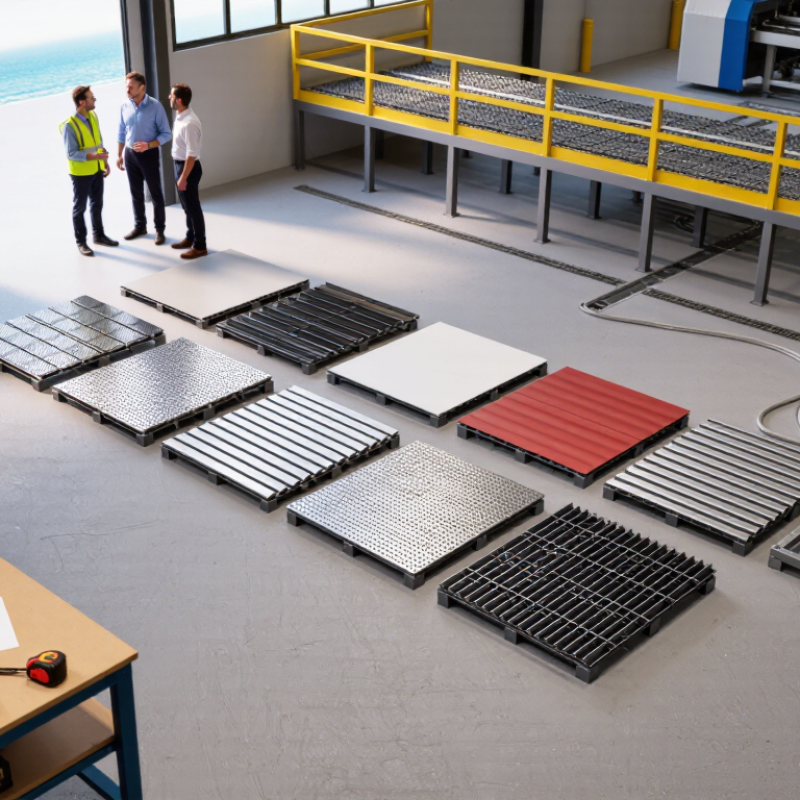
A reliable floor grating supplier proves performance before asking for a large order. Start with material traceability, accurate load tables, and clearly stated manufacturing tolerances. A serious supplier explains whether panels use galvanized steel, stainless steel, or aluminum. They should also describe surface finishes, drainage openings, bearing bars, and fixing systems in practical terms.
Ask for test reports, inspection records, and samples that match the proposed production method. Factory experience matters when platforms face forklifts, oil, rain, or repeated foot traffic. Check whether the supplier can maintain dimensions across several batches. Small variations can complicate installation. Communication is another useful test. Reliable teams confirm drawings, question unclear specifications, and report delays early. They do not promise everything instantly.
Tips:
Request a sample panel and verify its thickness, spacing, weld quality, and coating condition. Compare the sample with the quotation, not just the product photograph. Ask how rejected panels are controlled and whether replacement parts remain available. A supplier should provide installation guidance and realistic packaging details. Wooden crates, corner protection, and moisture barriers may prevent damage during long transit. Do not rely on certificates alone. Some documents look impressive but answer the wrong question. A site engineer’s review can expose risks that a purchasing checklist misses. Even experienced buyers may overlook slip resistance after surface treatment. That deserves a second check.

Choosing among seven floor grating suppliers requires more than comparing unit prices. Global buyers need evidence of manufacturing control, material traceability, and reliable delivery. The World Steel Association’s World Steel in Figures 2024 reports 1.89 billion tonnes of crude steel production in 2023. That scale makes origin verification essential. Ask for heat numbers, mill certificates, welding procedures, and recent inspection records. ISO 9001 certification helps, but it does not replace factory auditing. The ISO Survey 2022 recorded more than 1.26 million ISO 9001 certificates worldwide. A certificate alone proves little.
Load performance should match the real installation. Request calculations for span, load rating, deflection, bearing bars, and support spacing. Forklifts change the risk profile. So do wet floors and chemical exposure. For galvanized products, compare coating requirements under EN ISO 1461 or ASTM A123/A123M. Stainless options need documented grade, surface finish, and corrosion suitability. Never accept “industrial grade” without a technical definition.
Commercial reliability matters equally. Check production capacity, packaging methods, replacement procedures, and export experience. A useful supplier provides drawings before payment, not after complaints. One practical warning: the lowest quotation may exclude clips, freight protection, testing, or local duties. Request a landed-cost comparison. Sample inspection is worth the delay. It can reveal uneven welds, sharp edges, or warped panels that photographs hide. Even experienced buyers miss small details; documenting every assumption makes the final choice more defensible.
Seven Leading Floor Grating Suppliers Compared
Choosing among seven leading floor grating suppliers requires more than comparing quoted prices. In project reviews, I examine load tables, material grades, panel dimensions, and surface treatment details. One supplier may specialize in pressed steel grating, while another focuses on welded panels for platforms. A third offers aluminum options for lighter access covers. The remaining suppliers may provide stainless steel, molded composite, serrated surfaces, or custom cutouts. Each strength suits a different site condition.
Technical reliability appears in small details. Check bar spacing, bearing bar depth, deflection limits, and welding consistency. Ask whether hot-dip galvanizing follows a documented process. Request coating thickness records and batch traceability. Supplier response time also matters when drawings change. Good technical teams explain limitations clearly. That builds trust.
Do not rely on catalogs alone. Ask for recent test reports, installation references, and sample panels. Inspect edges for burrs and uneven welds. These details affect worker safety and fitting time. Delivery performance deserves equal attention. A low-cost supplier can become expensive after repeated delays. However, delivery claims are difficult to verify without project records. I would compare at least three references, not one. Even experienced buyers can overlook drainage, corrosion exposure, or maintenance access. The best supplier is not always the largest. It is the one whose evidence matches your operating conditions.
Product quality should be verified, not assumed. A supplier’s material certificates should identify steel grade, batch number, dimensions, and test results. World Steel Association statistics recorded about 1.89 billion tonnes of crude steel production in 2023. This scale supports global availability, but it does not guarantee consistent grating quality. I have seen small dimensional errors create difficult site fitting problems. Check bearing-bar tolerances, weld strength, panel flatness, and slip resistance before approval. A shiny finish proves little.
Standards provide a stronger comparison. ISO 14122-2 addresses working platforms and walkways, while ISO 1461 covers hot-dip galvanized coatings. ASTM A123 is also widely referenced for fabricated steel galvanizing. Suppliers should explain which standard applies to each component. Ask for coating thickness records and independent inspection options. The NACE IMPACT study estimated annual global corrosion costs at roughly US$2.5 trillion, or 3.4% of global GDP. Proper coating selection deserves serious attention.
Customization separates practical suppliers from catalog sellers. Strong candidates can adjust panel length, bearing-bar spacing, serrated surfaces, mesh openings, stair treads, drainage cutouts, and edge treatments. They should also provide load tables for unusual spans or concentrated loads. Request drawings before production. Small changes may affect weight, deflection, and installation hardware. My own cautious view is simple: customization is valuable, but excessive variation can complicate replacement later. A supplier should offer tailored engineering without creating an unmanageable product system.
Global buyers should treat floor grating procurement as a verification process, not a simple price comparison. Request drawings, load ratings, material grades, surface treatments, dimensions, and allowable tolerances. Ask each supplier for recent test reports, production photos, and a physical sample. Check whether the legal company name matches the quotation, bank details, certificates, and shipping documents. A video factory inspection can reveal useful details, including cutting equipment, stock levels, and packaging methods. References from comparable international projects add stronger evidence than polished brochures.
Confirm the purchase specification before issuing a purchase order. State quantities, pallet requirements, marking, inspection standards, delivery terms, and replacement procedures for damaged goods. Calculate freight using actual crate dimensions and gross weight, not estimates. Confirm port availability, export documents, customs classification, insurance, and the responsible party for each shipping stage. Keep communication records and approve a pre-shipment inspection when the order is substantial. It costs more, but mistakes cost more. A sample may look excellent while production quality varies across batches. That risk deserves attention. Also, delivery dates can shift because of port congestion, holidays, or incomplete documents. Allow practical buffer time, although many buyers underestimate it.
| Supplier Profile | Primary Supply Region | Recommended Product Range | Common Materials | Typical Surface Options | Indicative MOQ | Estimated Production Lead Time | Export Packaging | Typical Shipping Options | Documents to Request Before Ordering | Supplier Verification Steps | Best Use Case |
|---|---|---|---|---|---|---|---|---|---|---|---|
| Supplier A ★★★★☆ | East Asia | Press-locked steel grating, serrated safety grating, stair treads | Carbon steelGalvanized steel | Plain, serrated, hot-dip galvanized | 50–100 panels or approximately 5–10 metric tons | 25–40 calendar days after drawing approval and deposit | Steel straps, moisture-resistant paper, export-grade pallets | FCL sea freight; LCL for smaller trial orders | Technical datasheet, material certificate, coating specification, packing list, commercial invoice | Confirm factory address, review recent production photos, request a sample panel, verify coating thickness by independent inspection | Large infrastructure, platforms, walkways, and industrial plants |
| Supplier B ★★★★☆ | South Asia | Welded steel grating, heavy-duty trench covers, custom panels | Mild steelStainless steel | Serrated load bars, plain load bars, painted or galvanized | 25–75 panels depending on size and load rating | 30–45 calendar days | Bundled panels with edge protection and labeled lifting points | FCL sea freight; truck delivery to regional ports | Load calculation, welding standard, inspection report, country-of-origin document, HS classification | Compare approved drawings with production samples, inspect weld spacing, verify dimensional tolerances and corrosion protection | Factories, warehouses, utility rooms, and maintenance platforms |
| Supplier C ★★★★★ | Central Europe | Architectural grating, drainage grates, precision-fabricated floor panels | Stainless steelAluminum | Electropolished, brushed, passivated, powder-coated | 10–30 panels for standard designs; project-based for custom work | 20–35 working days | Foam separators, reinforced cartons, fumigated wooden crates when required | Road freight within Europe; air or sea freight for overseas orders | Material test report, surface-finish report, dimensional inspection record, installation drawing, warranty terms | Validate material grade through mill certificates, inspect finish consistency, confirm applicable load and slip-resistance test results | Food processing, public buildings, transport facilities, and architectural projects |
| Supplier D ★★★★☆ | North America | Heavy-duty safety grating, press-welded grating, access platforms | Carbon steelAluminumStainless steel | Serrated, galvanized, painted, mill finish | 20–50 standard panels; no fixed MOQ for selected stock items | 15–30 working days for stock or semi-standard products | Skidded bundles, corner guards, barcode labels, moisture barriers | Truck, rail, air freight, and ocean freight from regional distribution points | Product drawings, load tables, compliance statement, insurance certificate, packing declaration | Check business registration, confirm inventory location, request third-party load testing, verify after-sales response time | Fast replenishment, repair work, and projects requiring local technical support |
| Supplier E ★★★★☆ | Southeast Asia | Galvanized grating, stair treads, removable trench and drainage covers | Carbon steelStainless steel | Hot-dip galvanized, serrated, painted | 50–150 panels depending on panel dimensions | 25–40 calendar days | Strapped bundles with desiccant bags and container-safe blocking | FCL sea freight; consolidated LCL service available | Galvanizing report, product specification, loading plan, fumigation certificate, commercial documents | Confirm galvanizing process, check zinc coating measurements at multiple points, order a pre-shipment inspection | Marine environments, water-treatment plants, and outdoor walkways |
| Supplier F ★★★★☆ | Middle East | Industrial platform grating, rooftop access panels, custom support frames | Galvanized steelAluminum | Serrated, plain, anti-slip punched surface | 30–100 panels or one project lot | 20–35 calendar days after engineering approval | Heat-treated pallets, covered bundles, reinforced loading points | Sea freight, regional trucking, and multimodal delivery | Shop drawings, structural calculations, corrosion-protection details, delivery schedule, installation guidance | Review engineering credentials, verify stated load capacity, inspect frame alignment, and confirm site-delivery capability | Oil and gas facilities, refineries, warehouses, and rooftop equipment areas |
| Supplier G ★★★★☆ | Oceania | Custom safety grating, pedestrian walkways, modular access systems | AluminumStainless steelGalvanized steel | Anti-slip perforated, serrated, anodized, powder-coated | 10–40 panels for standard profiles; project quotation for custom sizes | 25–45 working days | Protective film, edge guards, export cartons, and treated timber crates | Sea freight for commercial volumes; air freight for urgent components | Slip-resistance data, material certification, installation manual, inspection checklist, warranty statement | Confirm compliance with destination safety requirements, test sample fit, check packaging quality, and obtain references for comparable projects | Public infrastructure, coastal facilities, commercial buildings, and modular platforms |

Signup our newsletter to get update information, promotion or insight.